Around 1900, few manufactories mastered glassmaking with such visual sophistication as Johann Loetz Witwe, the Bohemian glasswork brand whose Phänomen series became a hallmark of Art Nouveau glass: technically daring and visually captivating.
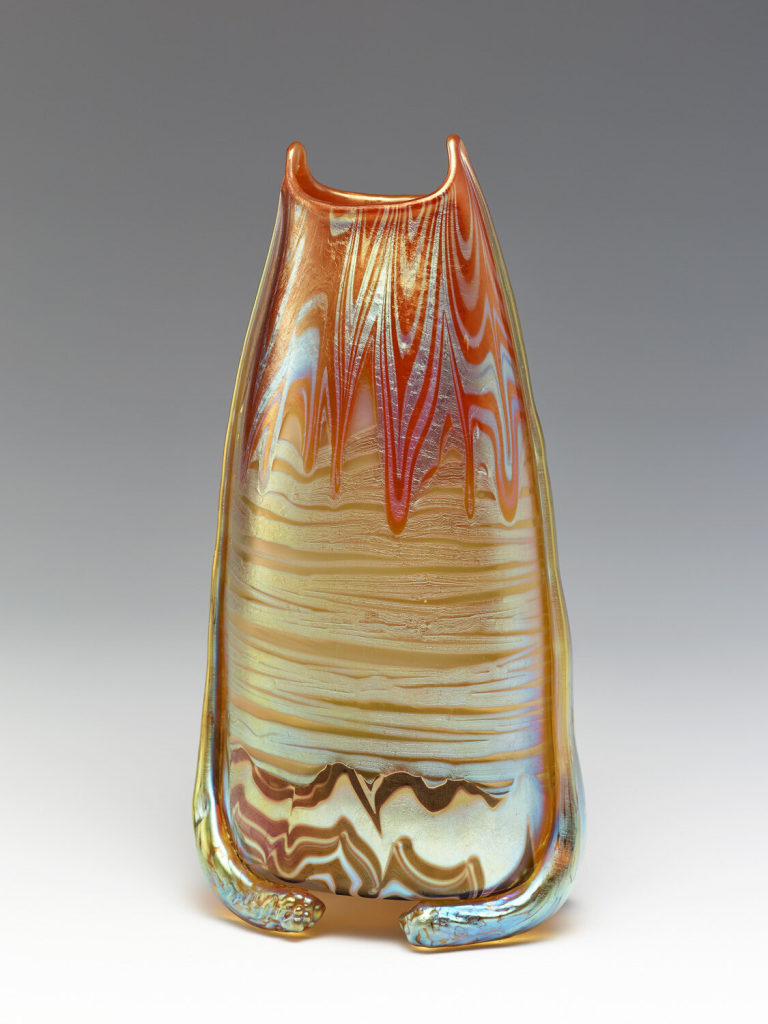
Design Antoinette Krasnik (attr.) Vase, 85/3875, Phänomen Gre 358, 1901. LVR-ZMB, Photo Stefan Arendt. Kunstpalast Glass collection
Founded in 1836, the company initially profited from the 19th-century boom in Bohemian coloured glass production. After the death of Johann Loetz, the firm was continued by his widow Susanna – hence the name Witwe (“widow”). Its artistic transformation occurred under Max Ritter von Spaun, the grandson of Johann Loetz, who directed the factory from 1879 onwards. He shifted production from utilitarian wares toward ambitious artistic glass and began experimenting with iridescent surfaces shortly after 1890, partly inspired by the success of Tiffany glass in the United States.
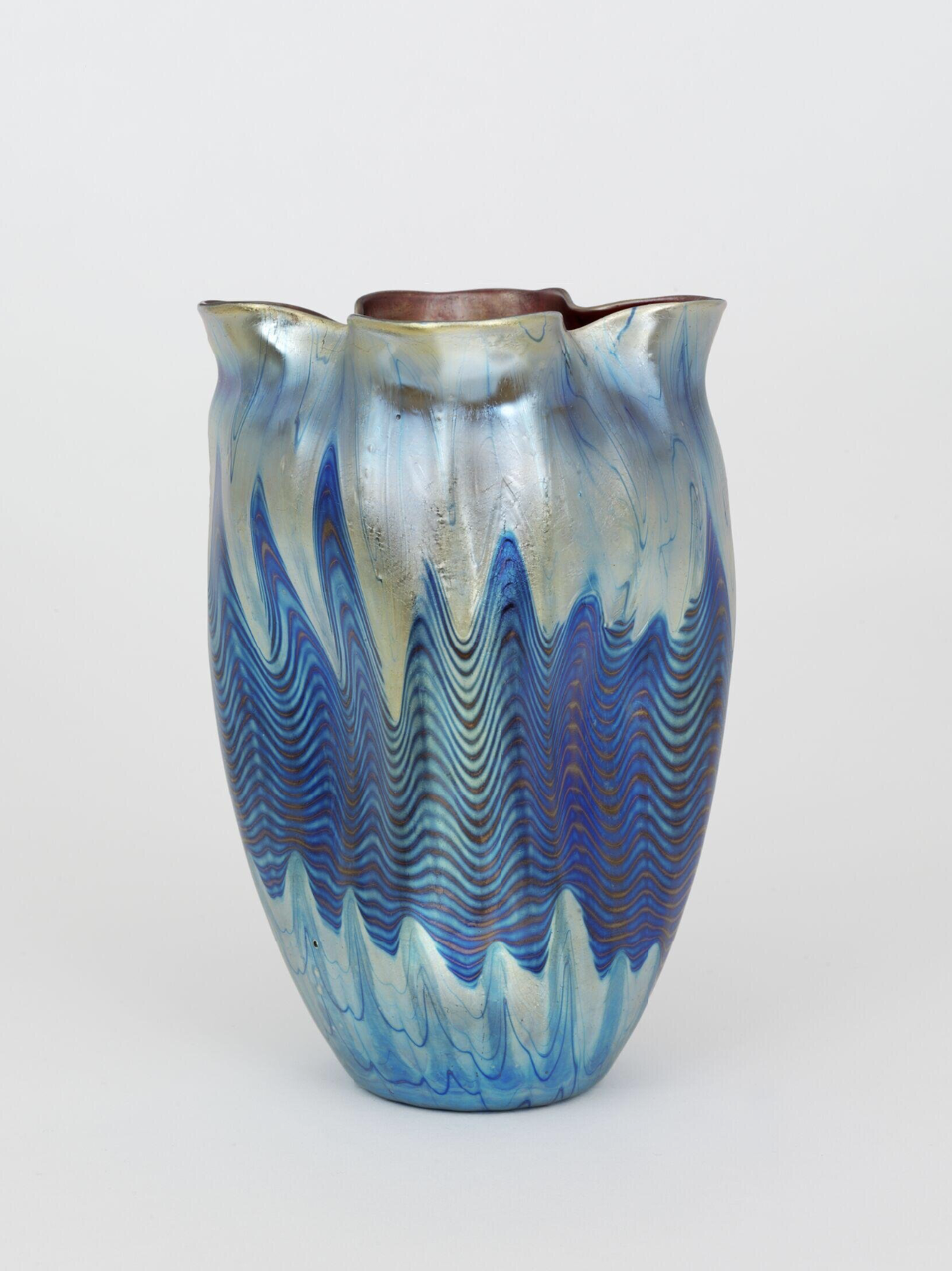
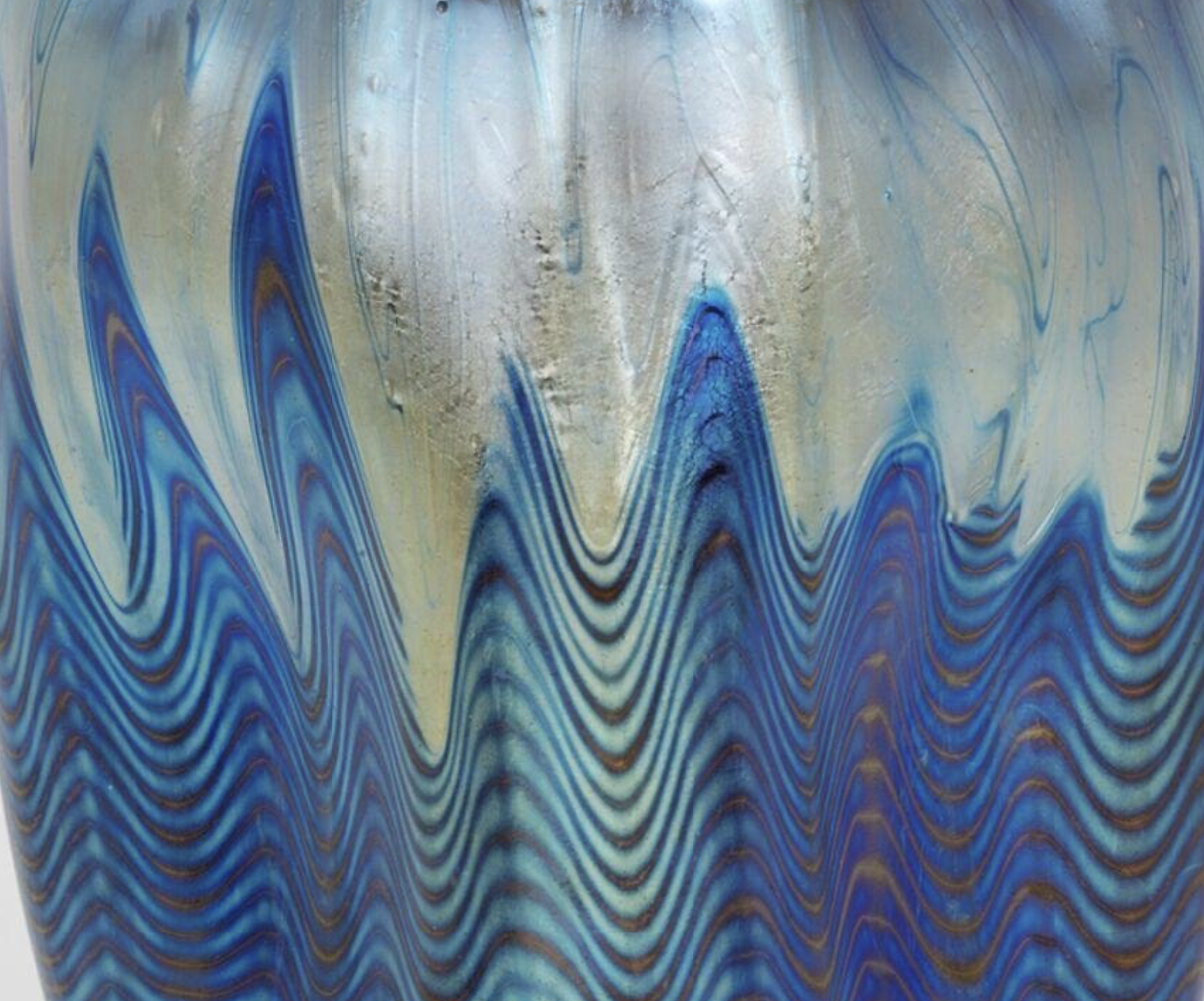
Design Max von Spaun, Vase Phänomen, 1900. Height 18,5 cm. Victoria and Albert Museum. Shown in the international exhibition, Paris, 1900, at which Loetz (Lötz) was awarded a Grand Prize. Lötz’ is the German spelling commonly used in the 19th century for the Bohemian ‘Loetz’
By 1900 Loetz had developed its own distinctive style and techniques, creating shimmering surfaces reminiscent of the lustre seen on excavated ancient glass or seashells. The manufactory developed and patented methods in which prefabricated glass threads were fused onto a monochrome surface and subsequently shaped through combing, marvering and other decorative techniques. This innovative range became known as “Phänomen” glass and proved central to the company’s artistic repositioning.
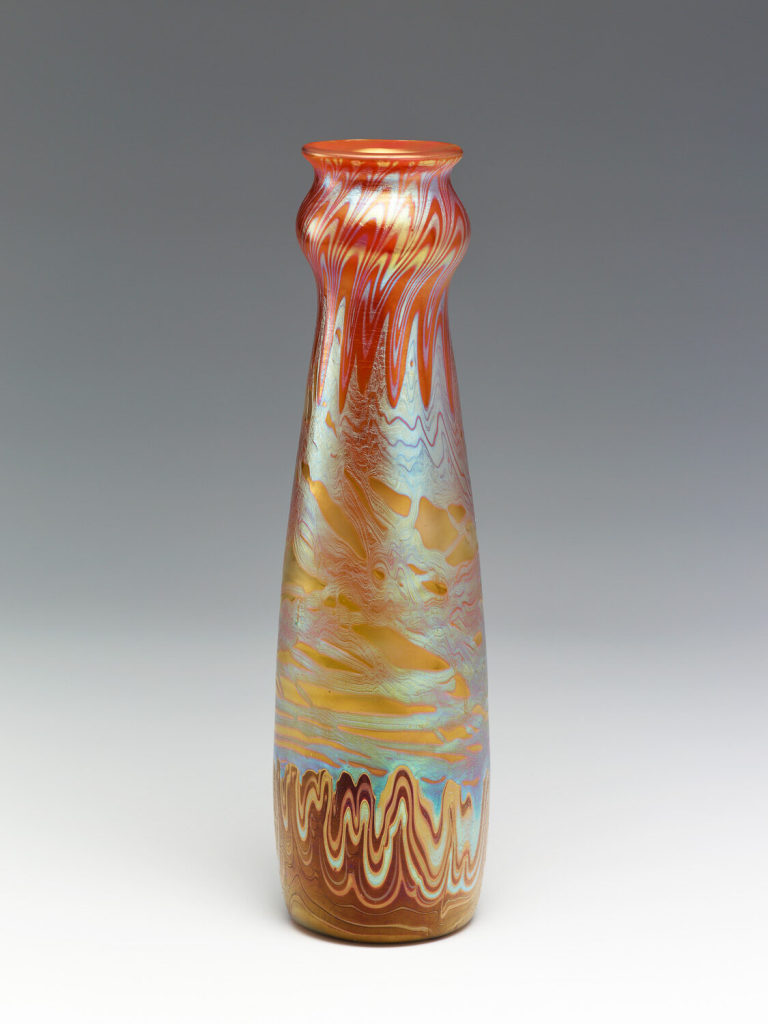
Design Franz Hochstötter, vase, decor Phänomen Gre 358, presented at the World Exhibition 1900. Kunstpalast Glass Collection, Photo: LVR-ZMB, Stefan Arendt
The new decorative series soon brought Loetz also nternational recognition. At the Paris World Exhibition in 1900, several pieces were presented and immediately caught the attention of the jury with their luminosity, metallic sheen and flowing thread decorations. Unexpectedly, the Loetz glassworks was awarded the coveted Grand Prix, placing it alongside major figures in glass art such as Émile Gallé, Daum Frères, and Tiffany.
Around the same time, Loetz collaborated with designers connected to the Wiener Werkstätte and the Vienna Secession, including Josef Hoffmann or Koloman Moser ans his students. This exchange positioned the manufactory within a broader Central European network of progressive decorative arts production.
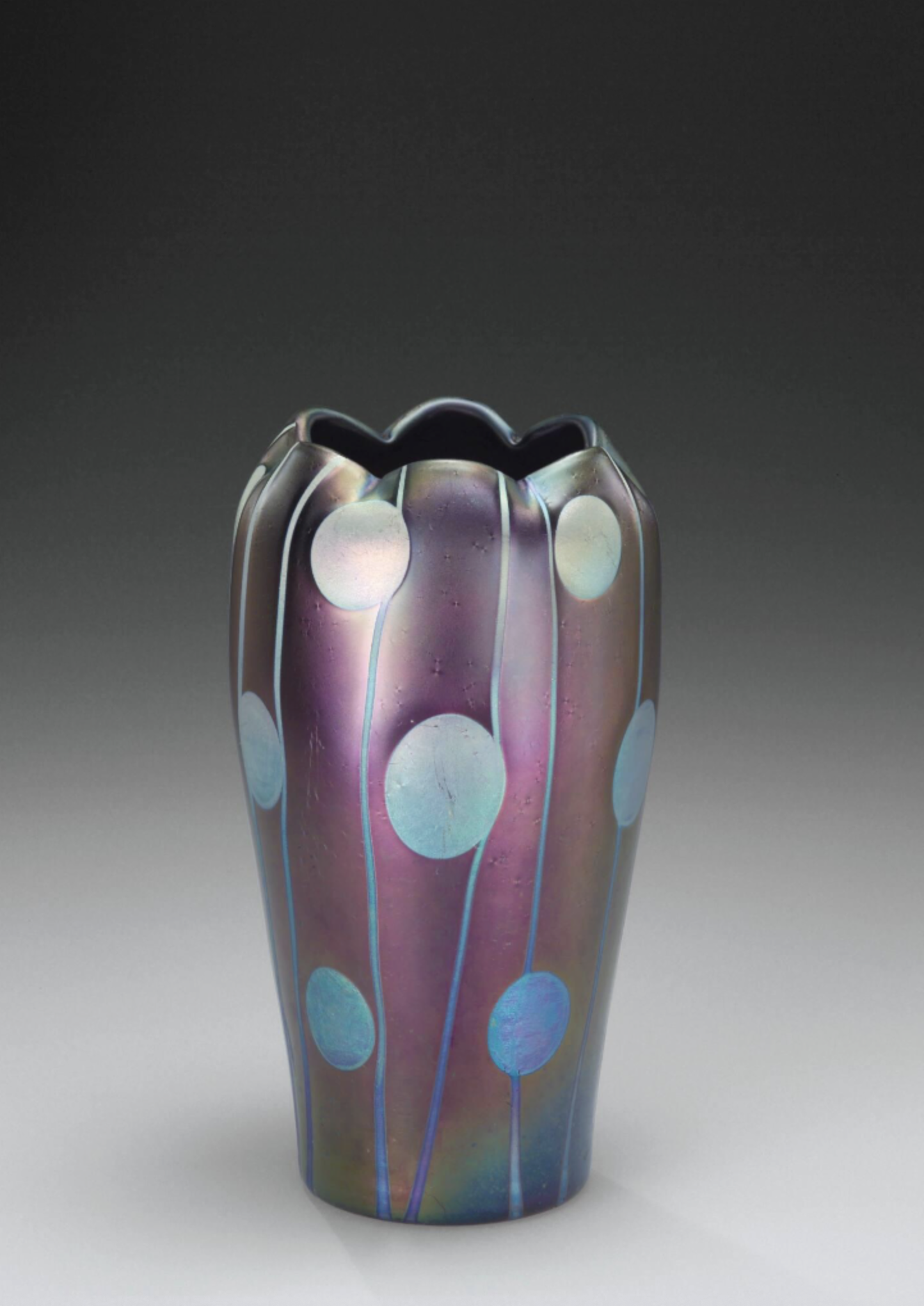
Vase with stripes and spots pattern, attributed to Koloman Moser, 1900-1903. Maker: E. Bakalowits & Söhne. Transparent purple glass; mold-blown,tooled, iridized. Cylindrical shape vase that widens to shoulders then pinches in a rim. Decorated overall with iridized surface, vertical stripes and scattered circles.
Despite its rapid ascent, the company’s success proved fragile. Sales began to decline as early as 1903, and attempts at strategic renewal were ultimately disrupted by World War I, when raw materials and labour became scarce or unaffordable. Although production continued intermittently, Loetz never regained its pre-war position and ceased operations in the mid-20th century.
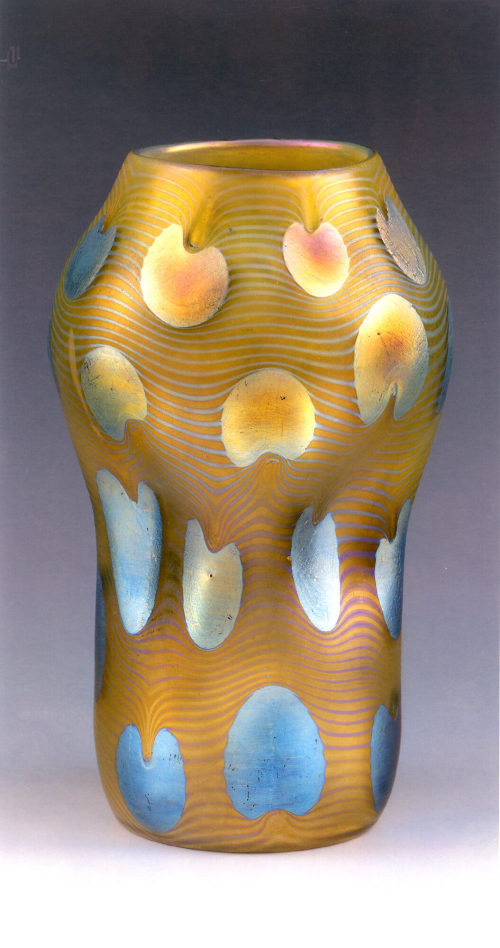
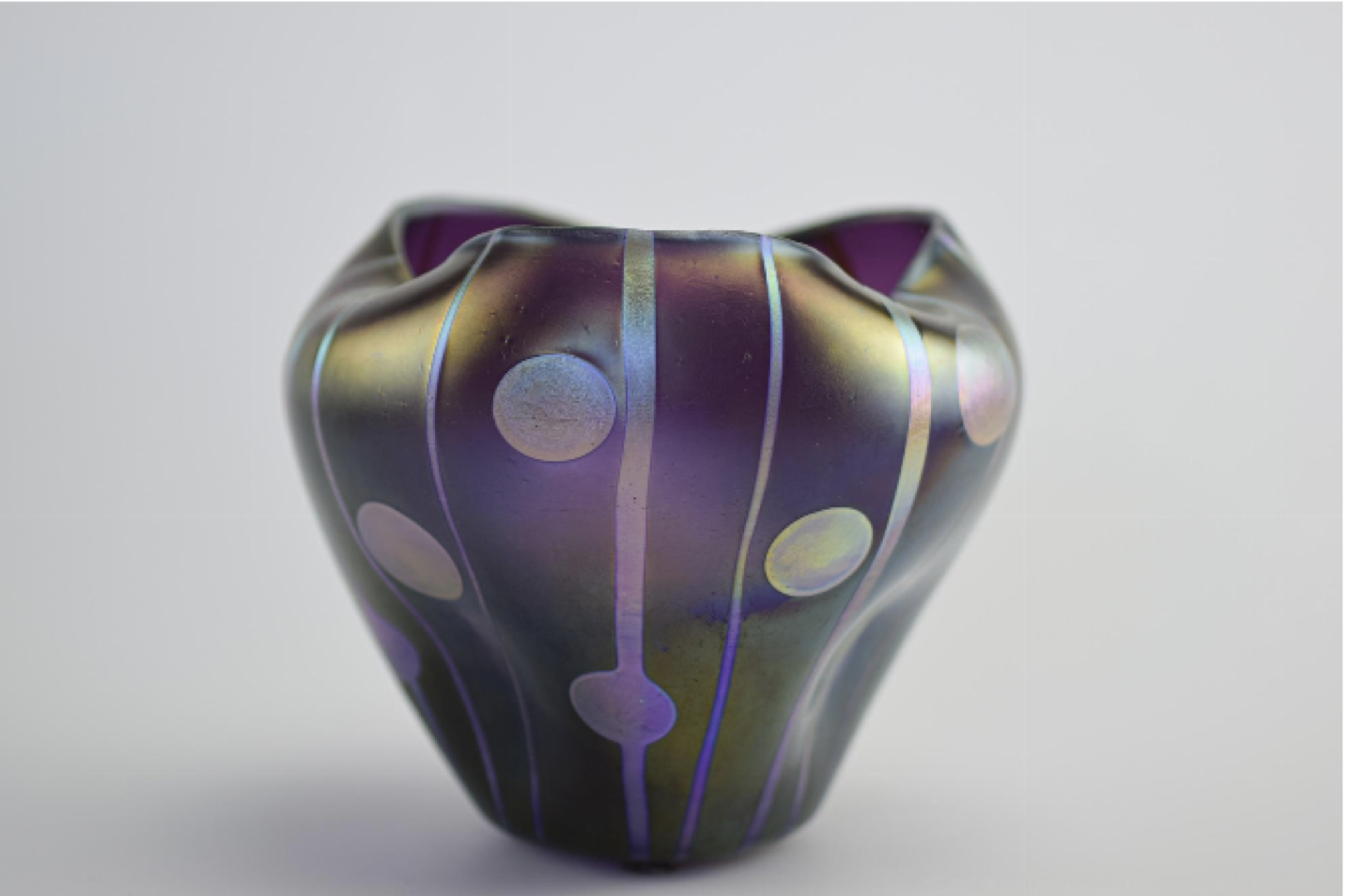
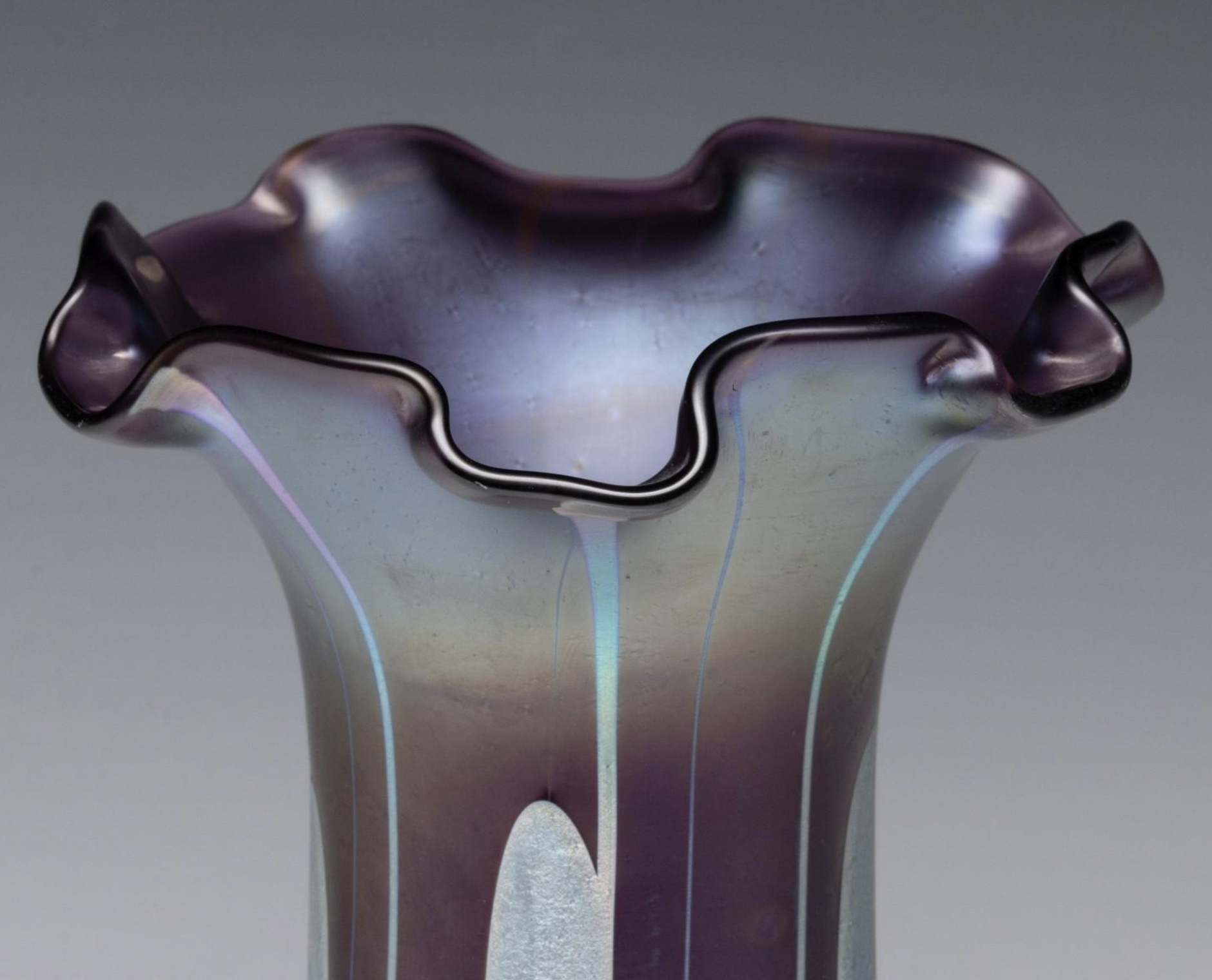
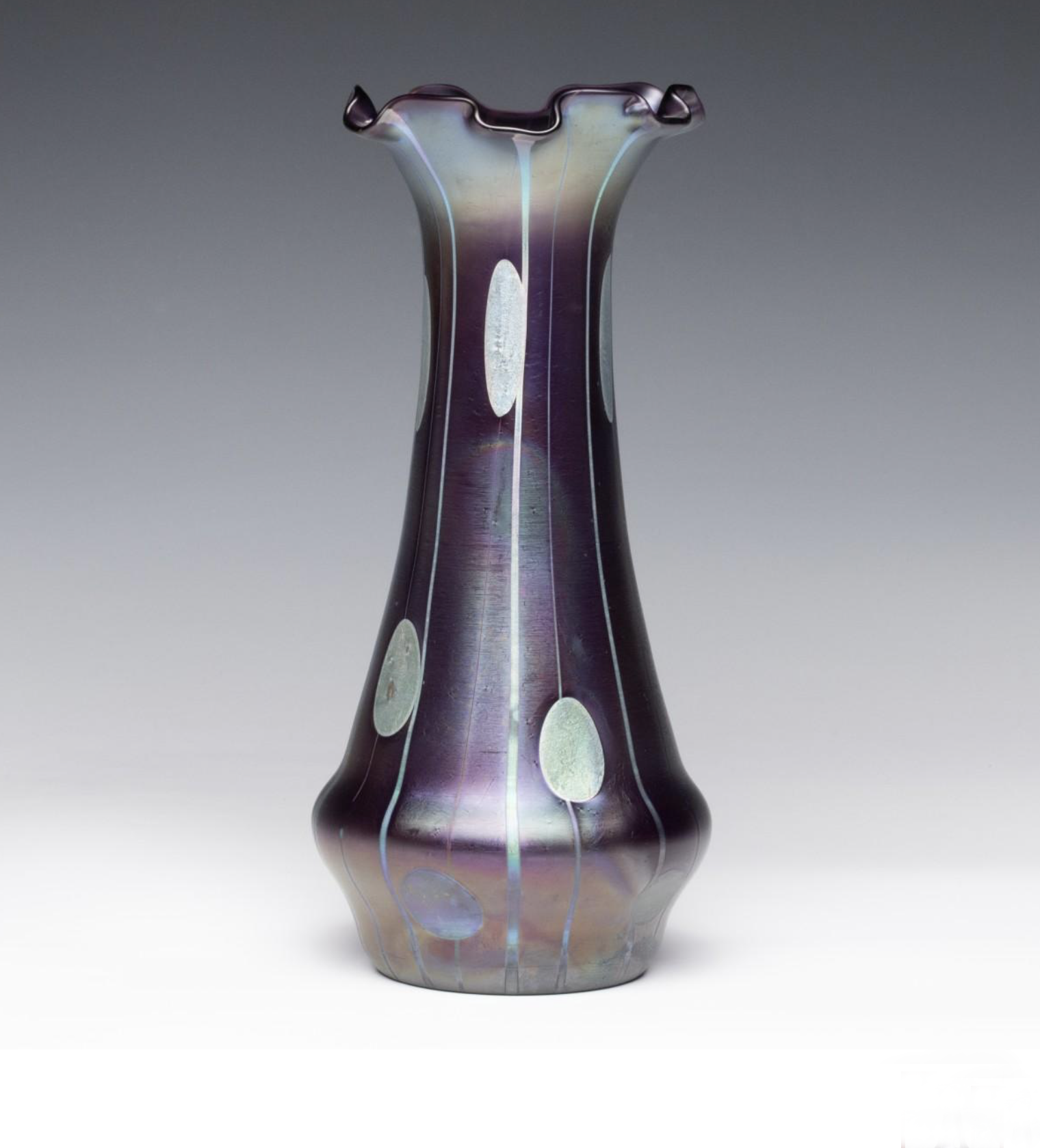
Candia Phänomen Gre 1/696, 1903. The Phänomen décor used metallic iridescent coloured glass with fused threads and surfaces, often under- or overlaid. It is achieved by applying thin layers of metallic oxides during the glassmaking process, producing an effect similar to oil on water. Kunstpalast Düsseldorf
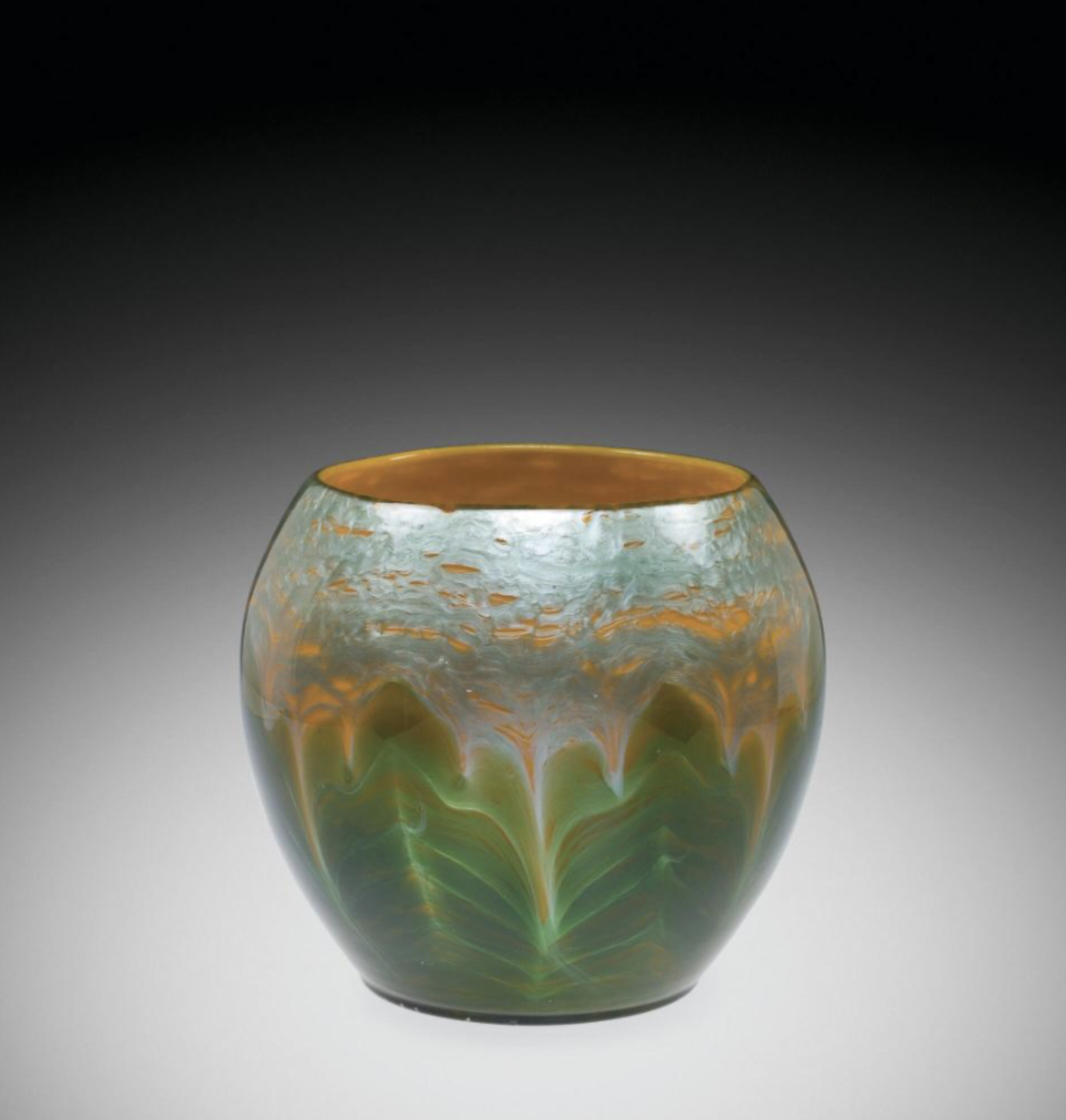
Today, Phänomen pieces are regarded as key examples of turn-of-the-century glass innovation – valued not only for their beauty but also for their technical experimentation. Strong, well-preserved examples with pronounced iridescence typically achieve €4,000–10,000 at auction, while rare or exceptional variants can exceed this range, particularly in specialised Art Nouveau sales.
 Design is fine. History is mine.