“Son of a calligrapher.” The first line of his Instagram bio is not a slogan, but a statement of lineage. It signals respect for his father, for his artistic upbringing, and for an ancient culture of writing that shaped Jianfeng Pan (*1973) long before graphic design, advertising, or global art circuits entered his life.
Jianfeng Pan’s father, Pan Zishan, introduced him to calligraphy as a child. What began as discipline and repetition gradually became both a personal anchor and a conceptual framework – one that connects art and craft, tradition and a distinctly modern sensibility.
One of Pan’s most affecting works, A Farewell to My Father, was created during his father’s final days in 2016. The piece consists of an eleven-meter-long sequence of individual scrolls, each approximately one meter wide. Black ink moves across white paper in waves, lines, and pulses – at times restrained, at times forceful.
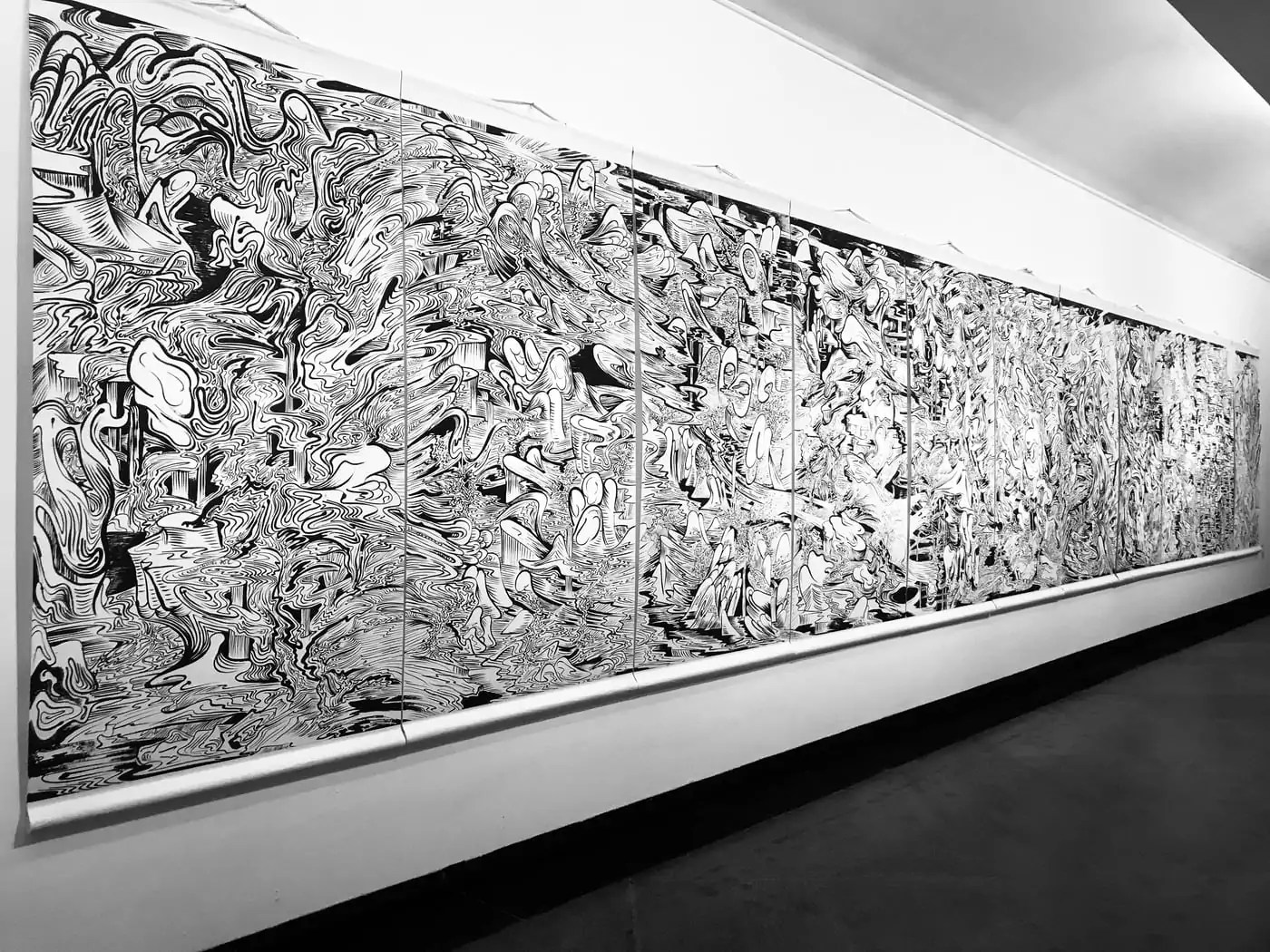
The work was produced while Pan shared the studio with his dying father. For fifteen days, father and son remained in the same space: one approaching death, the other working through grief by drawing
Pan’s biography bridges continents. After completing an MA in Visual Communication at the China Academy of Art in Hangzhou in 1999, he pursued a second master’s degree at the University of.Central England and the Birmingham Institute of Art and Design. From 2001 onward, he worked as a graphic designer in Shanghai and later became Head of Design at JWT. He worked for clients such as Coca-Cola, ran his own office, and achieved professional status. Over time, however, he came to describe his advertising career bluntly as an “abuse of talent.”
A decisive turning point occurred during the World Expo Shanghai in 2010, where Pan met representatives of a Finnish institution. An invitation followed – and a decision. At the age of forty, Pan moved to Finland with his wife and son. He refers to this step as a form of “self-exile”: not politically motivated, but existential. Leaving the comfort zone, he believed, was necessary for real change.
Family remains central. Pan lives in Porvoo in a wooden cabin (with a sauna, naturally), despite the long long winters he feels home. His teenage son speaks fluent Finnish and is fully integrated into local life. He even played the clarinet in a short impromptu at the award ceremony, when his father received a price in November 2025 and was named Artist of the year – grant by Akita Foundaton in Porvoo Finland. The Finnish people have good taste.
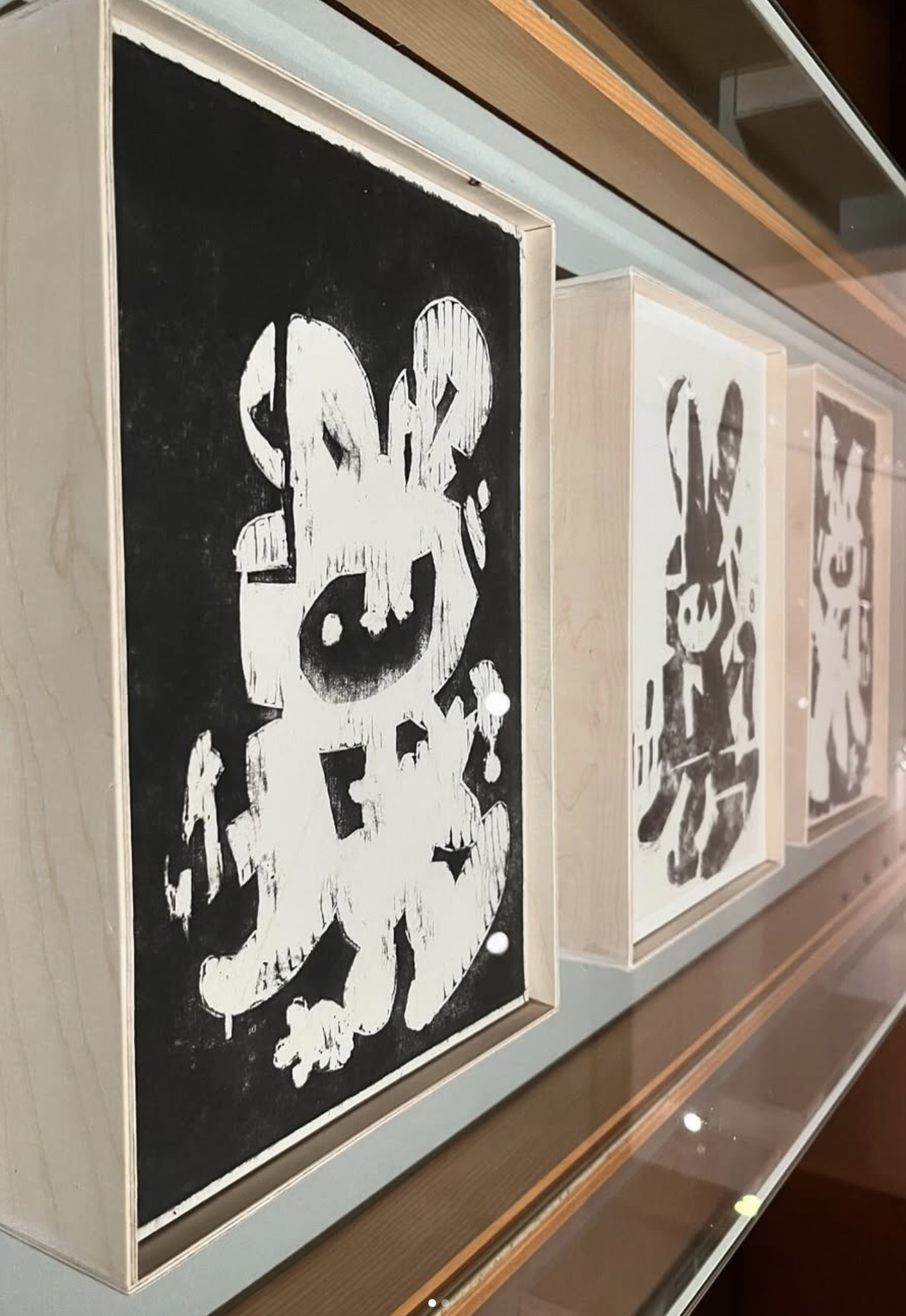
Pan’s practice consistently links manual labor with intellectual reflection. A woodcut series featuring a rabbit motif draws inspiration from Joseph Beuys’ How to Explain Pictures to a Dead Hare, while also referencing the rabbit–moon relationship in East Asian mythology.
By the way, the artist is a gifted storyteller – communicative, humorous, and precise, radiating friendliness and openness. His work often reflects this attitude: playful on the surface, conceptually layered beneath.
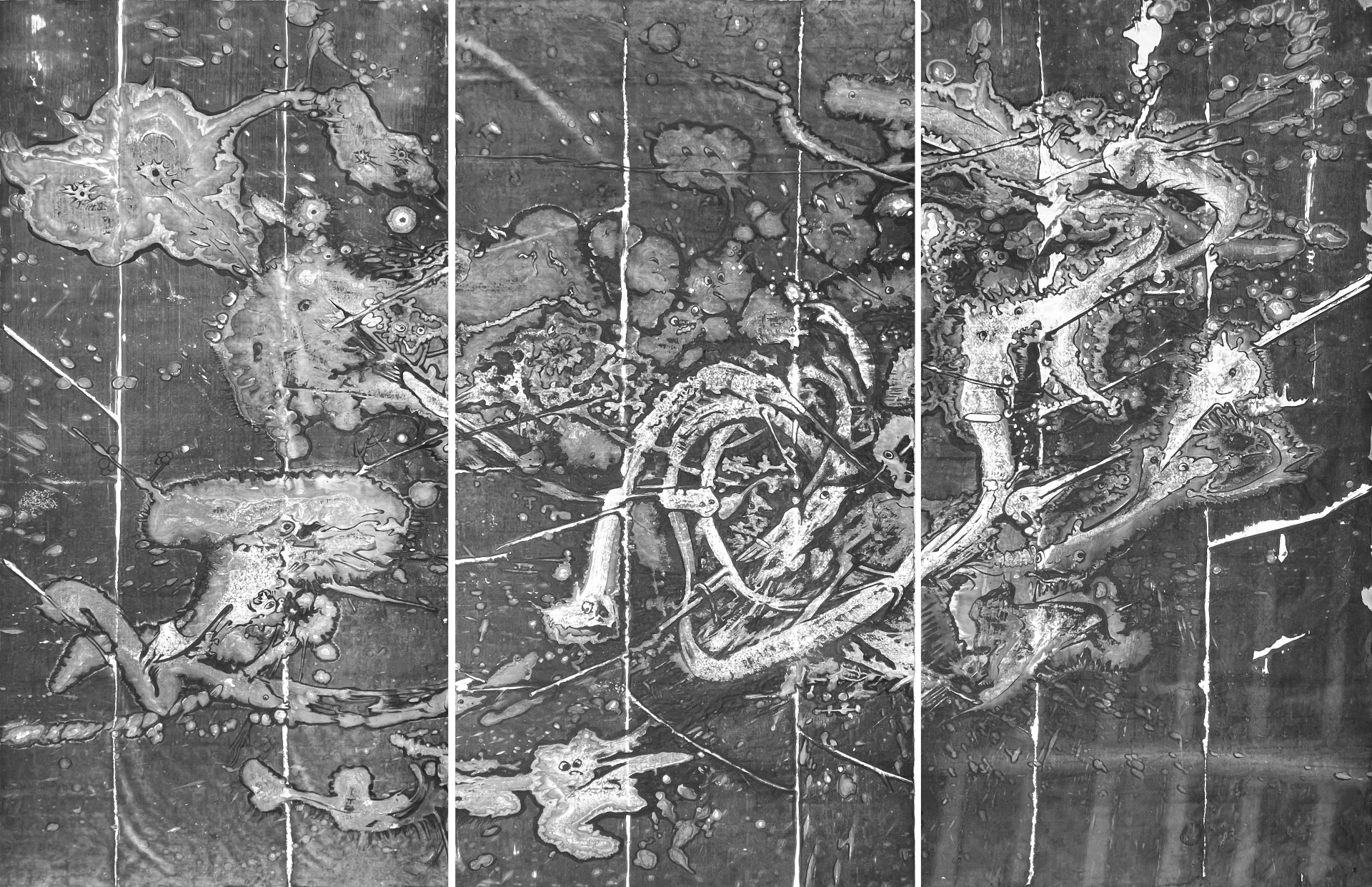
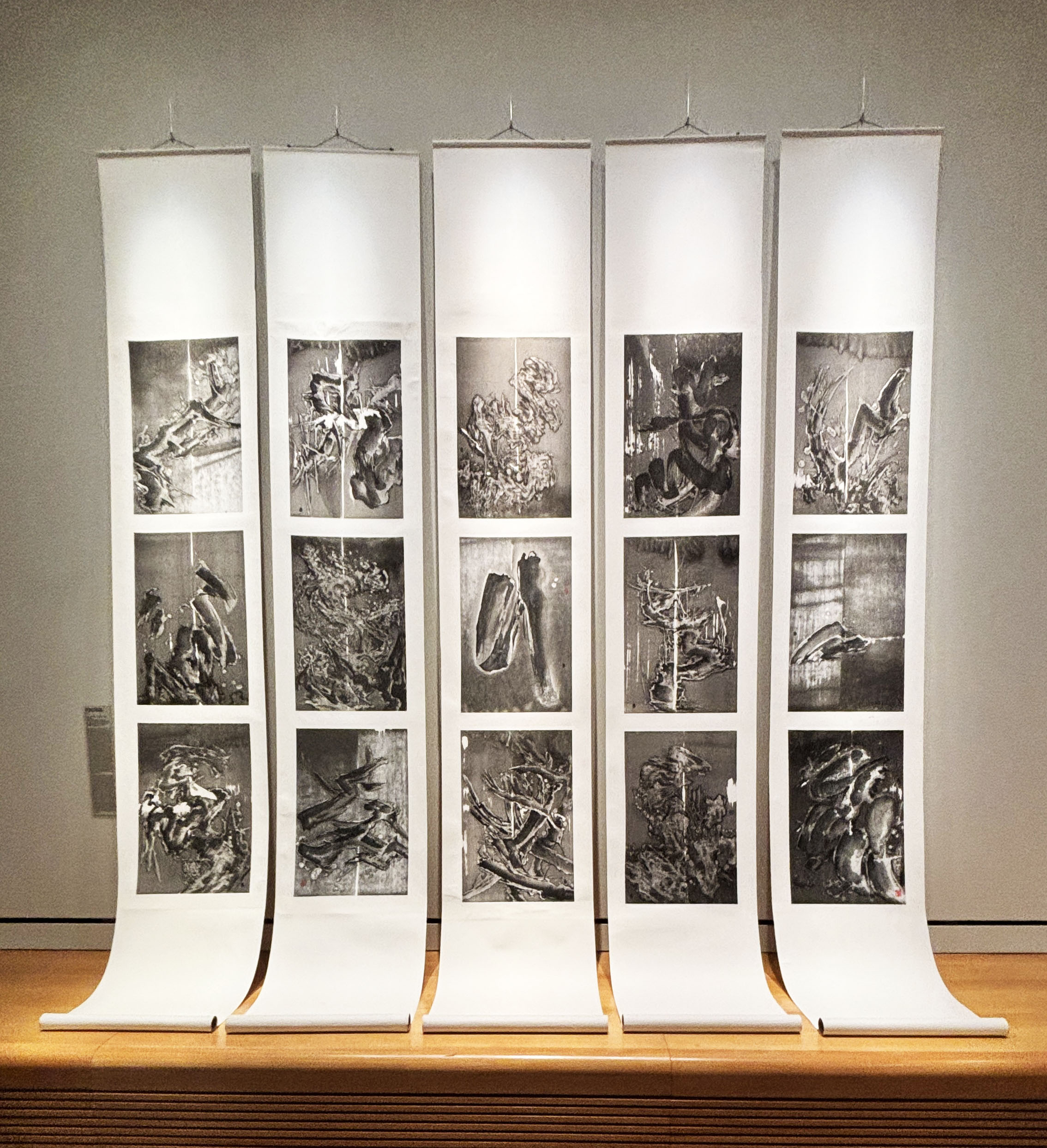
Northern Ocean, 2023, 3 hanging scrolls, Chinese ink on Xuan paper, 200 x 70 cm per hanging scroll (mounted).
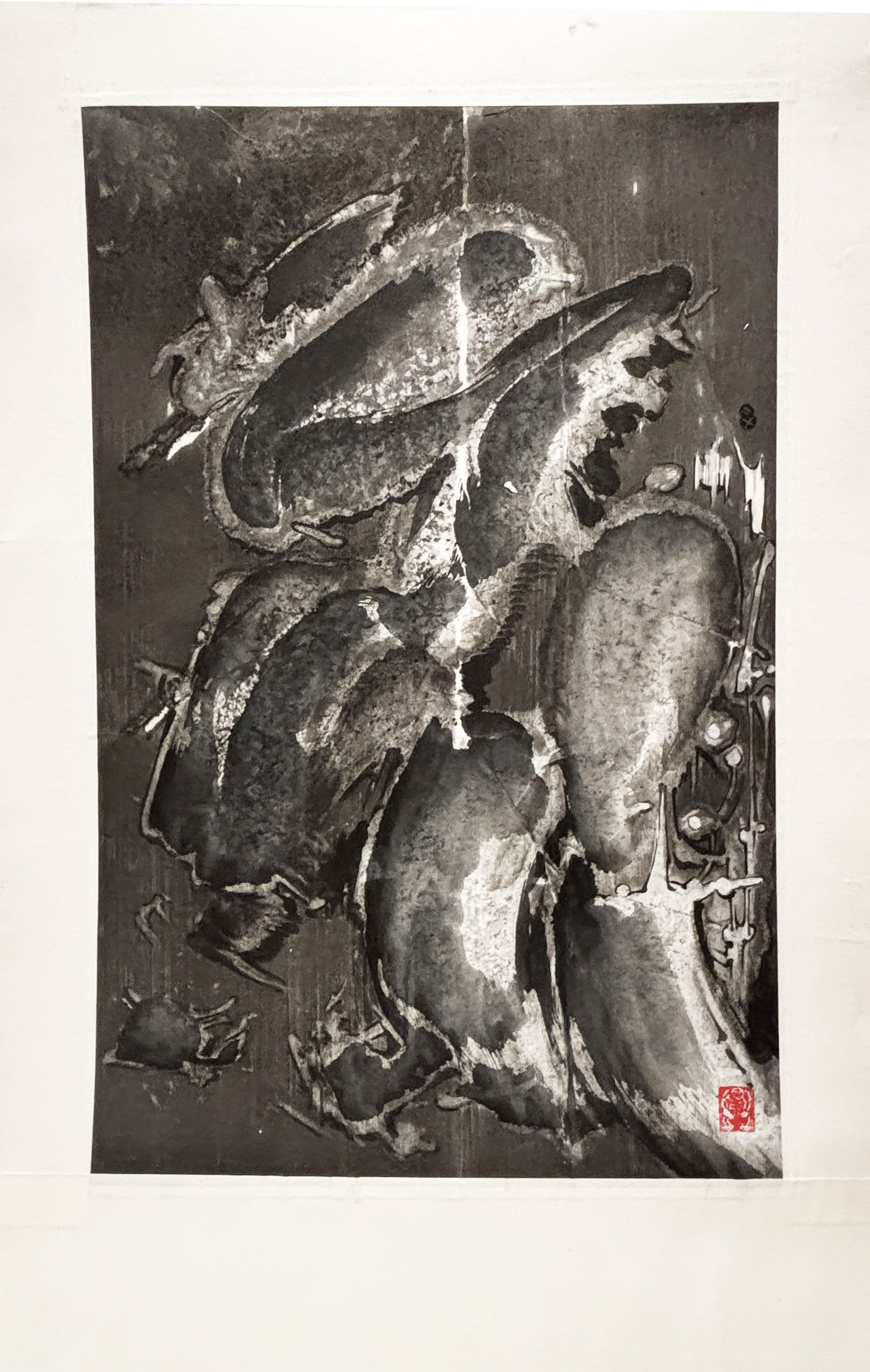
Pan describes his working method as “paper on ink” – a reversal of the traditional “ink on paper.” Water is first applied to the front of the xuan paper, ink to the back. The absorbent material reacts in ways that cannot be fully controlled; control gives way to interaction.
This inversive approach echoes long-standing East Asian principles: thinking in white, drawing in black; emptiness as an active component of form. In Daoist terms, the paper becomes an agent through non-action (wuwei). Pan refers to himself, with quiet irony, as a “background painter.”
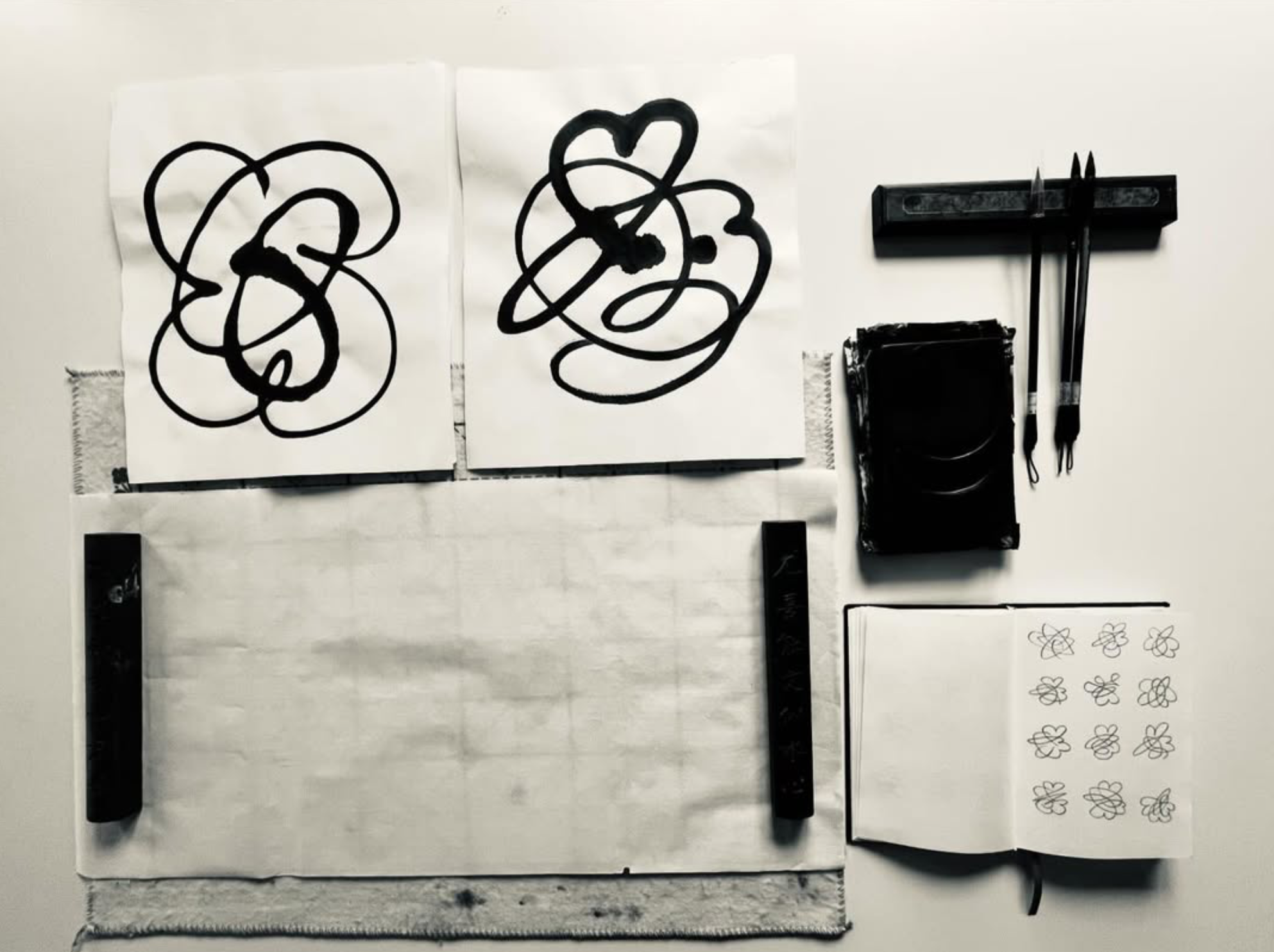
Pan always cleans up his table before he jumps into new ideas.
His practice is grounded in a mindful engagement with the three fundamental elements of traditional Chinese calligraphy and painting – brush, ink, and paper. Shaped by rigorous early training with the modernist calligrapher Wang Dongling, major commissions for international world expositions, and sustained intercultural work, Pan positions ink today as a living medium within contemporary graphic art.
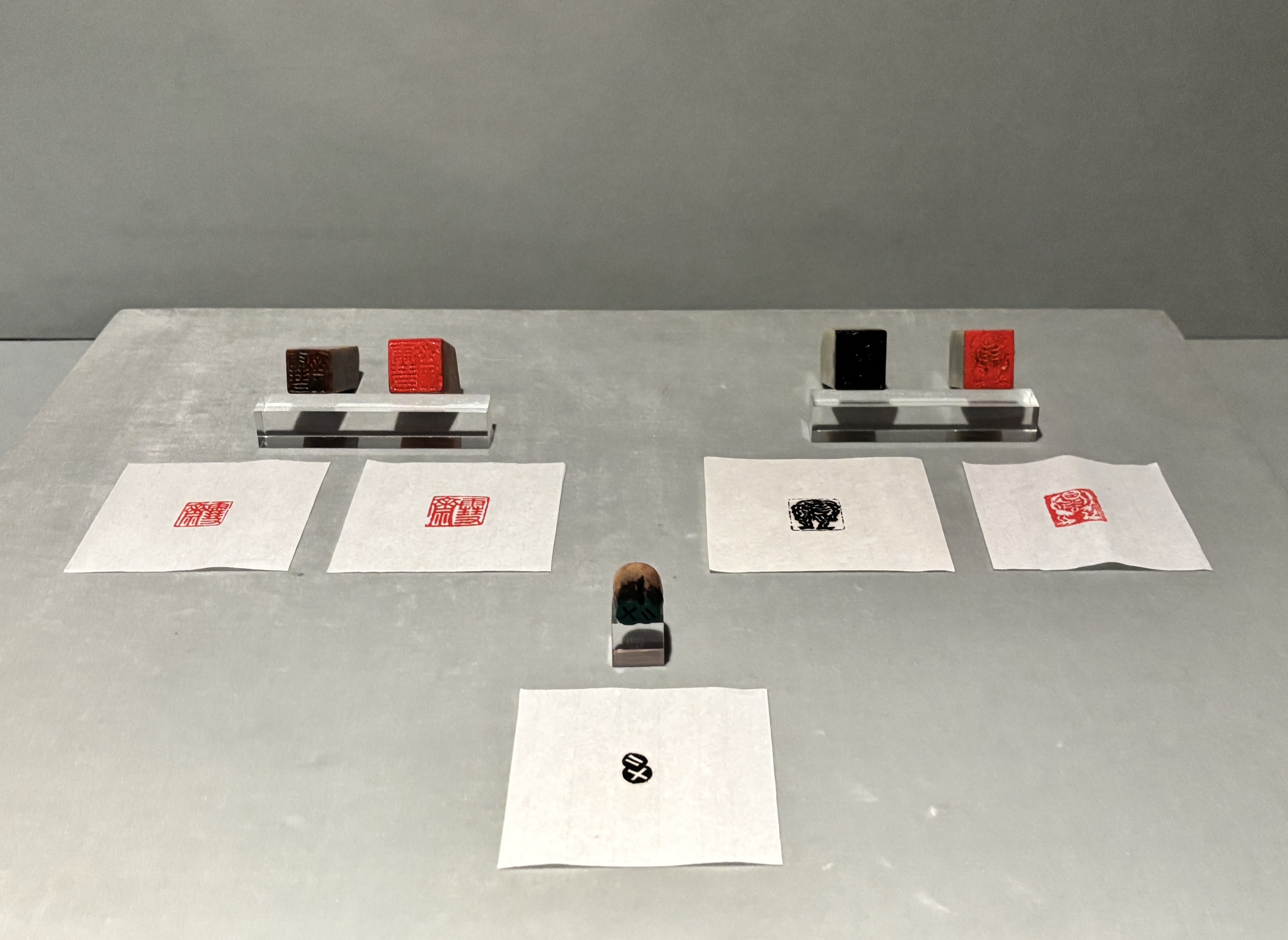
In East Asian art, the seal marks completion. Its placement requires contemplation; once stamped, the work is finished. Pan presents three core seals: Two were carved by his father; others are of his own design. His personal sign – derived from complex characters and reduced to a minimal “x”– functions almost like a logo: distilled, legible, essential.
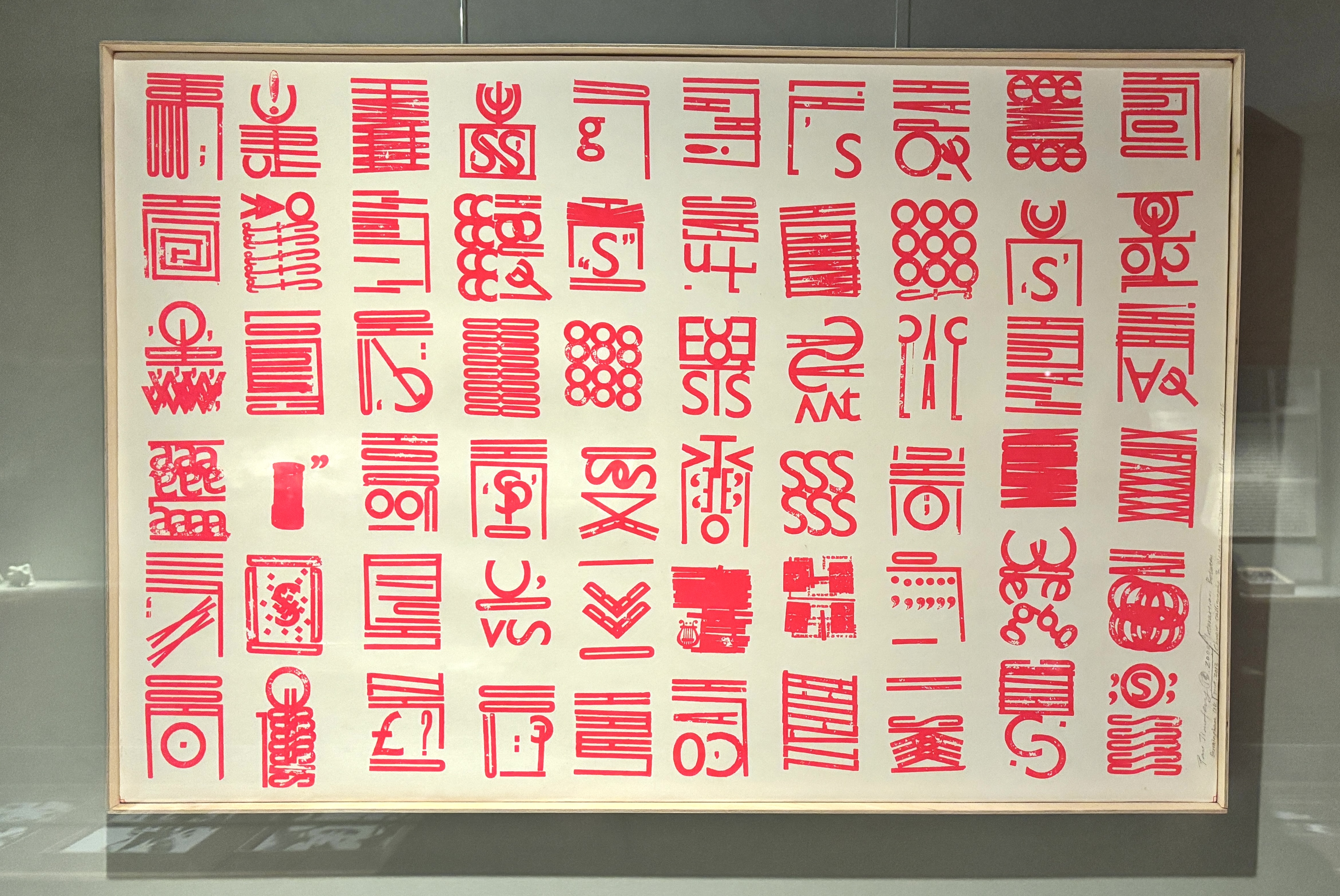
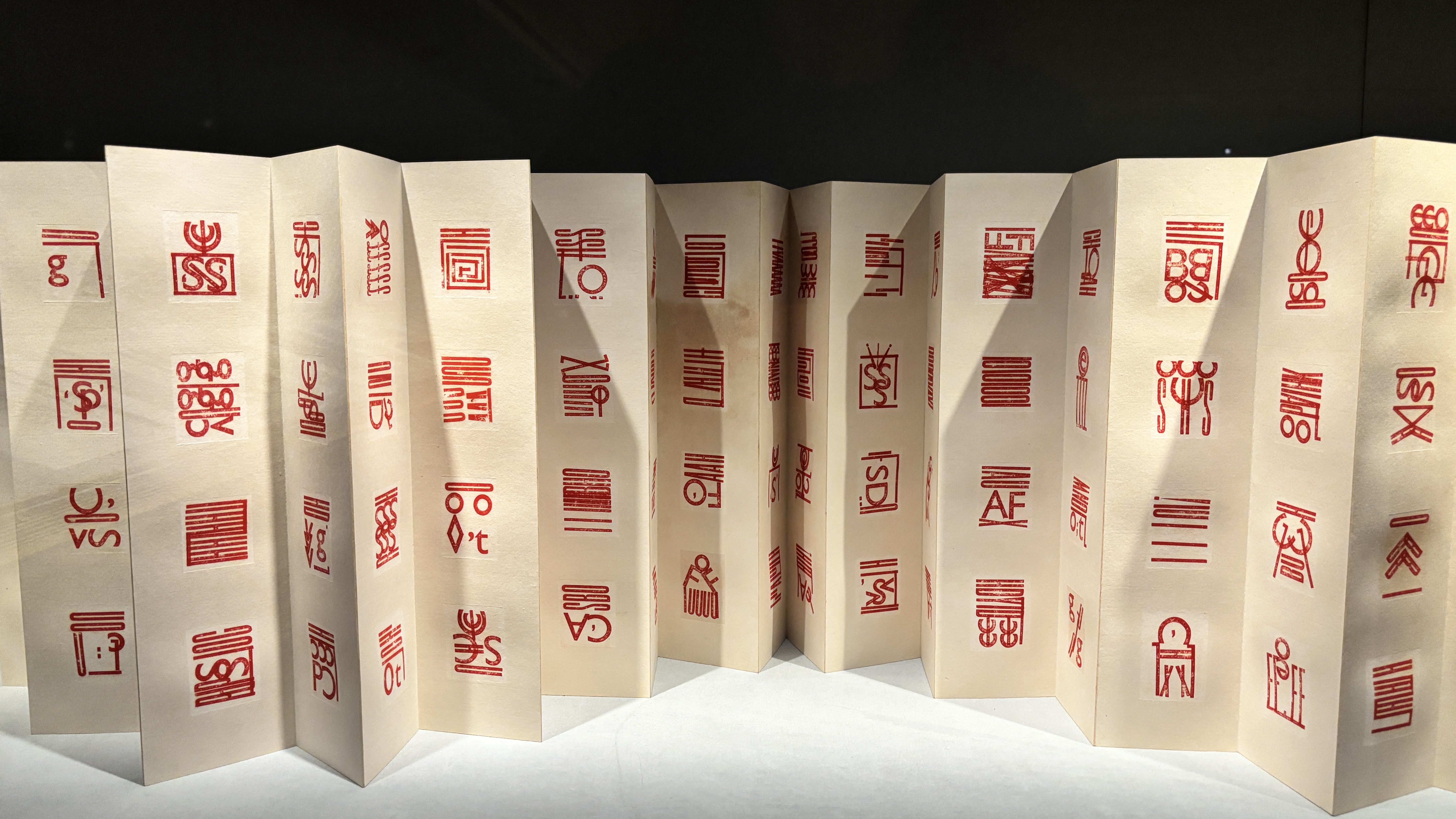
The silkscreen poster My Hundred Longevities (2003) revisits an earlier folding album created in 1999. While “longevity” has become a contemporary buzzword, the concept itself is deeply rooted in Chinese culture, where it has carried symbolic, philosophical, and visual meaning for centuries. The work translates this long cultural lineage into a contemporary graphic language.
Teaching is also integral to Pan’s practice. Through workshops, he shares methods that combine ink, concentration, and movement, often incorporating Qi Gong exercises. The principle is simple: a healthy body enables a clear mind.
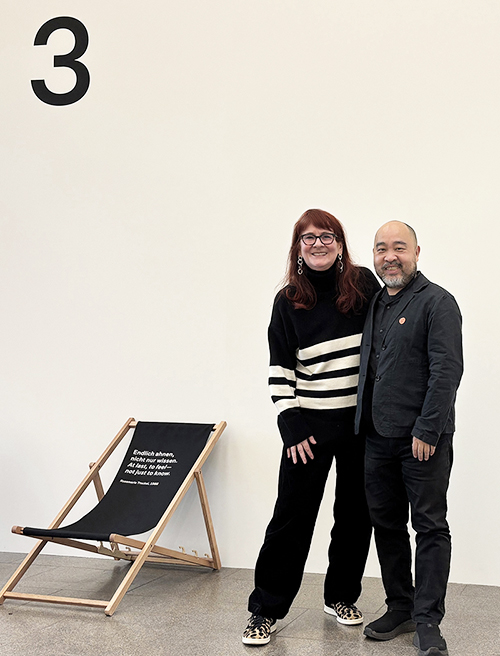
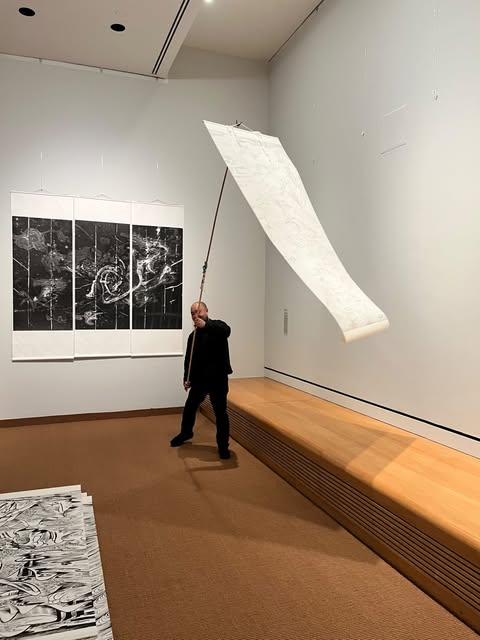
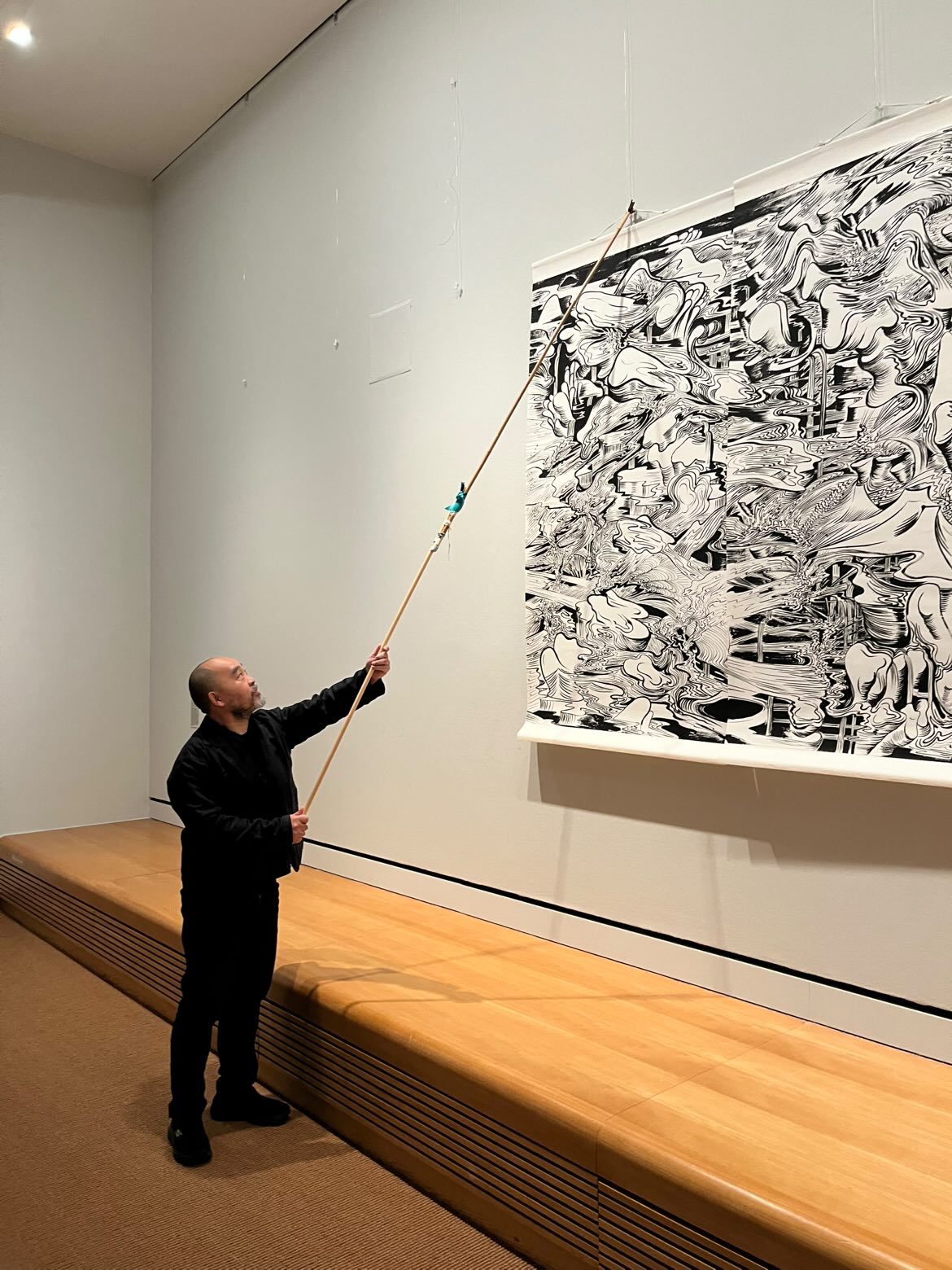
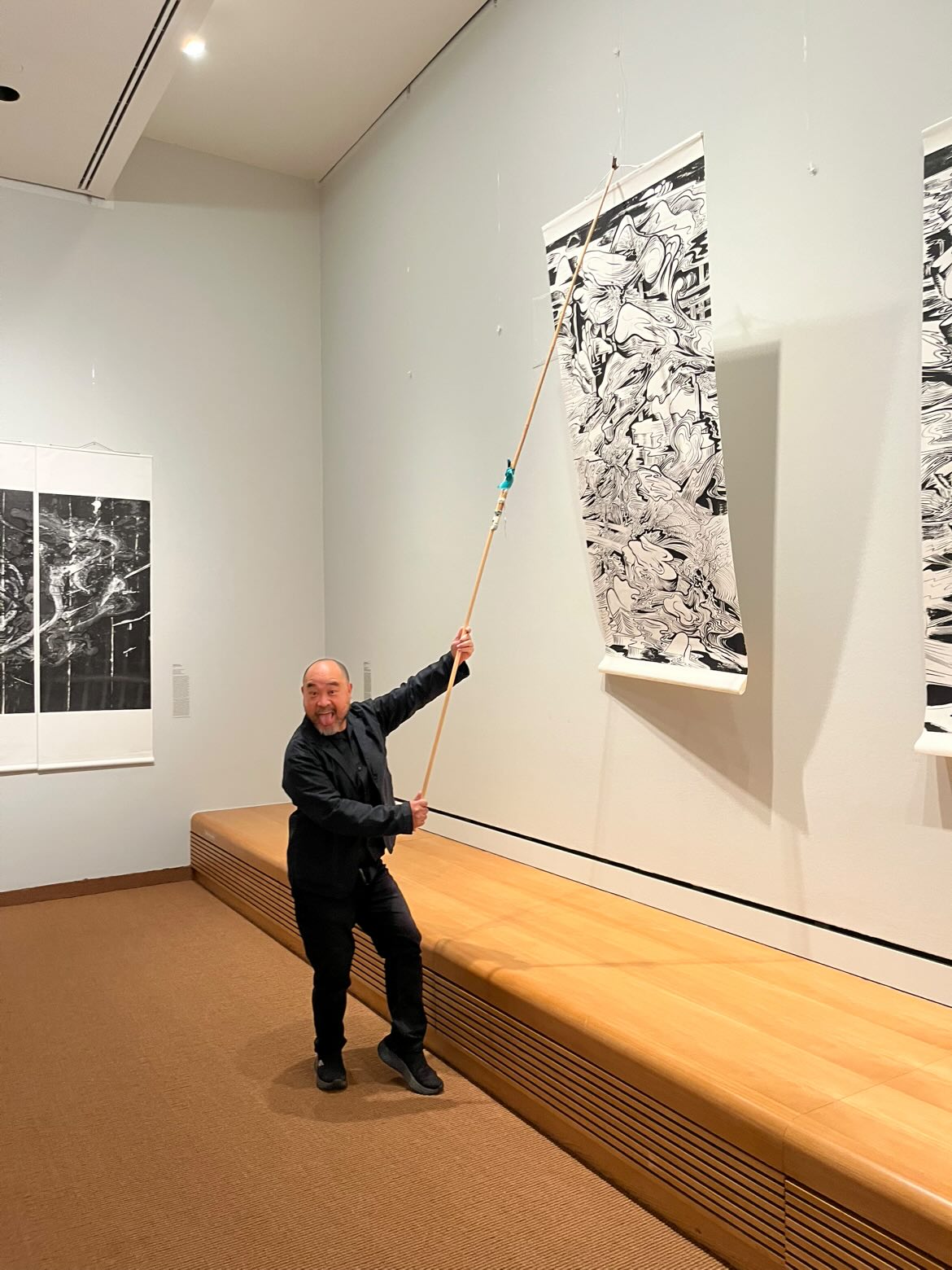
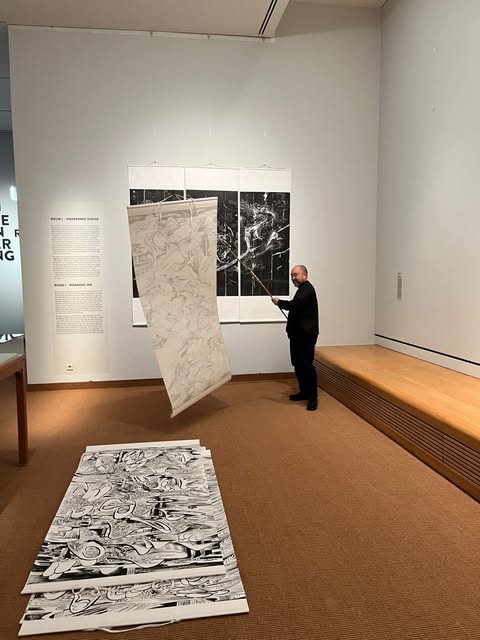
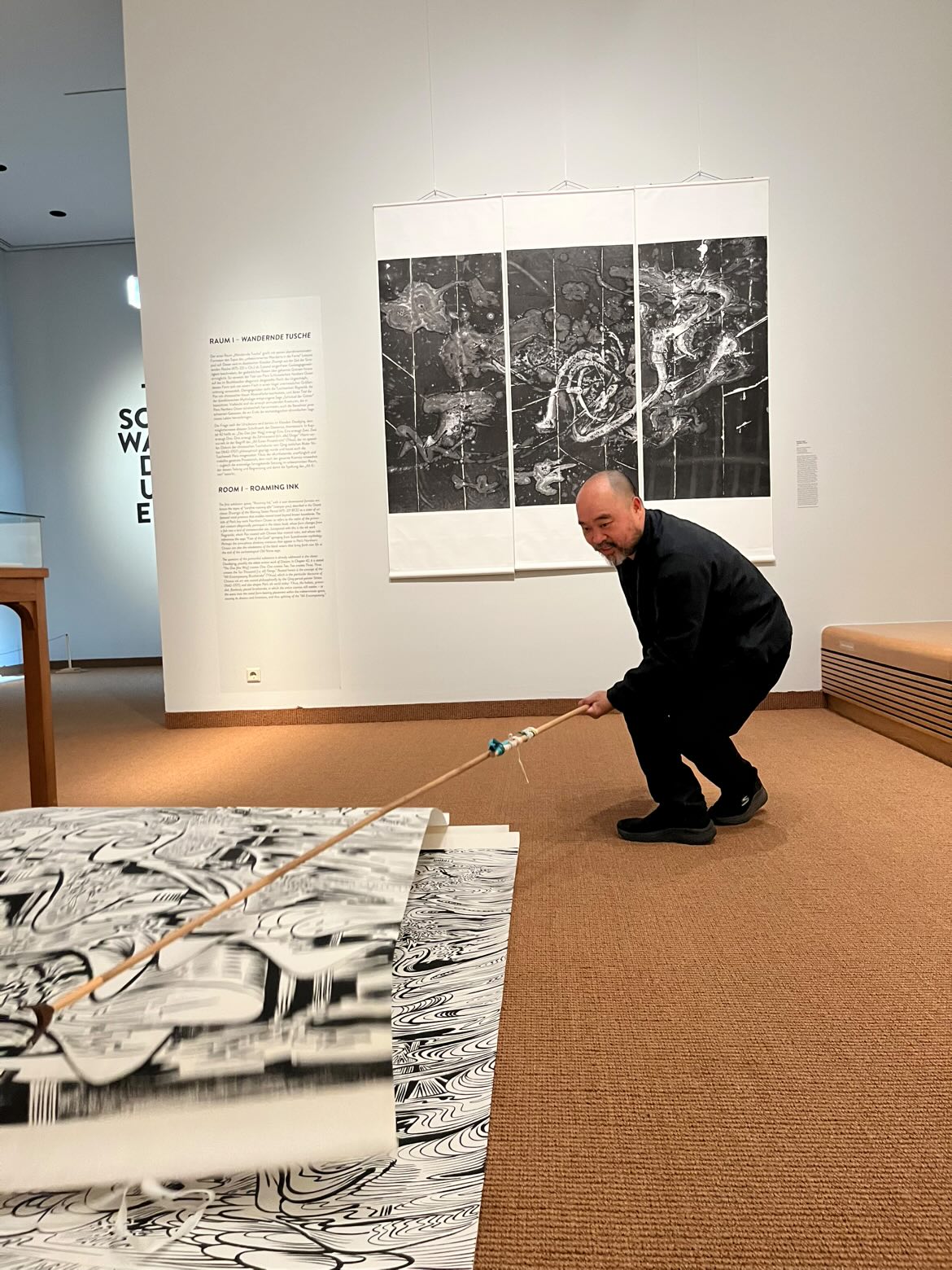
Footnote: I met Jianfeng Pan in person on the occasion of his exhibition at the Museum of East Asian Art in Cologne. Here you see us at the K20 Museum in Düsseldorf and him dismantling his exhibition. Photos Cologne: Anna Hillcoat-Imanishi.
If you would like to see more, visit his website or his Insta Account.
Website: panjianfeng.com / Instagram: @inklink
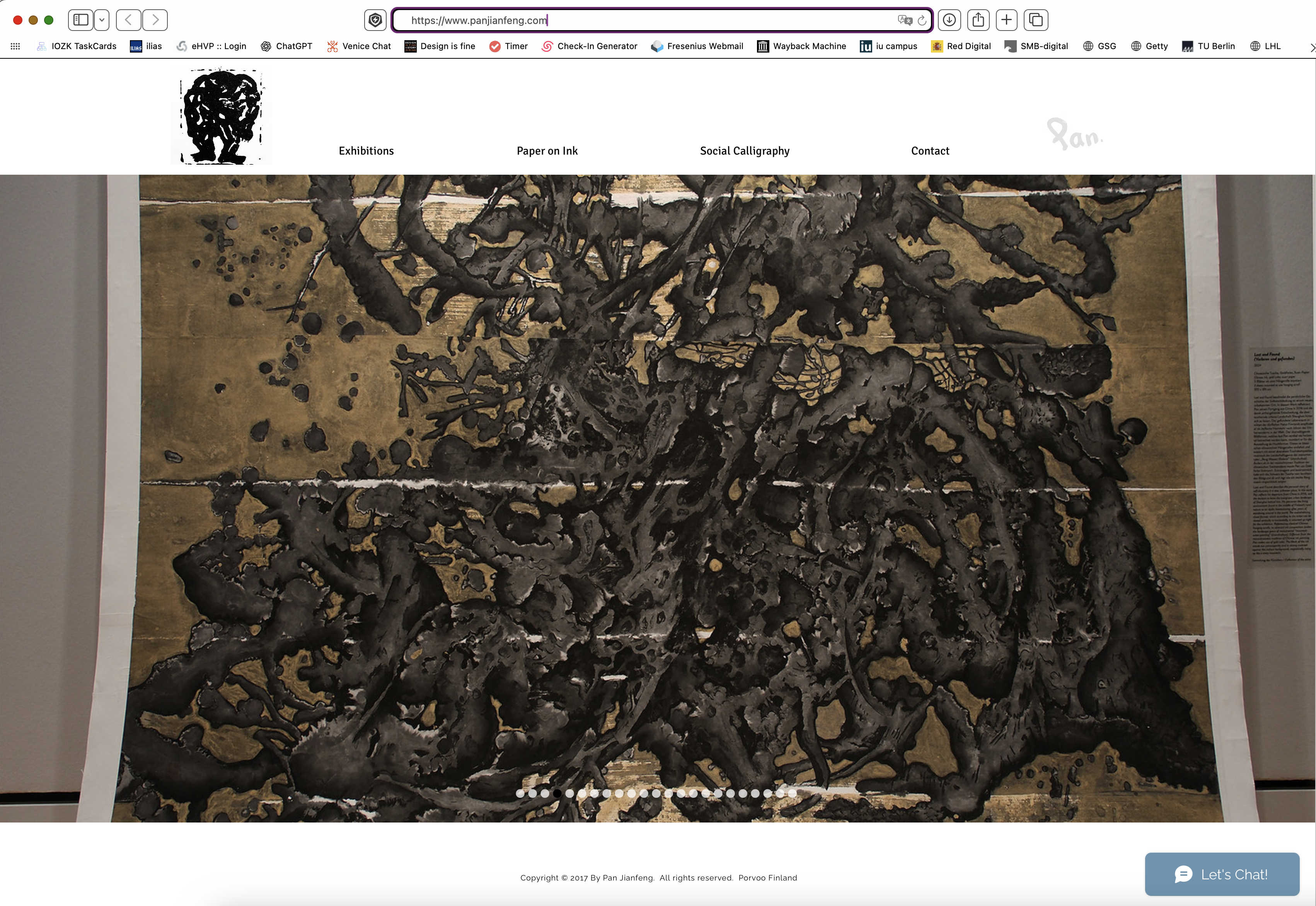
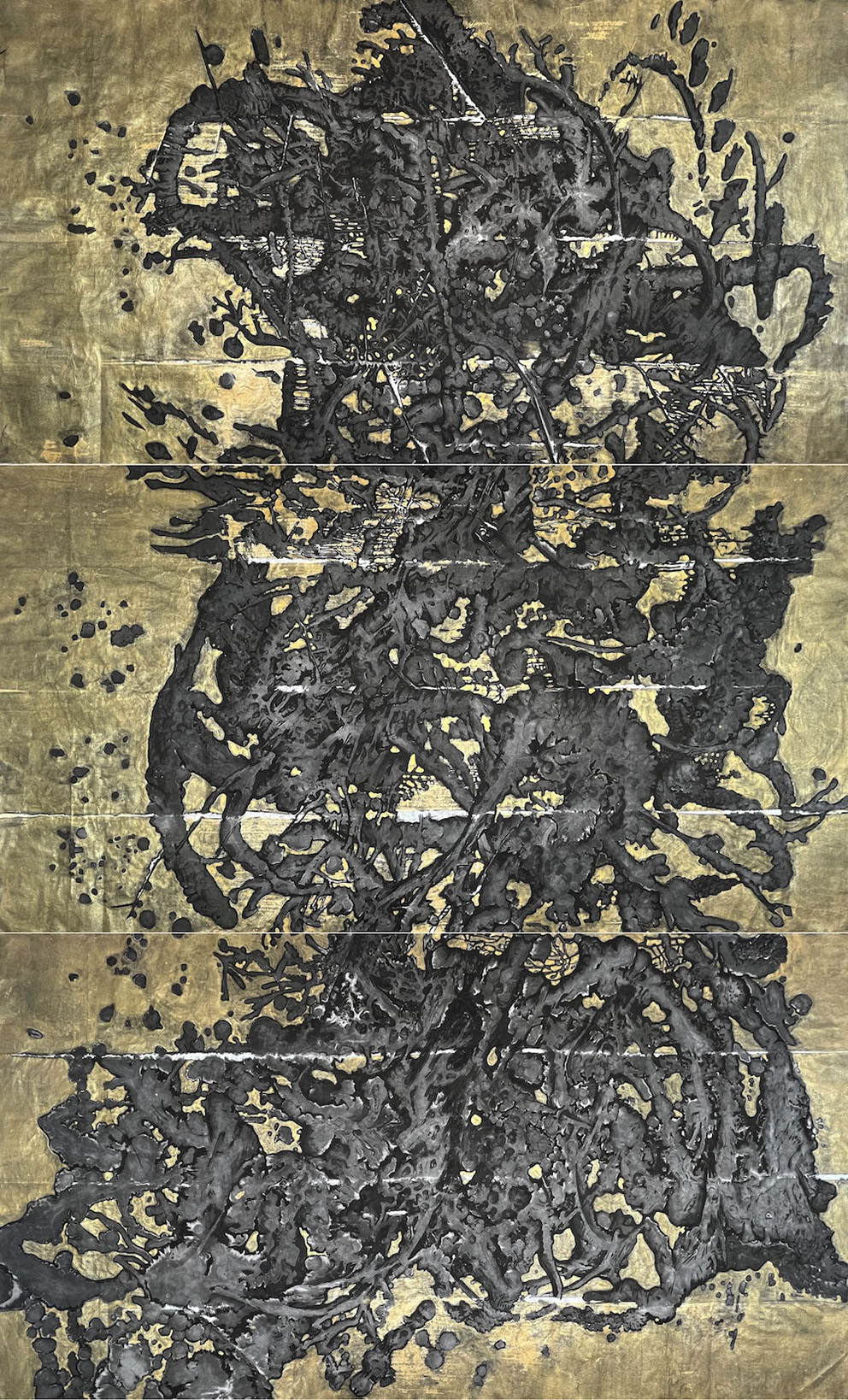
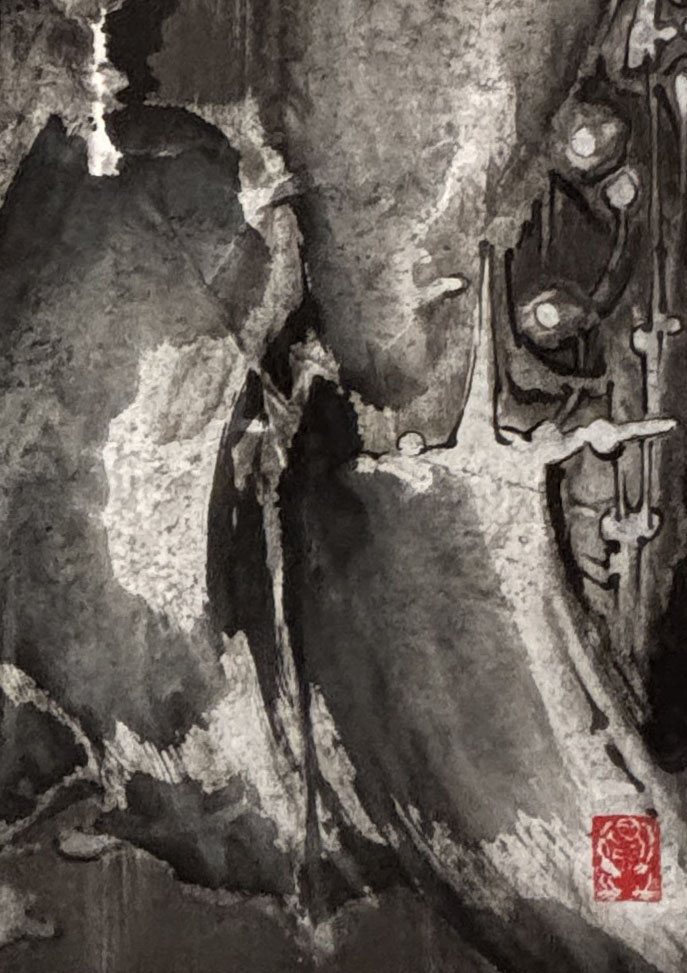
From the website: Lost and Found (detail), 2024, hanging scroll, Chinese ink and gold paint on Xuan paper, 370 x 185 cm (mounted)
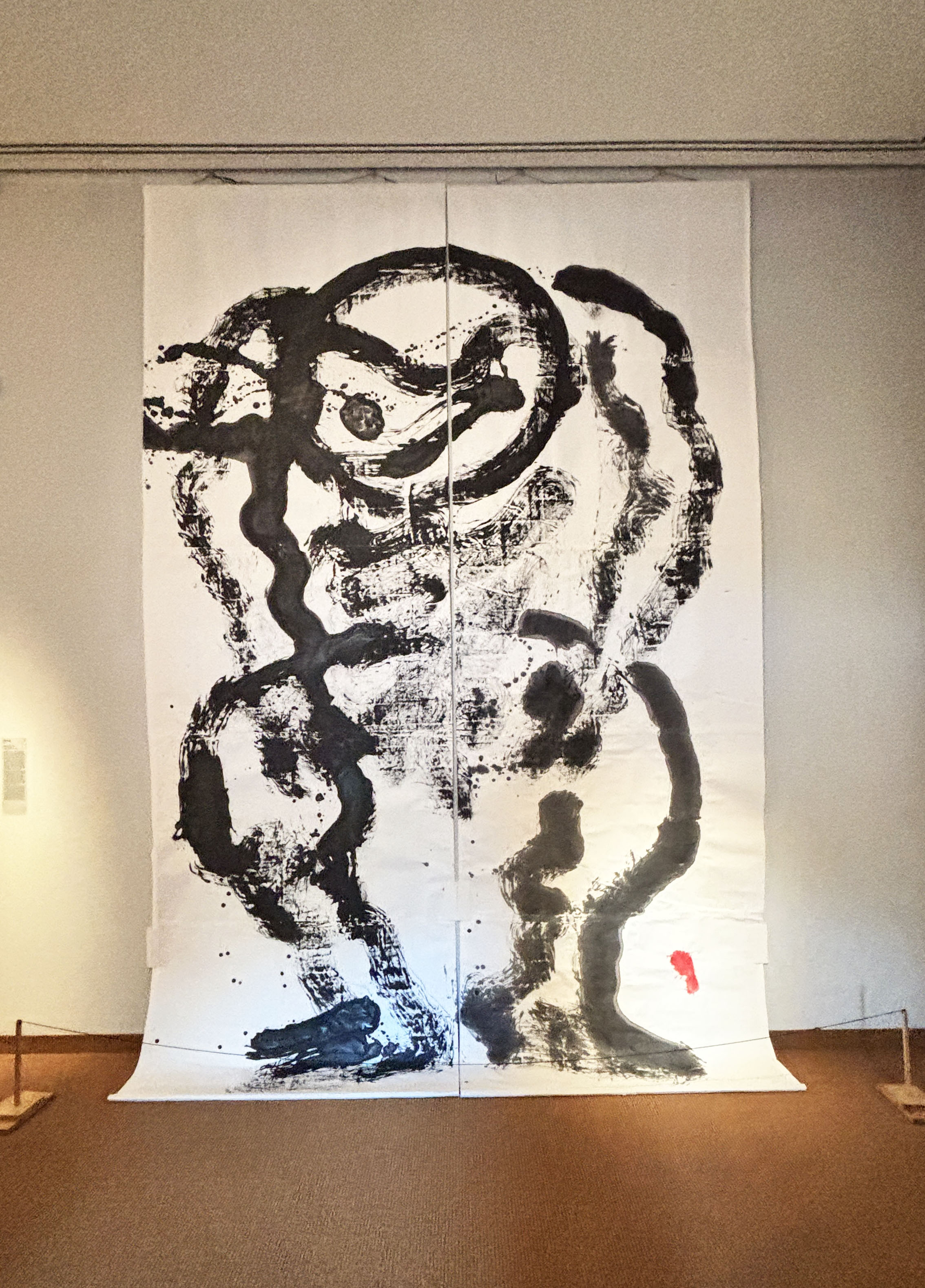
A three-metre-high self-portrait did welcome visitors to the exhibition in Cologne.
 Design is fine. History is mine.