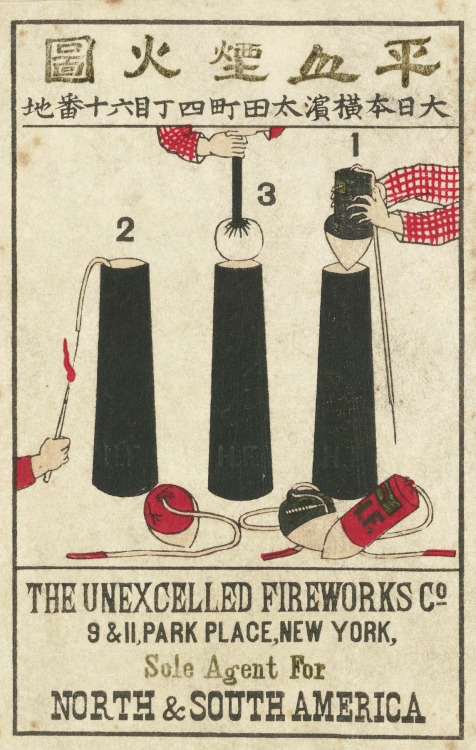
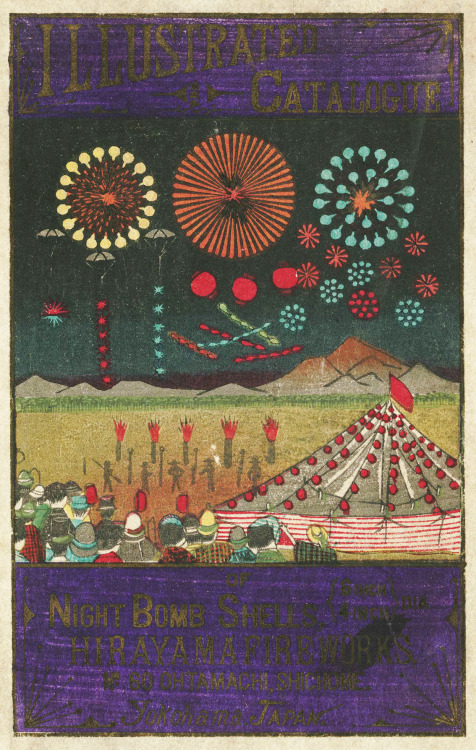

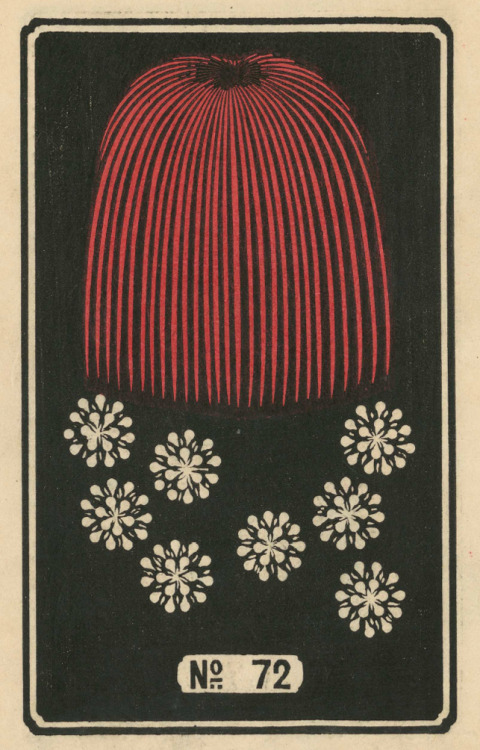


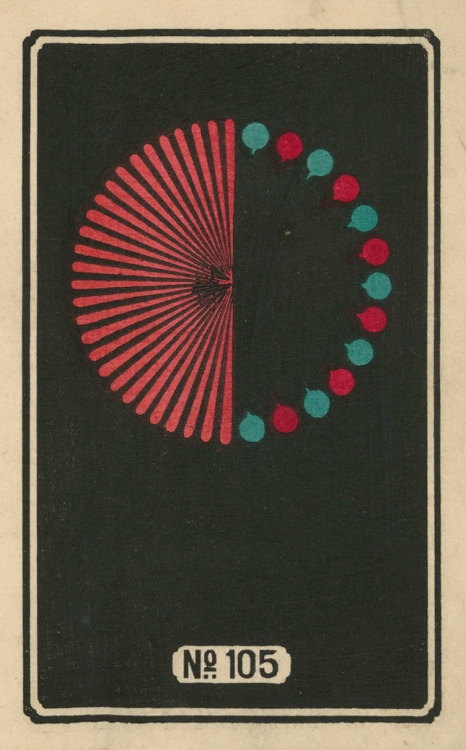
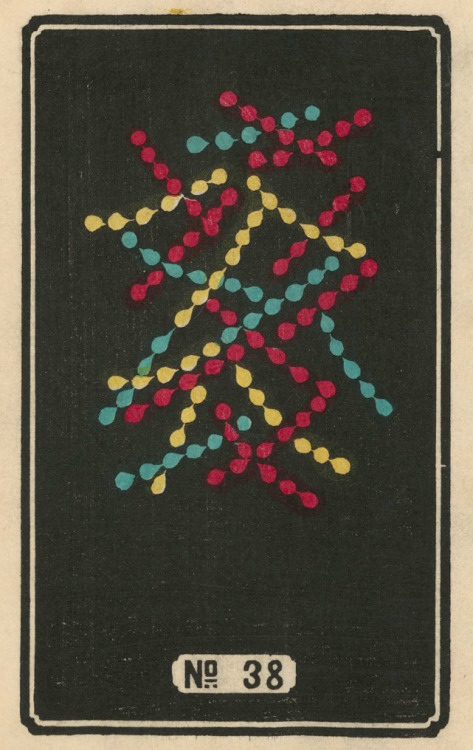
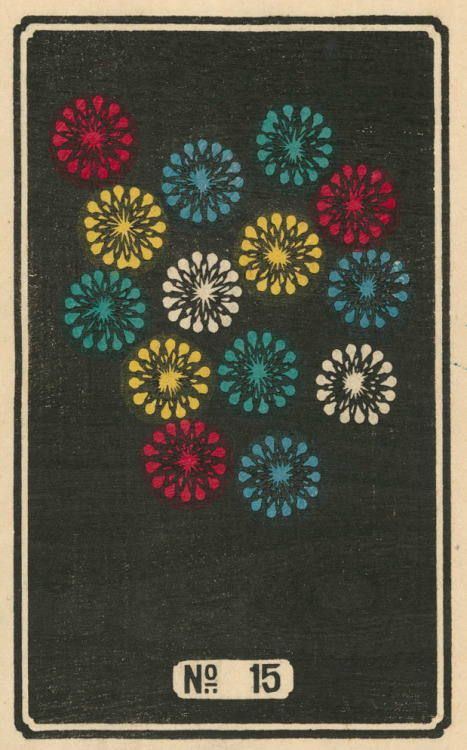
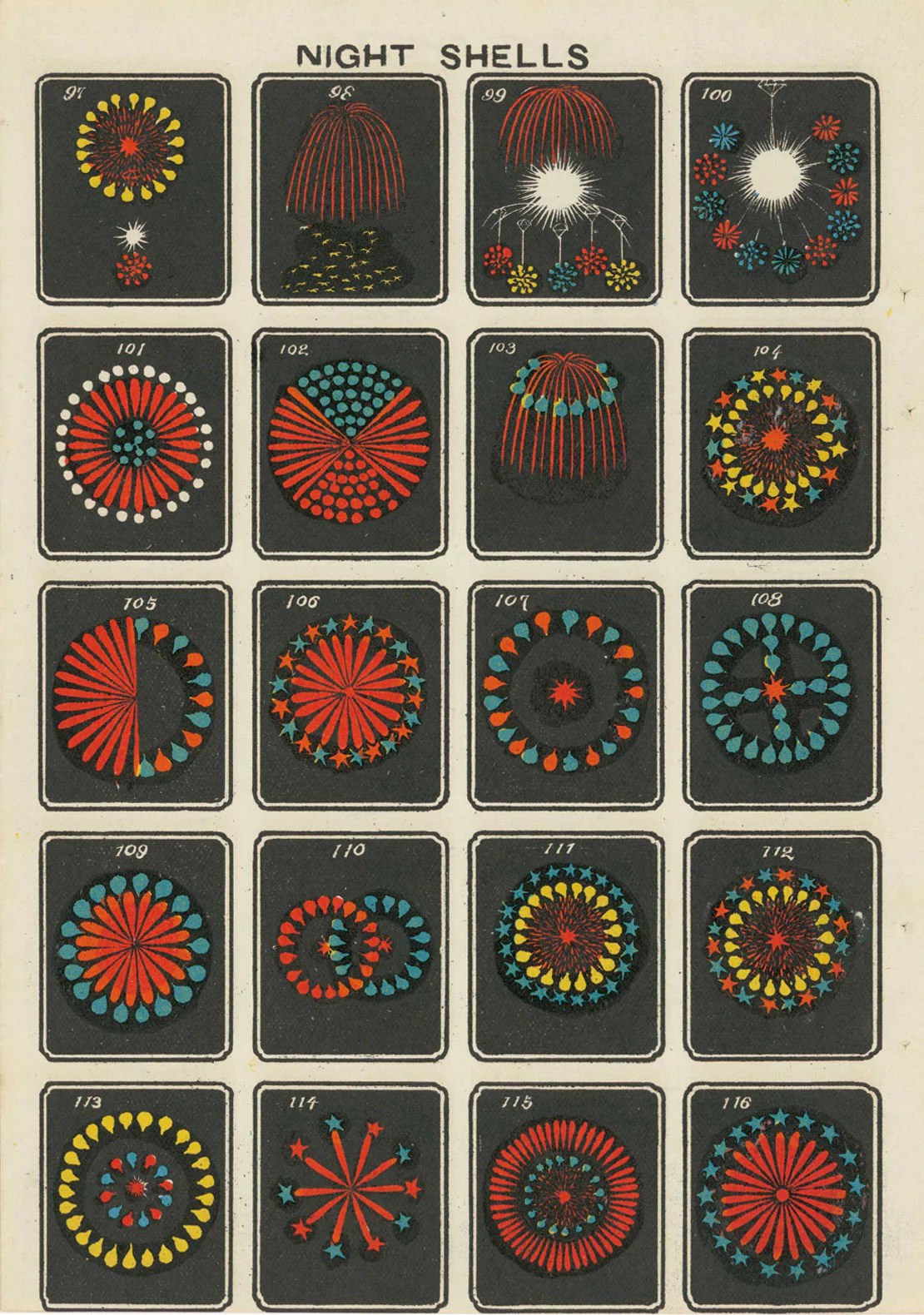
From the Hirayama Fireworks company, early 1900s. Via present & correct
First introduced in the 1600s, Japanese fireworks, known as hanabi, played a pinnacle role in global pyrotechnic innovation regarding shape, colour, and design. The development of hanabi (which translates directly to fire flower) started small, based on early versions of flares, but they were soon woven into the culture of public life, their roots set deep in the socio-political history of Japan, where the artisanal pyrotechnic craft became its own unique art form.
Fireworks hold cultural significance as physical and metaphorical symbols of ephemeral beauty within the Japanese culture, sitting at the unique intersection where the arts and science collide. Discover the history of the artisinal craft of hanabi, artfully preserved in nineteenth century Uikyo-e prints.
Fireworks trace their origins to ancient China, around 200 BCE, when the Chinese first discovered that bamboo could explode when thrown into a fire. The hollow air pockets in bamboo would heat up, expand, and eventually burst, creating a loud bang. The sound was thought to ward off evil spirits and was used to celebrate major events.
In the 9th century, Chinese alchemists inadvertently created gunpowder by mixing saltpeter (potassium nitrate) with sulfur and charcoal. This combination, initially aimed at creating a potion for immortality, resulted in an explosive powder instead. When this gunpowder was placed inside bamboo tubes and lit, it produced an bright explosion similar to those we see in modern pyrotechnics.
First introduced to Japan in the early seventeenth century, fireworks became central to both global pyrotechnic innovation and Japanese cultural expression. Their development began small, based on early versions of flares, but they were soon woven into the culture of public life, with the artisanal pyrotechnic craft evolving as its own unique art form. While their roots are set in the socio-political history of Japan, they also hold cultural significance as physical and metaphorical symbols of ephemeral beauty. Their shapes, colours, and effects represent some of the most pioneering achievements in pyrotechnics, sitting at the unique intersection of artistry and technical mastery.
In 1733, the shogun Yoshimune (1684–1751) hosted a grand fireworks display to commemorate those lost during a period of disease and famine that swept through Edo. The annual event, the Ryōgoku Kawabiraki Fireworks Festival, was established – a celebration that still exists to this day. This official backing was a key moment in pyrotechnic advancement, utilising a surplus in materials to create fireworks of all sizes and colours for grand public display.
Fireworks soon became an integral part of Edo’s culture, and following several considerable fires within the city, they were relocated to the banks of the Sumida River. Displays became popular along the river during the summer months, often funded by the rich merchants who passed through the city. Pleasure boats and stalls became commonplace with the public who flocked to the area to marvel at the pyrotechnic crafts of the firework masters. In 1733, the shogun Yoshimune (1684–1751) hosted a grand fireworks display to commemorate those lost during a period of disease and famine that swept through Edo. The annual event, the Ryōgoku Kawabiraki Fireworks Festival, was established – a celebration that still exists to this day. This official backing was a key moment in pyrotechnic advancement, utilising a surplus in materials to create fireworks of all sizes and colours for grand public display.
 Design is fine. History is mine.