Before you notice the musical instruments, you feel the space. Da Forli’s angels do not sit quietly within the picture, they hover above it. In these figures Renaissance perspective becomes an experience rather than a technical exercise.
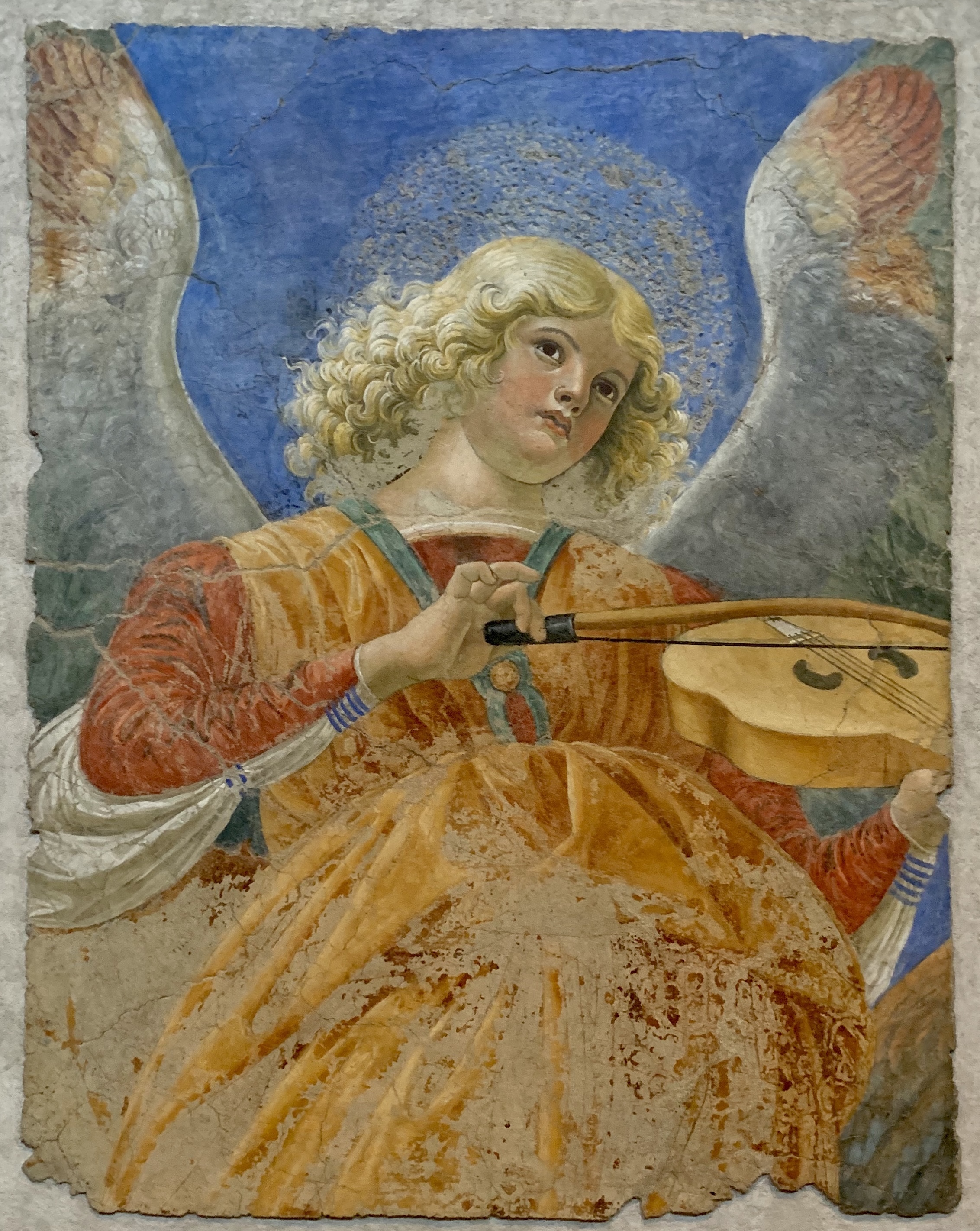
They are fragments of a much larger and now lost masterpiece: Originally part of the fresco The Ascension of Christ, painted around 1480, they survived as detached fragments, housed in the Vatican Pinacoteca. Together with fourteen figures of apostles and angels and the figure of Christ (now kept in the Quirinal Palace), they once formed the decoration of the apse vault of the Church of the Holy Apostles in Rome.
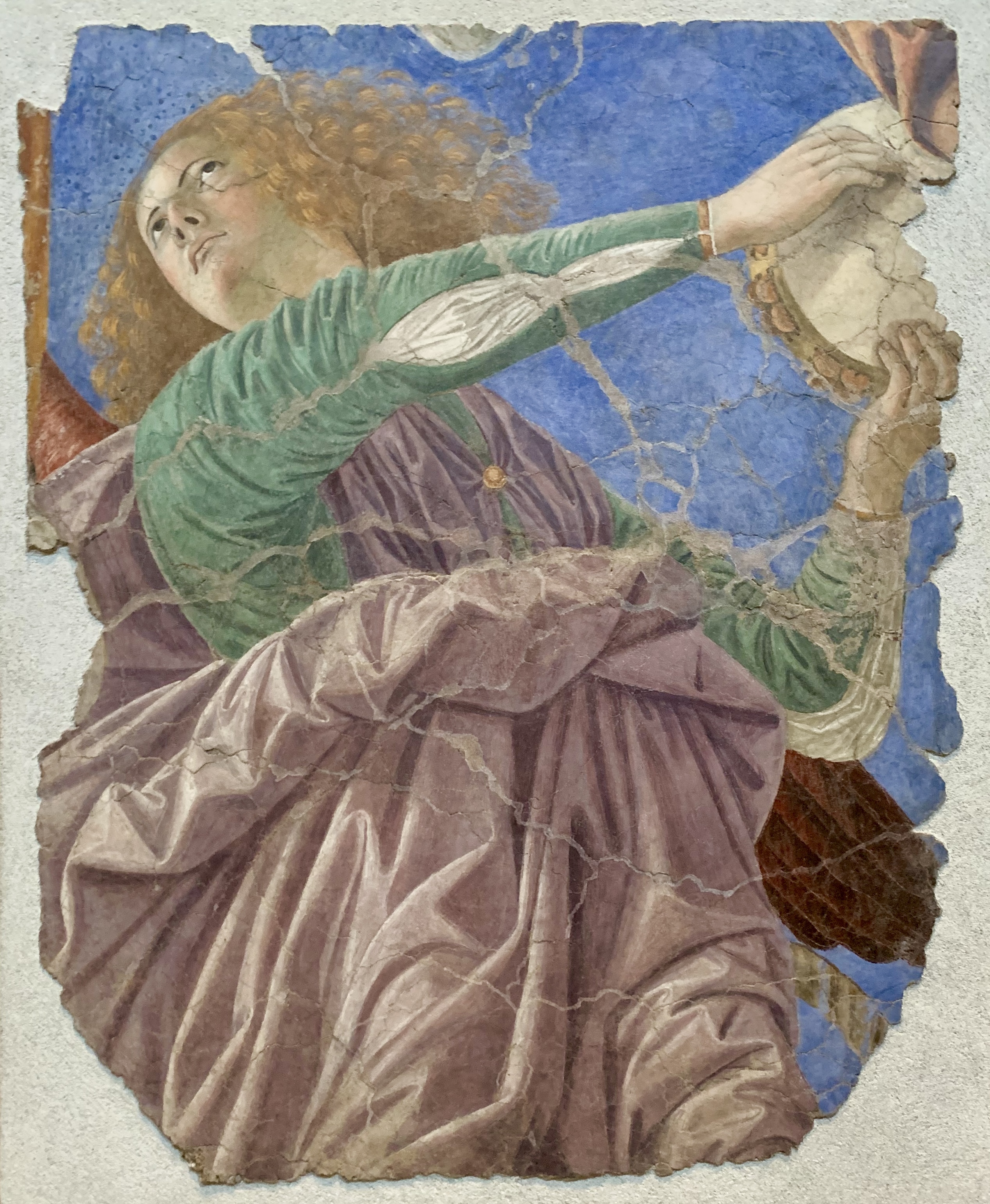
What makes the angels exceptional is not only their beauty and elegance, but their spatial realism. Melozzo da Forlì (circa 1438 – 1494) was a master of di sotto in sù, the dramatic foreshortening of figures seen from below. They appear to float above the viewer, their bodies twisting naturally in space, while their instruments are rendered with attention to structure and proportion.
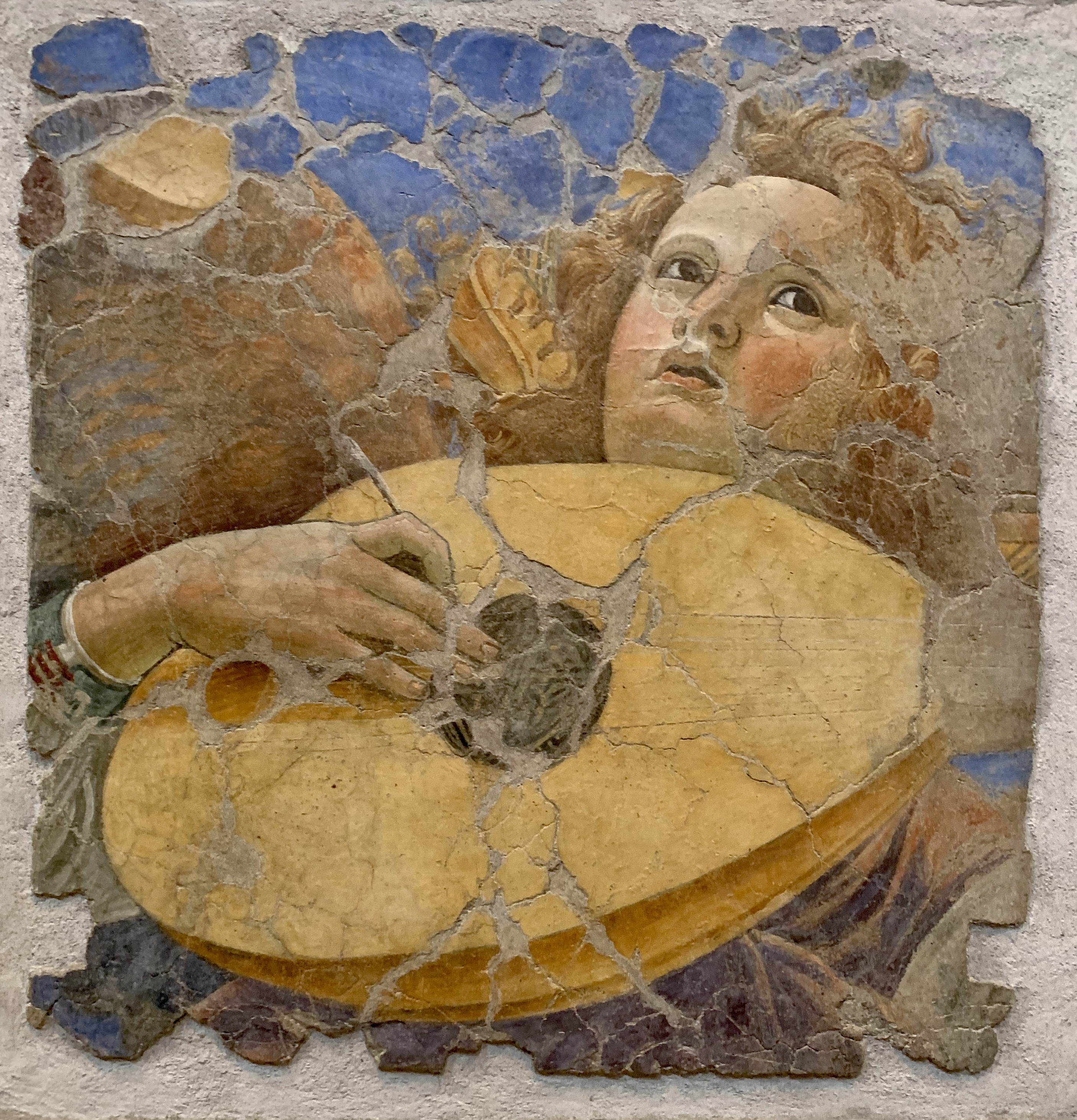
It reflects da Forlì’s deep engagement with perspective, shaped by his training as a disciple of Piero della Francesca, one of the key theorists of Renaissance space. Piero was not only a great painter but also (especially later in life) a mathematician, and his treatises on geometry and perspective helped establish a new rational way of constructing space that influenced a next generation of artists.

Unlike the typical symbolic or just decorative angelic figures common at the time, these beautiful musicians feel active and present. They play and listen. Music here is not just harmony, but a physical act unfolding in real space. It is a key moment in Renaissance painting, where mathematical innovation and poetic imagination meet just perfectly.
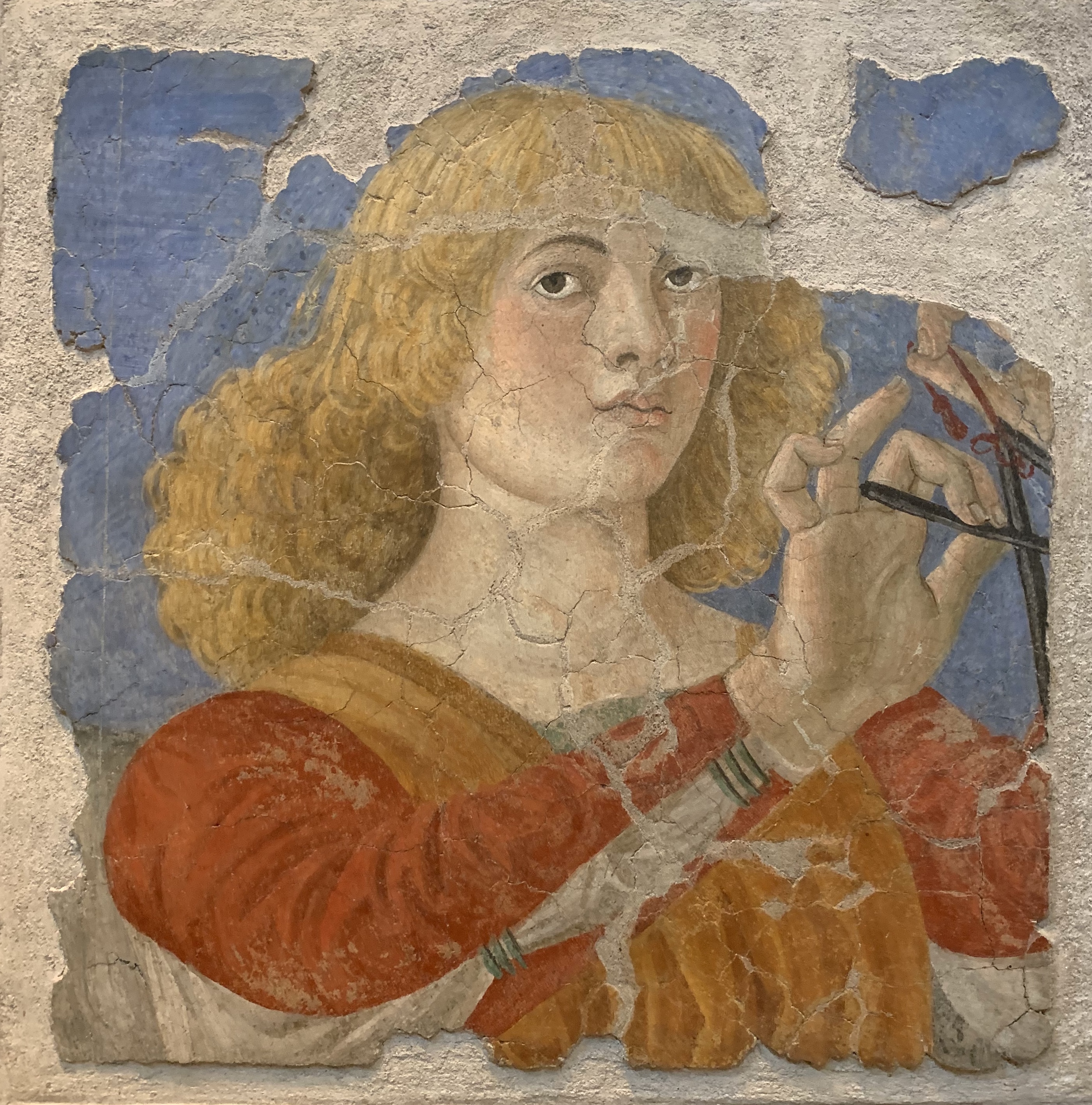
In 1477, Melozzo da Forlì was appointed one of the official painters of the papal court, a role that placed him at the center of artistic innovation in the city. His work was highly regarded by contemporaries not only for its perspective skills but for its ability to integrate painting with architecture. He is documented as returning to his native Forlì later in life, where he died in 1494.
Angeli musicanti, gruppi d’angioletti e apostoli, v. 1472-1475. Source: Province de Sienne
 Design is fine. History is mine.