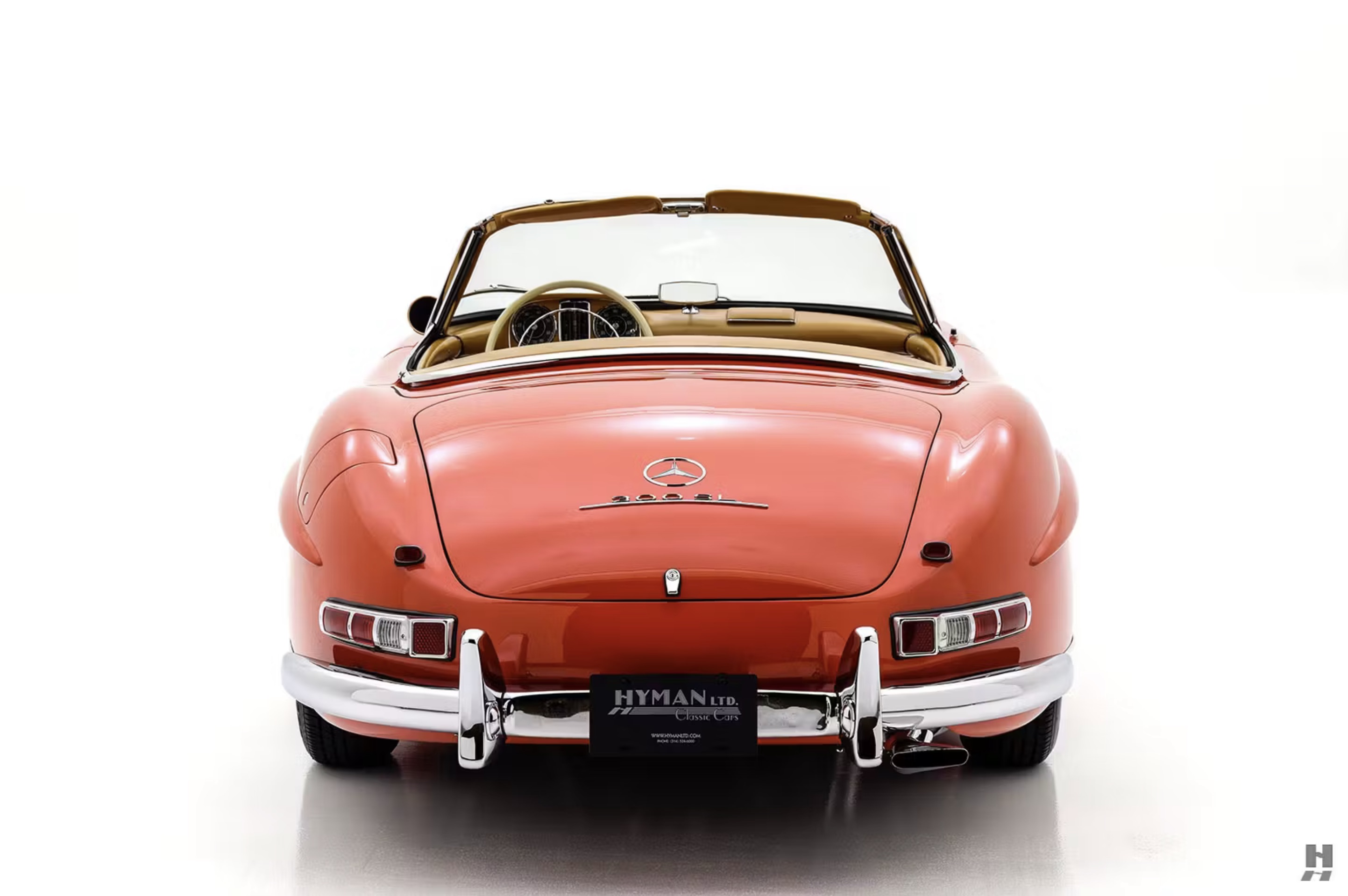
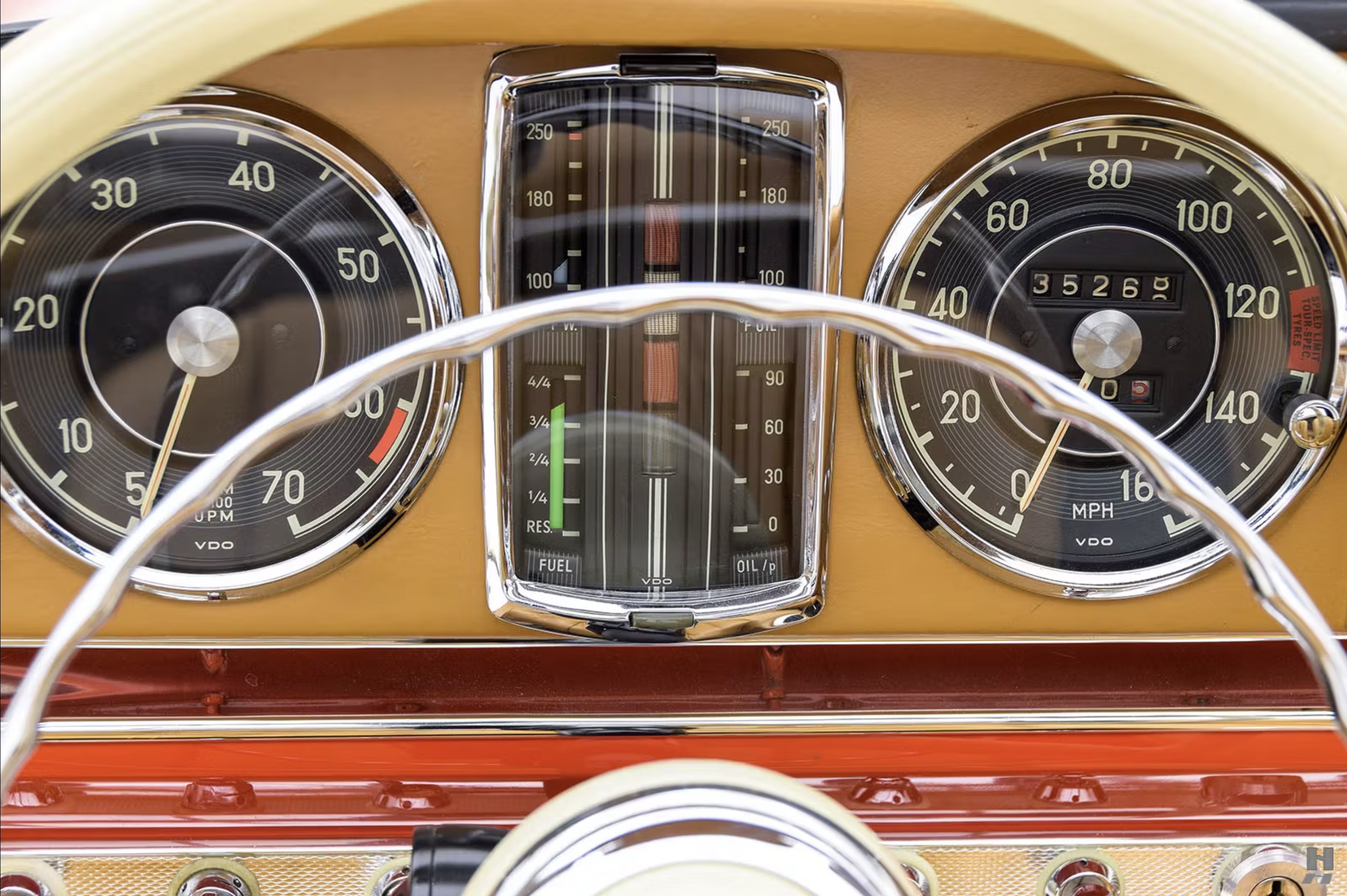
What a beauty: Produced from 1957 onwards, this Roadster was a brilliant blend of advanced engineering and exceptional design. Powered by the famous inline six-cylinder engine with 170 PS, it could reach up to 260 km/h – a remarkable performance for its era. With its smooth and sleek look, it is a true icon today.
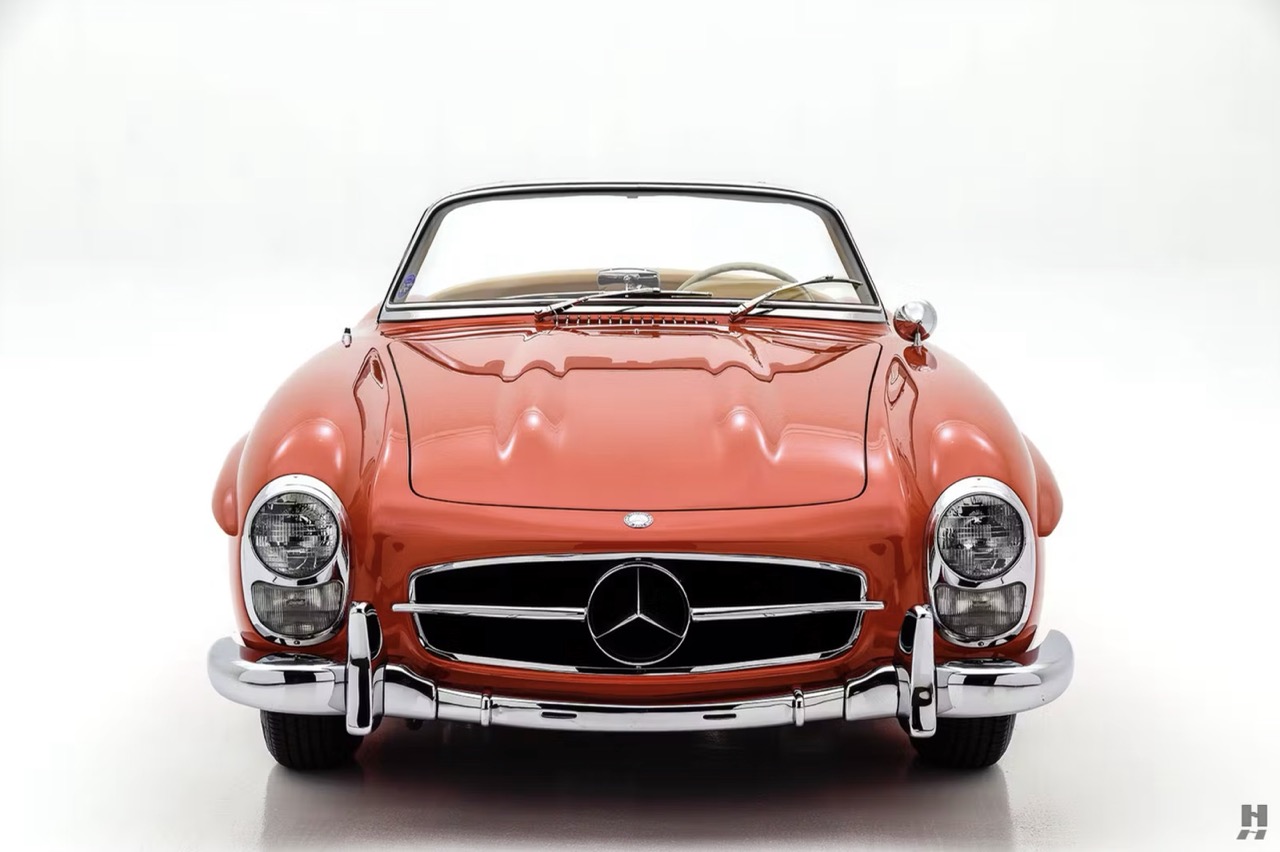
Usually, a road car is developed first and later adapted for racing. With the 300 SL, the process was reversed. The distinctive gullwing coupé introduced in 1954 was directly based on the competition car that had triumphed at the Carrera Panamericana and the 24 Hours of Le Mans in 1952. The close connection to motorsport shaped the character of the car.
Rudolf Uhlenhaut (1906–1989) was a British-German engineer and head of racing and development at Mercedes-Benz. Known for testing his own prototypes, he shaped the dynamic character of the brand’s postwar sports cars. His experience in motorsport led to the development of the lightweight space frame that became the technical core of the 300 SL.
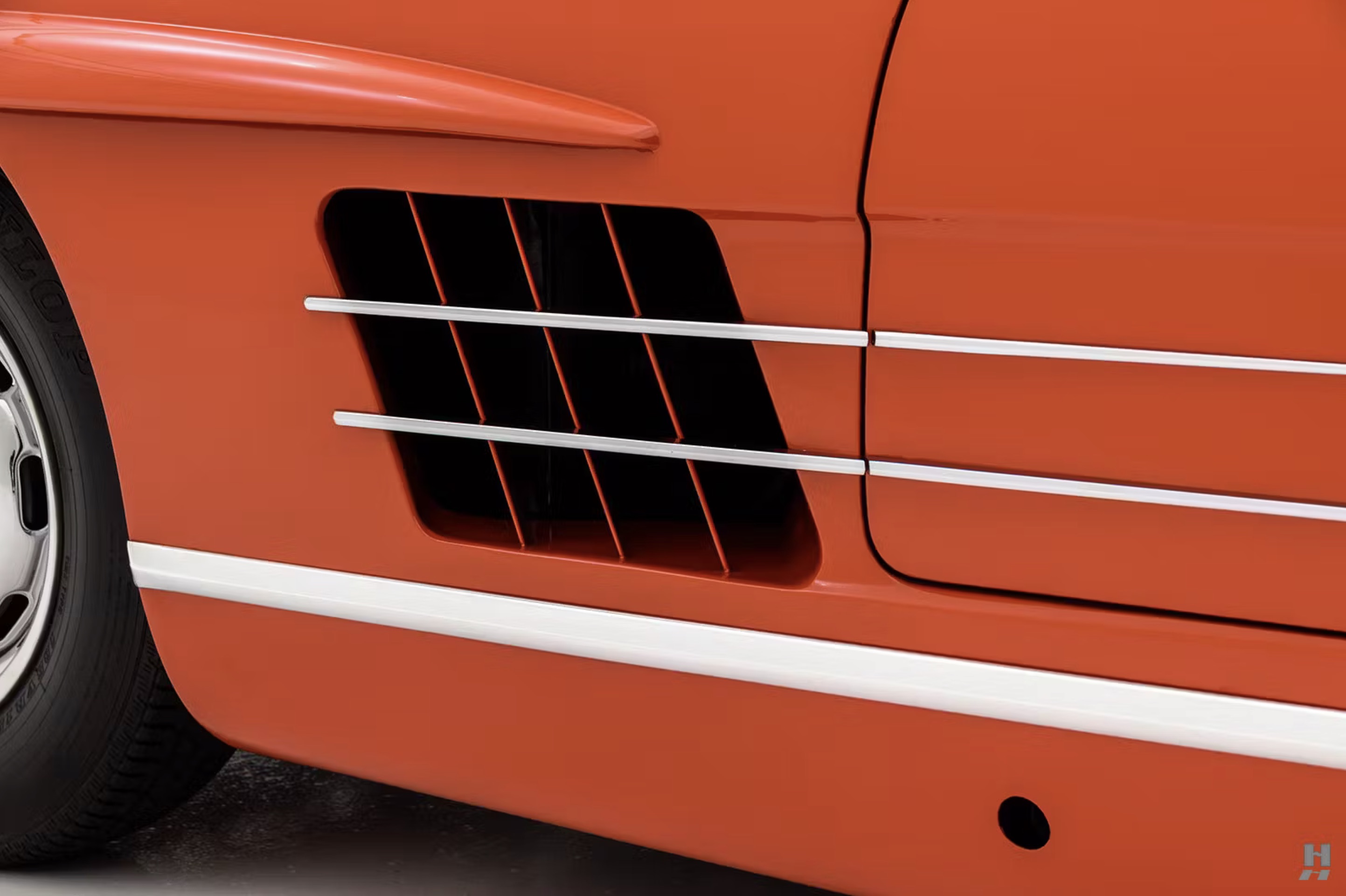
The design came from Friedrich Geiger (1907–1996), bodywork designer and later head of design at Daimler. With its flowing lines, balanced proportions, and refined details, the 300 SL became one of the most beautiful automobiles of its time and an aesthetic reference for later Mercedes models.
Fast, elegant, and exclusive: only 1,858 Roadsters were produced between 1957 and 1964. Today, a well-preserved car can reach more than one million dollars at auction — a lasting symbol of technical excellence and timeless beauty.
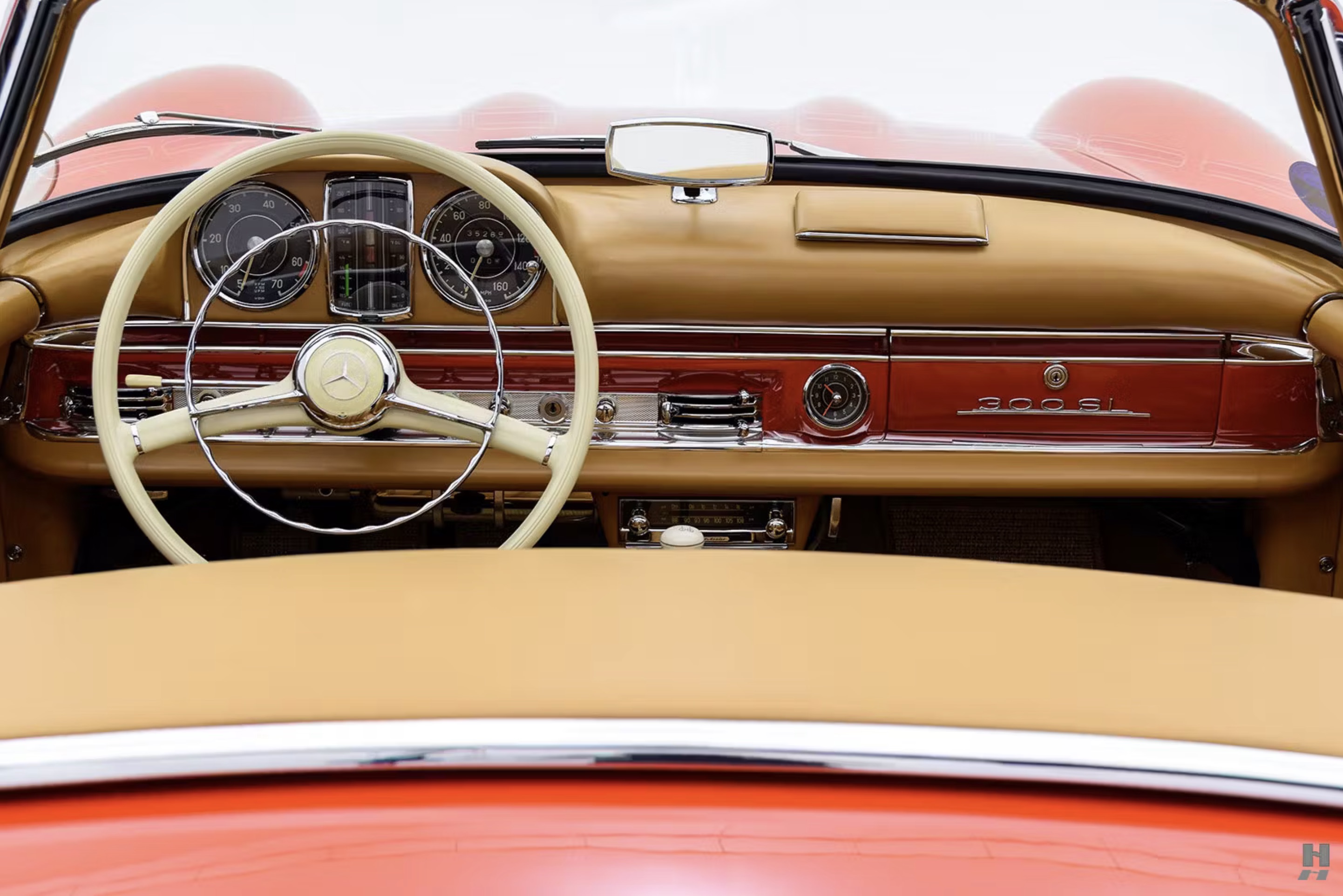
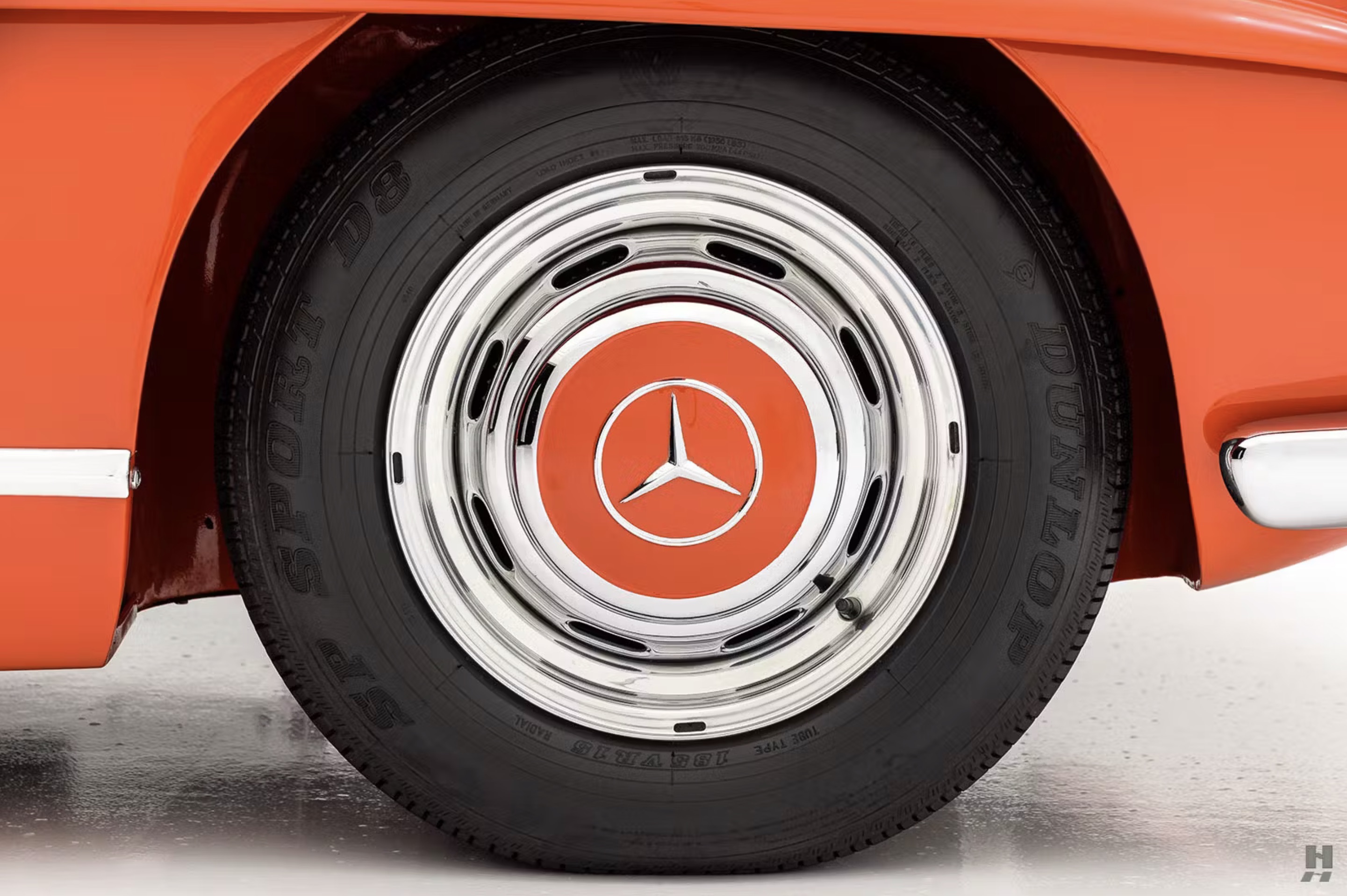
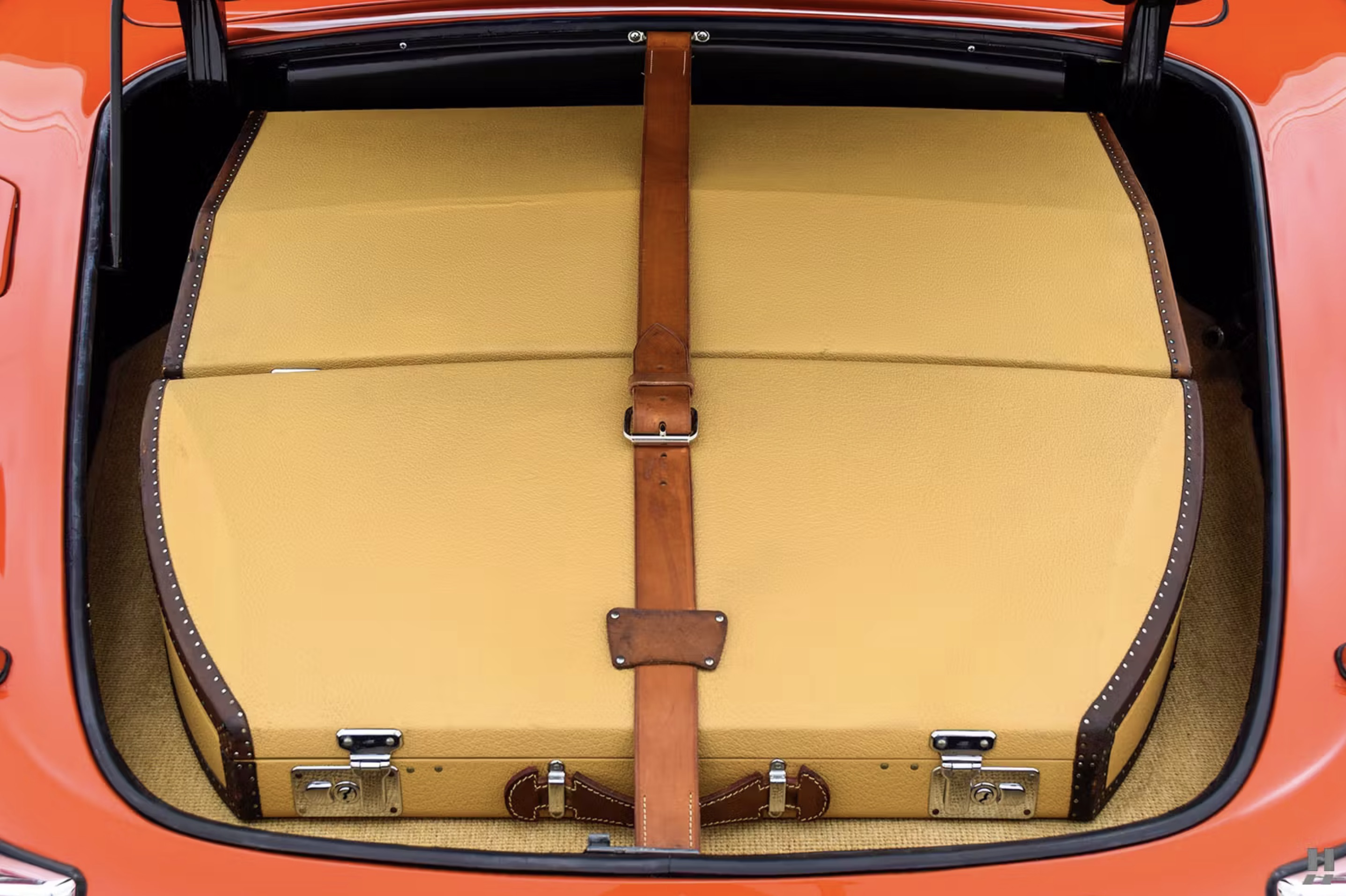
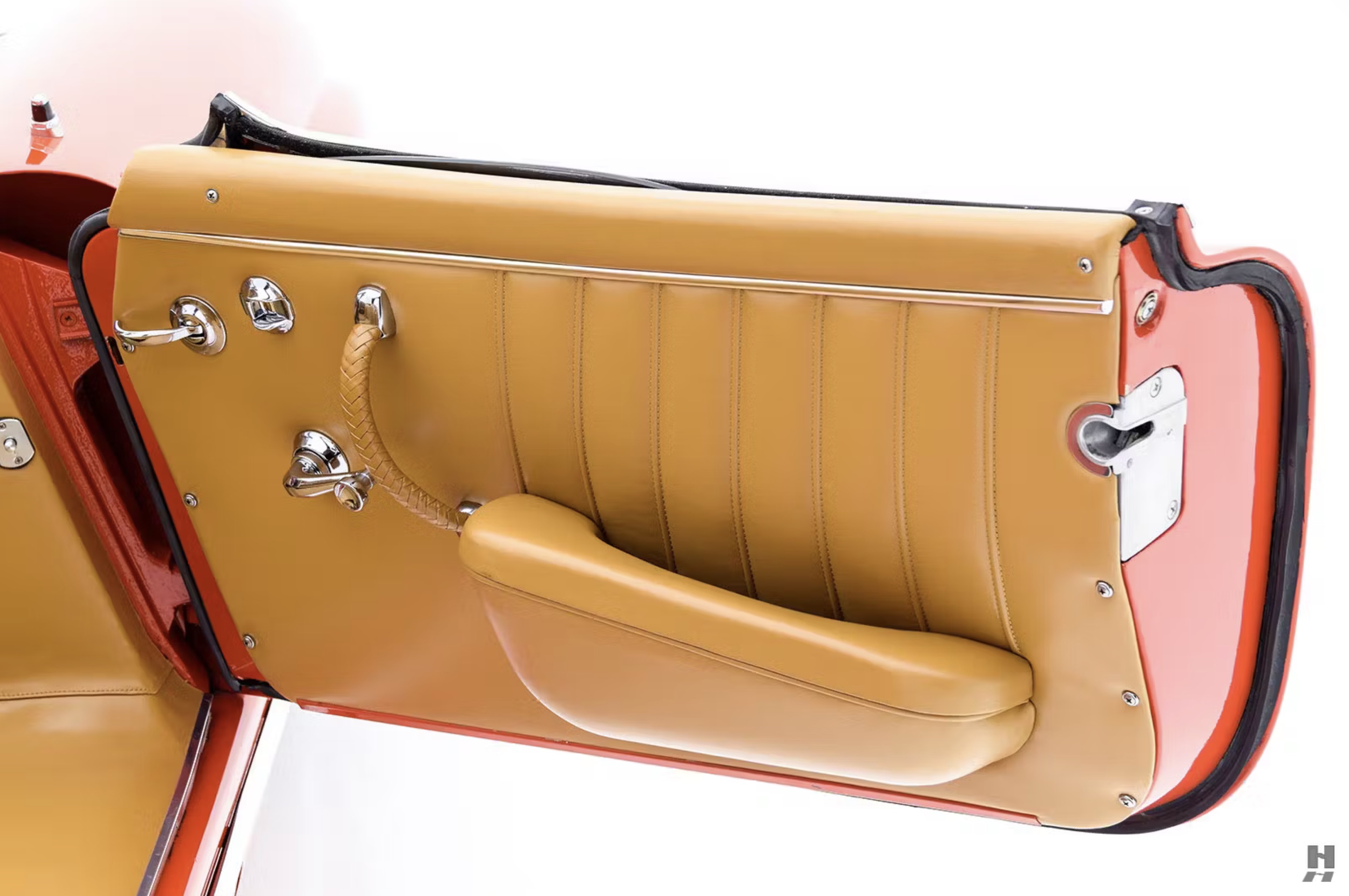
The open two-seater was clearly closely related to the coupe, but thanks to a modified tube frame, a conventional door – with roll-up windows – could be fitted. Note the braided handle, nice detail.

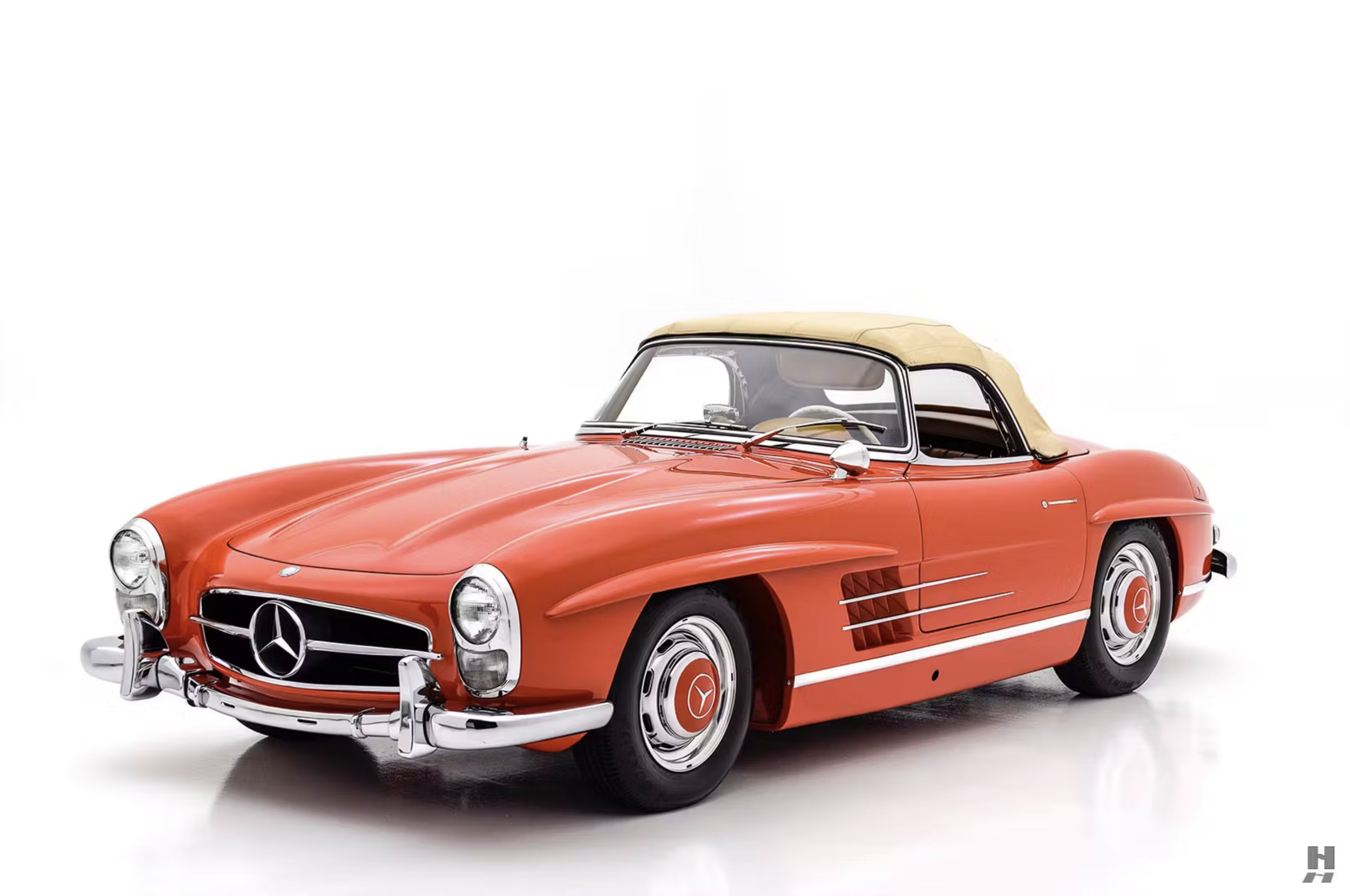
Model for North America, 1960. Photos: Hagerty
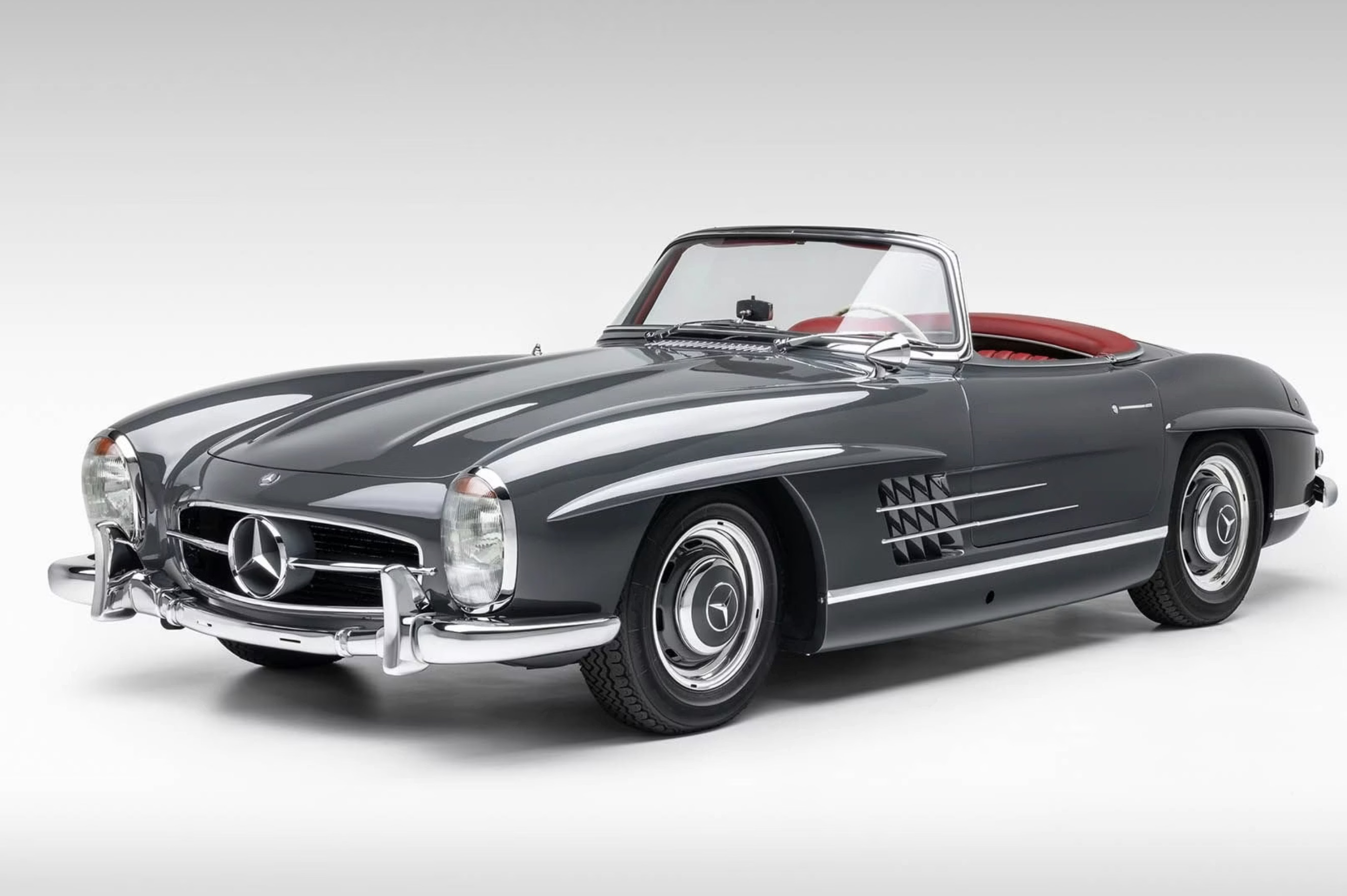
This is a Model of 1962. Sold October 31, 2025 for $1,831,000. Photo: Hagerty.
 Design is fine. History is mine.