Such glass objects, mostly ointment vessels for storing fragrant oils, remained a great luxury in ancient Egypt. At that time, glassmaking still had something magical about it, as glassmakers were able to create replicas of precious stones from simple raw materials and fuse them together as they pleased. However, these products could not retain their magical character forever.
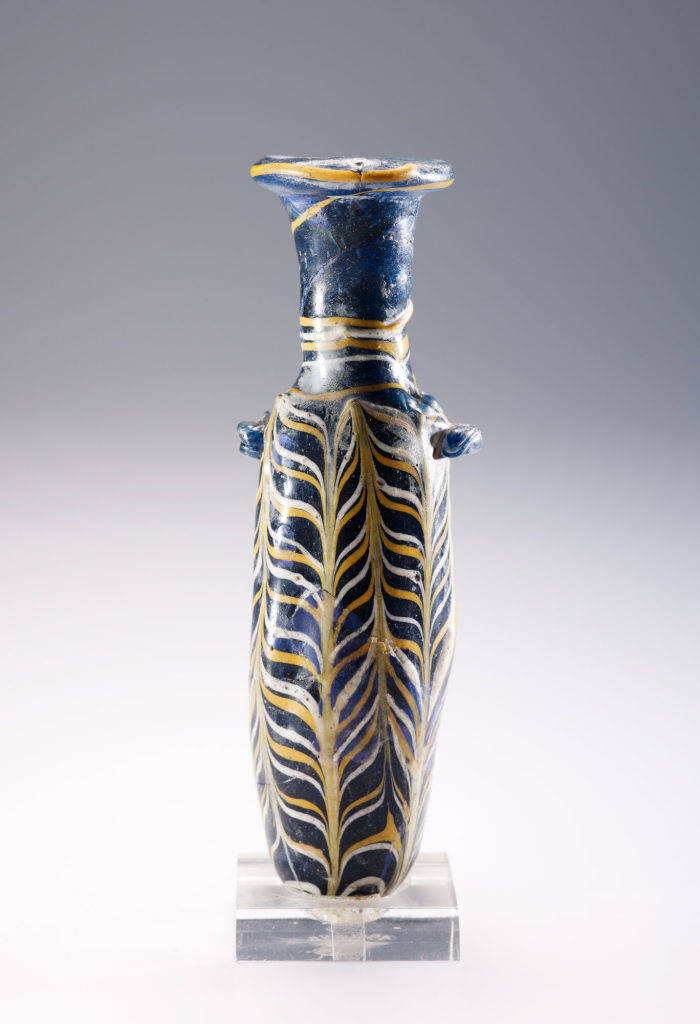
The earliest glass vessels were made by shaping molten glass powder or glass threads around a porous, clay-containing core, which was scraped out after cooling. There was a long interruption, but the technique revived in the 6th century BCE and became widespread. Now they were no longer luxury products, but rather antique ‘accessories’ of a flourishing perfume trade. The Düsseldorf alabastron belongs to a group of vessels that may have originated in glassworks in the western regions around the Mediterranean, from Greece to Spain.
These ointment vessels, probably manufactured in Syria, were very popular until the late Hellenistic period; frequently used forms include alabastra, amphoriskoi and oinochoe.
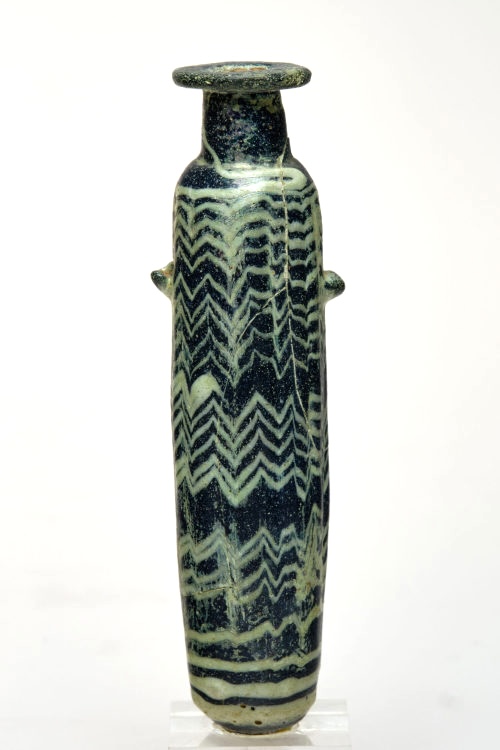
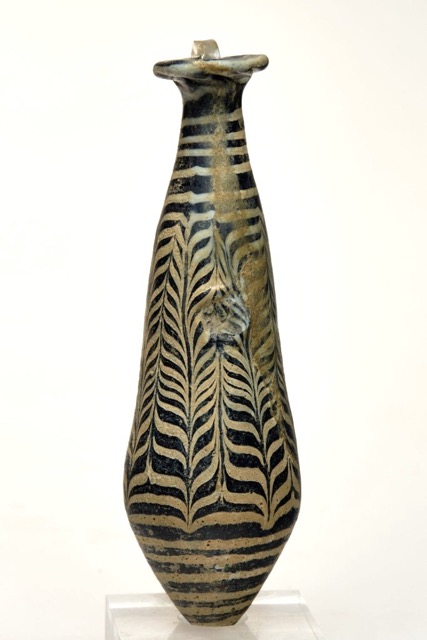
1 Alabastron, core-formed vessel. Biconical shape without base. 10,8 × 3,1 × 2,5 cm, 3rd–2nd century BC. 2 Alabastron, core-formed vessel. 11,9 × 3,5 cm. 4th–2nd century BCE. Both from the Eastern Mediterranean region
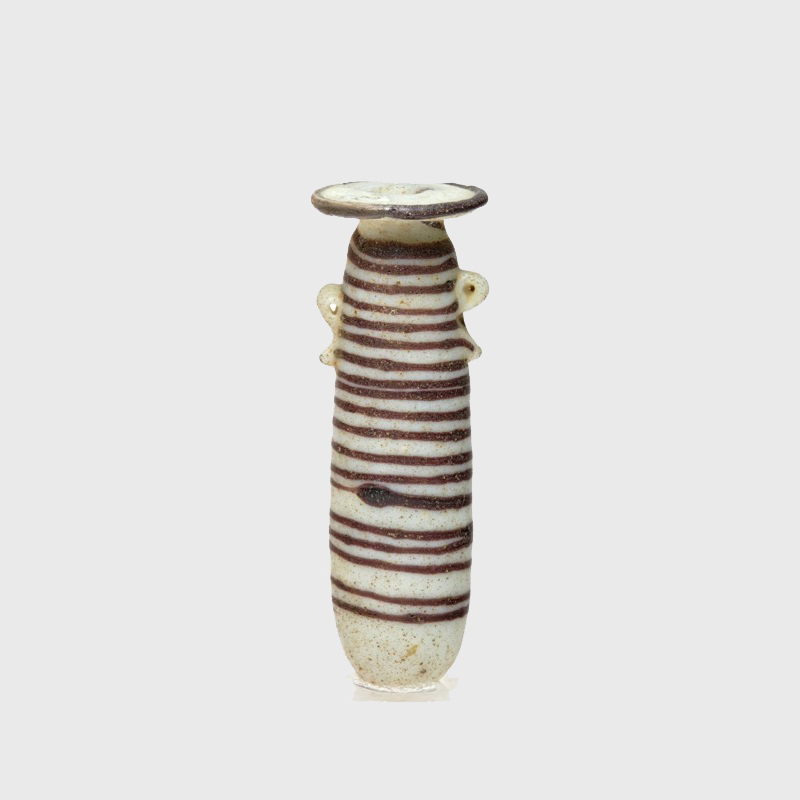
3 Core-formed alabastron (cosmetic bottle). Opaque white glass with applied double violet spiral thread. 9,6 × 3,3 cm. Probably 6th–5th century BC, Rhodes, Dodecanese, Greece. Photo: Kunstpalast Düsseldorf.
First photo: Alabastron (perfume bottle) with threaded decoration, c. 4th–3rd century BC. 13,5 × 5,6 × 3,5 c. Eastern Mediterranean. Foto: LVR-ZMB, Stefan Arendt. Source Kunstpalast Düsseldorf,
 Design is fine. History is mine.