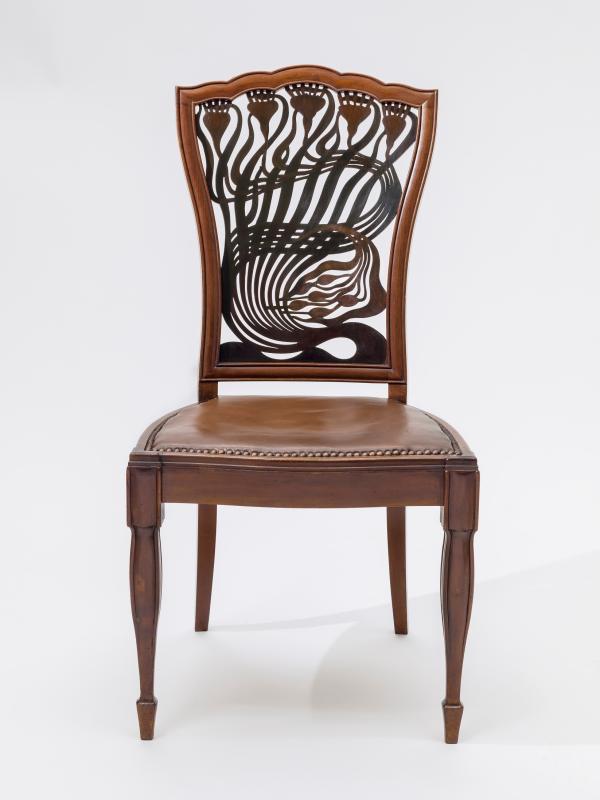
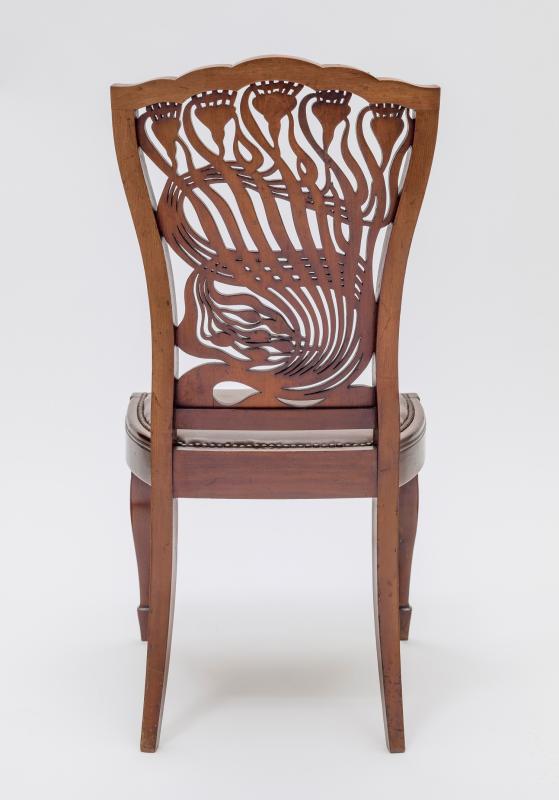
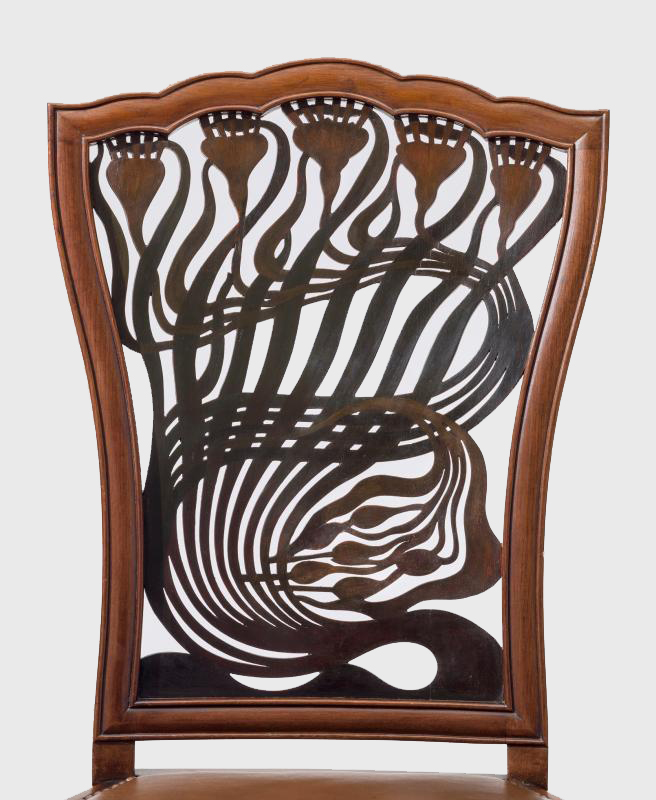
Often cited as one of the origins of Art Nouveau, A.H. Mackmurdo’s chair design incorporates a striking innovation: a backrest reminiscent of floating seaweed – appealingly decorative even today. The iconic motif, later known as a whiplash curve, anticipated the organic forms that would define the movement, from Horta’s Hôtel Tassel in Brussels to the Metro Stations of Hector Guimard or the posters of Alphonse Mucha.
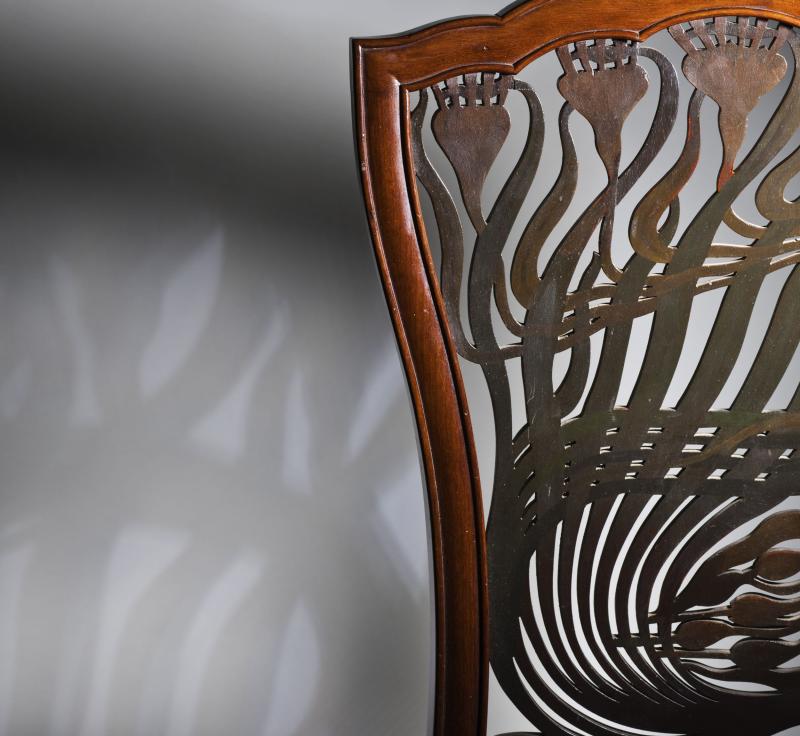
By contrast, the legs and the seat of the mahagony chair follow the Georgian tradition of the 1780s. Originally painted in green and red, the surviving examples are now much faded, as noted by the Victoria and Albert Museum. It is believed that either six or eight were produced in total, only five have been found.
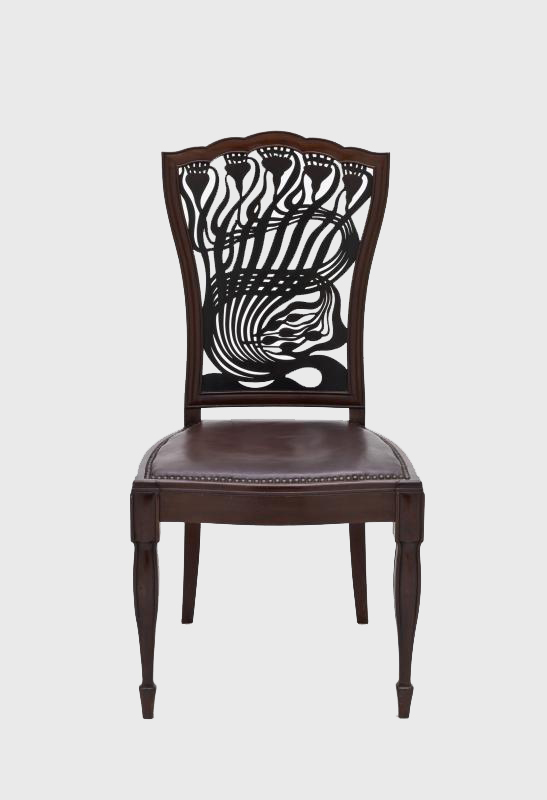
This chair from 1883 is part of the Huntington Collection,
When the magazine The Builder published the design in August 1885, it was celebrated for its originality – an early signal of Mackmurdo’s lasting influence on the „modern style“ (or liberty), as Art Nouveau was called in Britain.

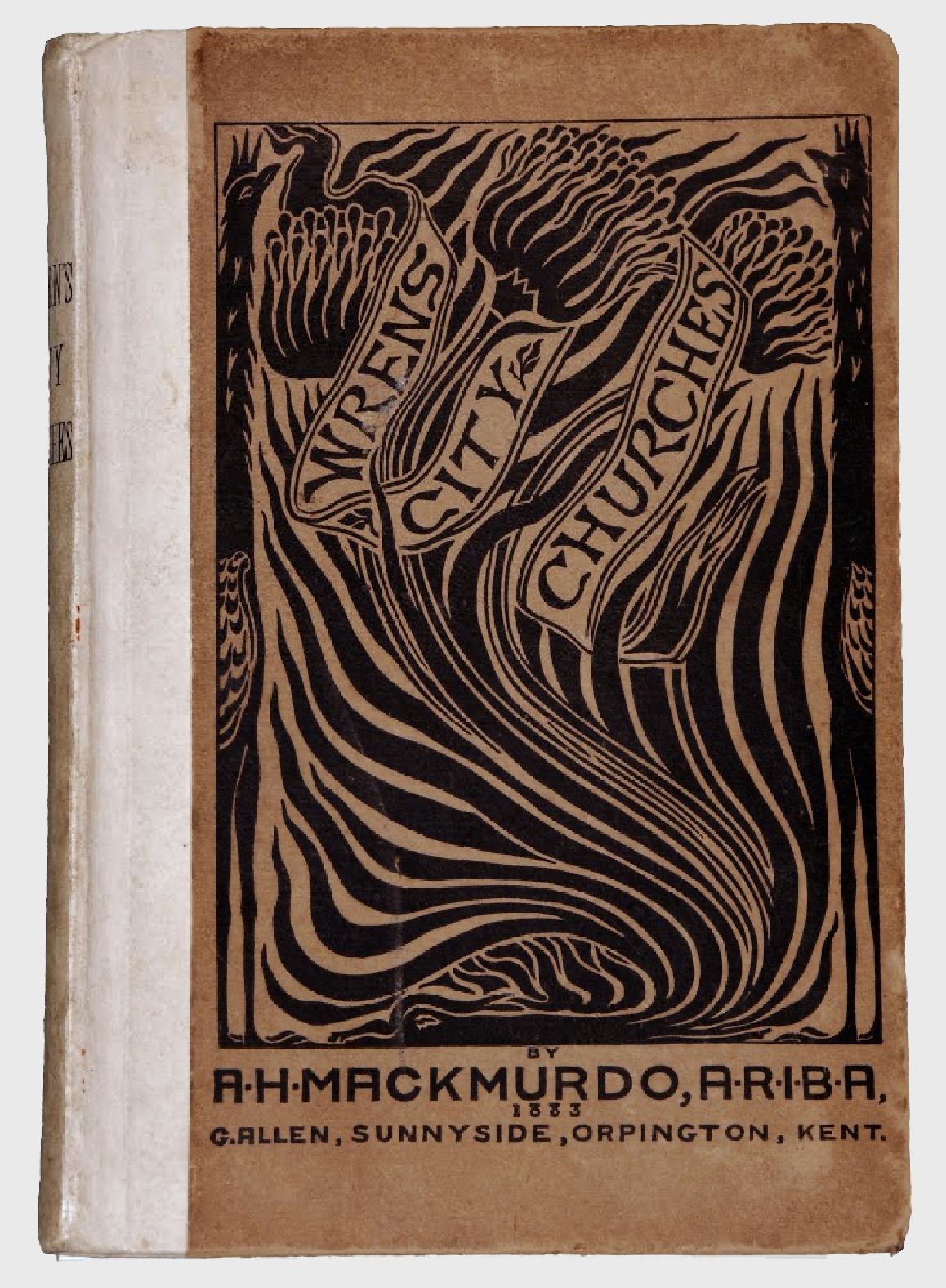
Small paper edition of Wren’s City Churches, 1883. Google Arts & Culture
Arthur Heygate Mackmurdo (1851-1942) used the same serpentine shapes on the title page of Wren’s City Churches, published in 1883. The floral motif, which caused quite a stir, is flanked at either side by the attenuated form of a peacock.
It exhibits complex relationships of positive and negative space, visual rhythms, and abstract forms based upon the natural growth of plants … By contorting the stalks into unnatural, whiplashed forms, Mackmurdo fuses the white, negative space between the dark forms into active components of the picture plane.
Tim Rodgers, Museum of Arts and Design NY
Mackmurdo took great interest in preserving historic architecture. In 1883, he gave a lecture urging the protection of several churches by Sir Christopher Wren, the 17th-century English architect best known for designing St. Paul’s Cathedral. He published the content in Wren’s City Churches.
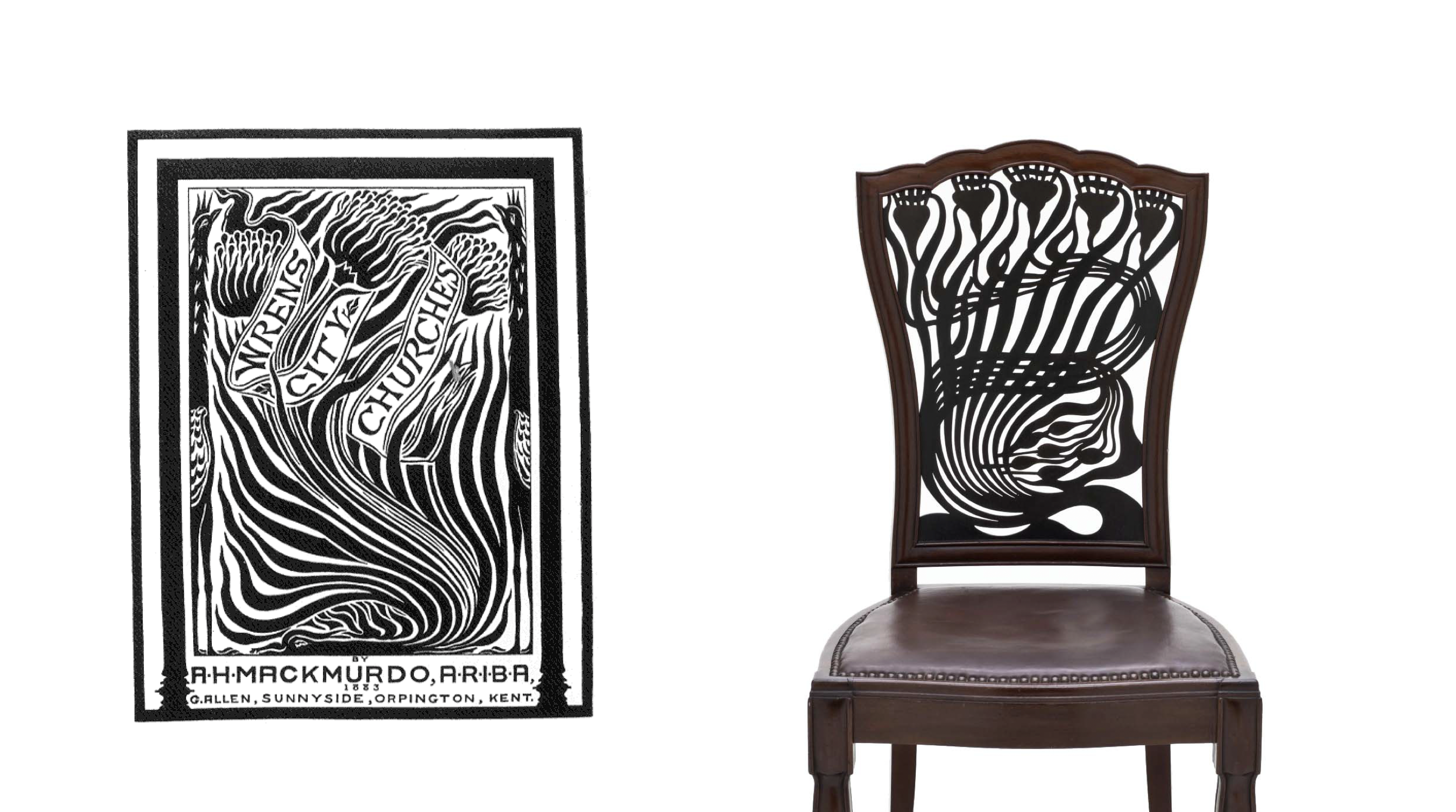
The cover would go on to strongly influence also the graphic style of Aubrey Beardsley – particularly his 1893 illustrations for Salome, now seen as iconic works in the early days of Art Nouveau.
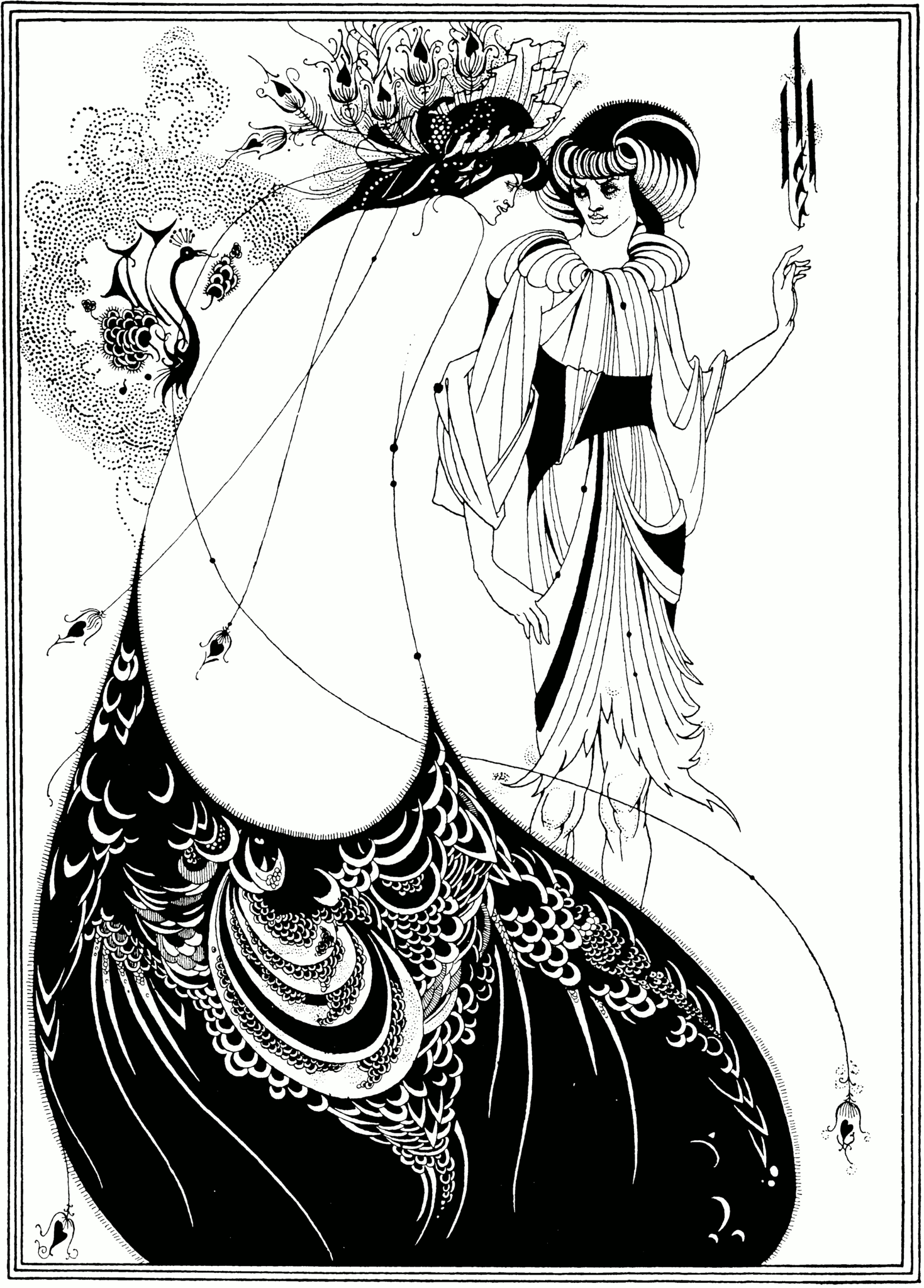
The Peacock Skirt, 1893 illustration by Aubrey Beardsley for Oscar Wilde’s play Salomé. Pen and ink drawing, 17.8 x 12.7 cm (7.0 × 5.0 in). Fogg Art Museum, Harvard University. Wiki commons
Mackmurdo was not only a talented designer but also a founder member of the Century Guild in 1882 and of the Arts and Crafts Exhibition Society. He set up as an architect in 1875 and from 1885 to 1890 worked in partnership with Herbert Horne. About 1883 (or 1881?) Mackmurdo formed the Guild of Artists with his former pupil Herbert Horne. During the 1880s Mackmurdo was responsible for the overall conception of the Guild’s displays, for which he designed printed and woven textiles, wallpapers, furniture and metalwork. As part of his training, he studied cabinet-making and apparently made some of the furniture that he designed for The Century Guild.
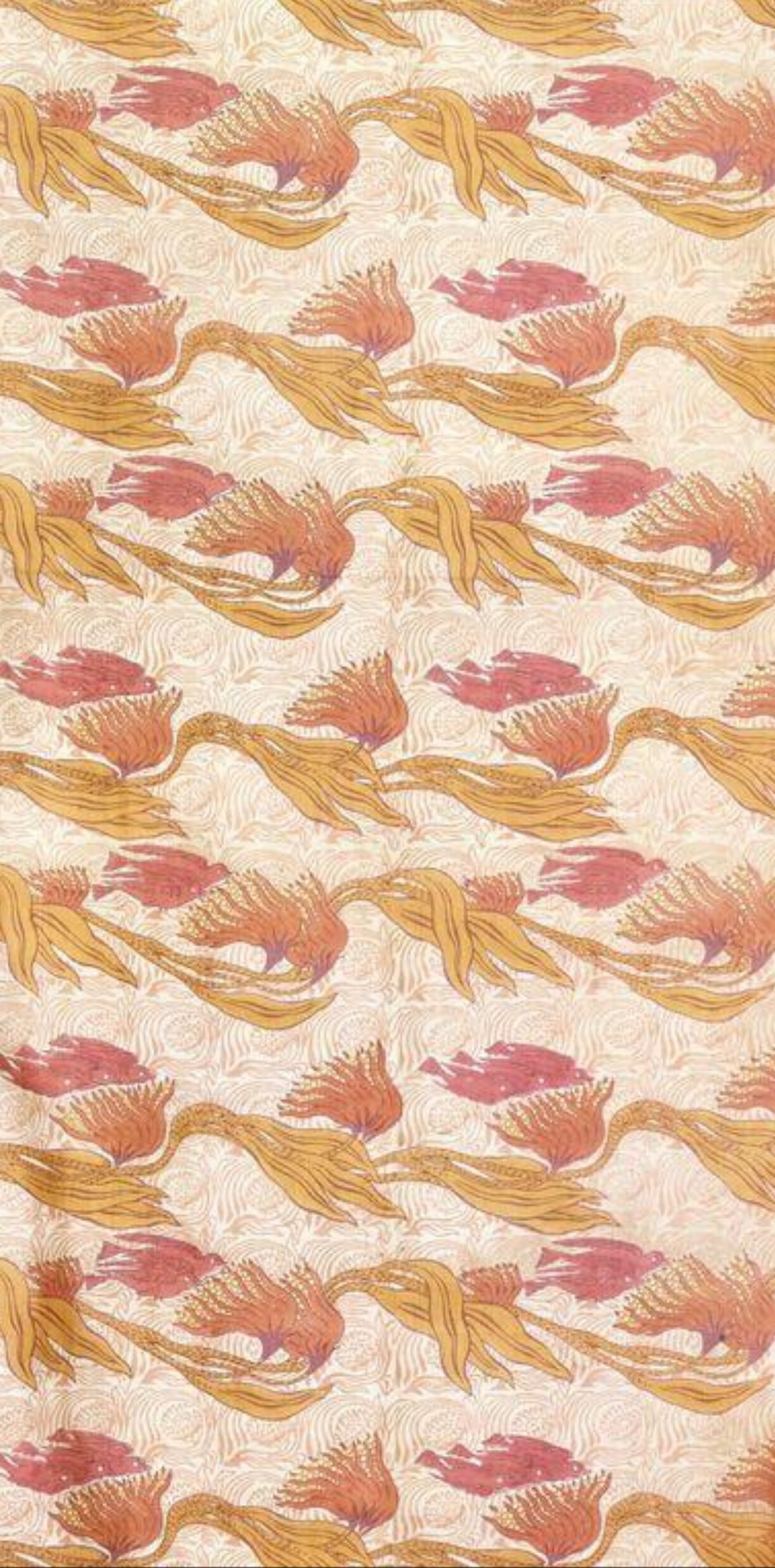
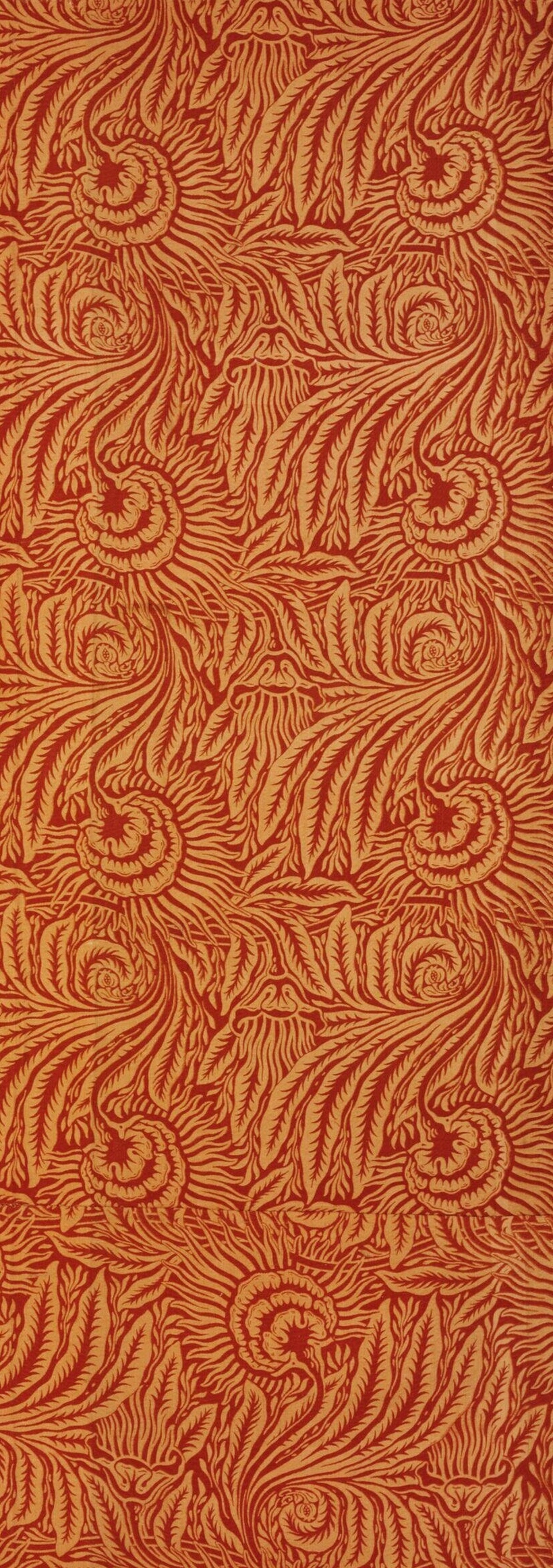
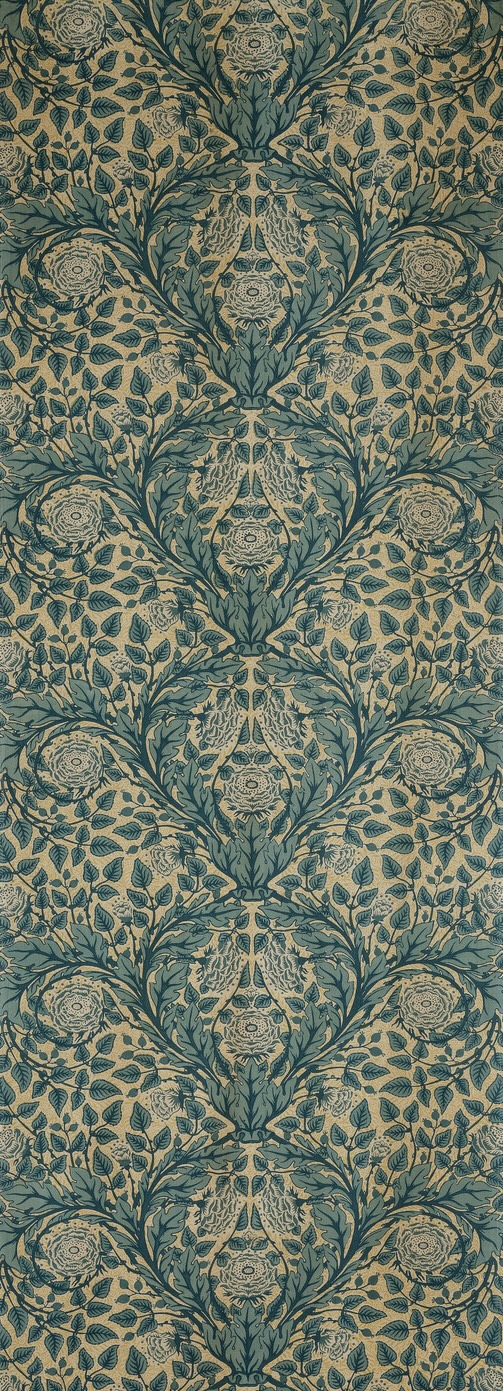
Fabric and Wallpaper design by Mackmurdo, Victoria & Albert collection.
Mackmurdo was also a friend of William Morris and C. F. A. Voysey. He worked with the ideas and aesthetics of Morris, but took them a step further to create something that built a bridge between Arts and Crafts and later Modernism.

Vine and Grapes design, possibly a wallpaper, 1884-87. Google Arts & Culture
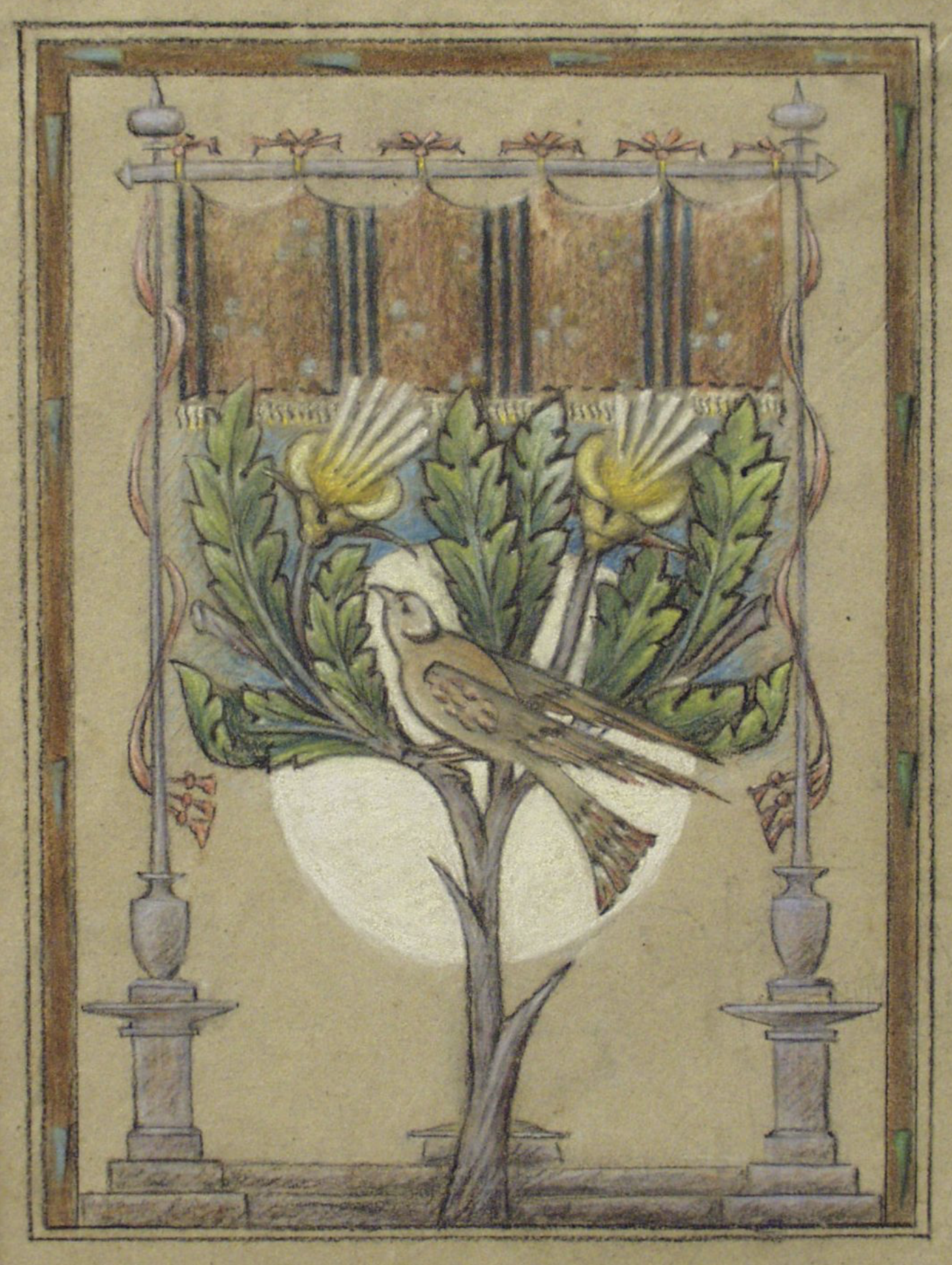
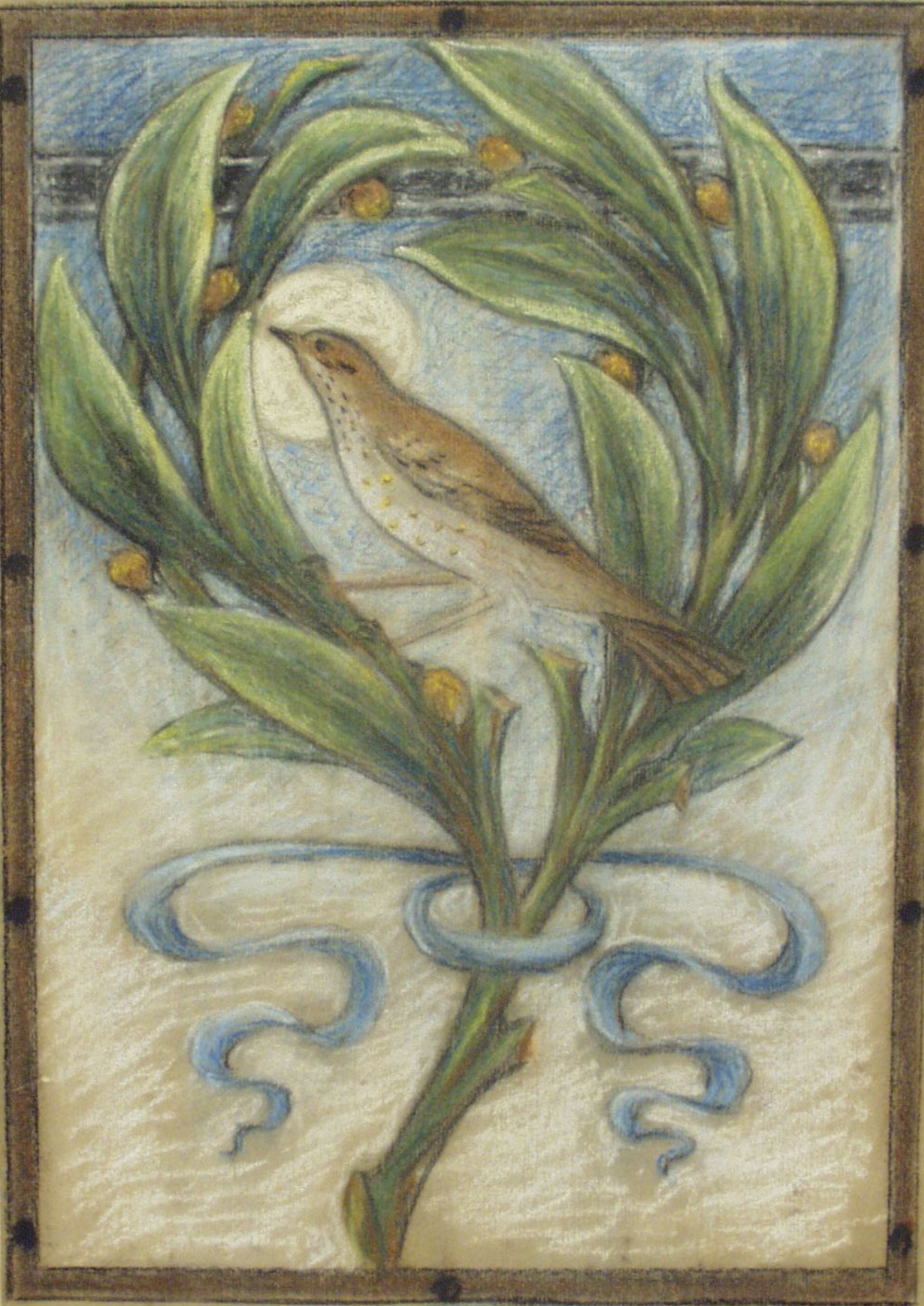
Drawings by A.H. Mackmurdo, made decades apart but sharing a familiar stillness. One, from 1898, shows a bird perched on a branch, moon rising behind it. The other, from 1920, features a bird nestled in leaves, the branch bound with a ribbon.
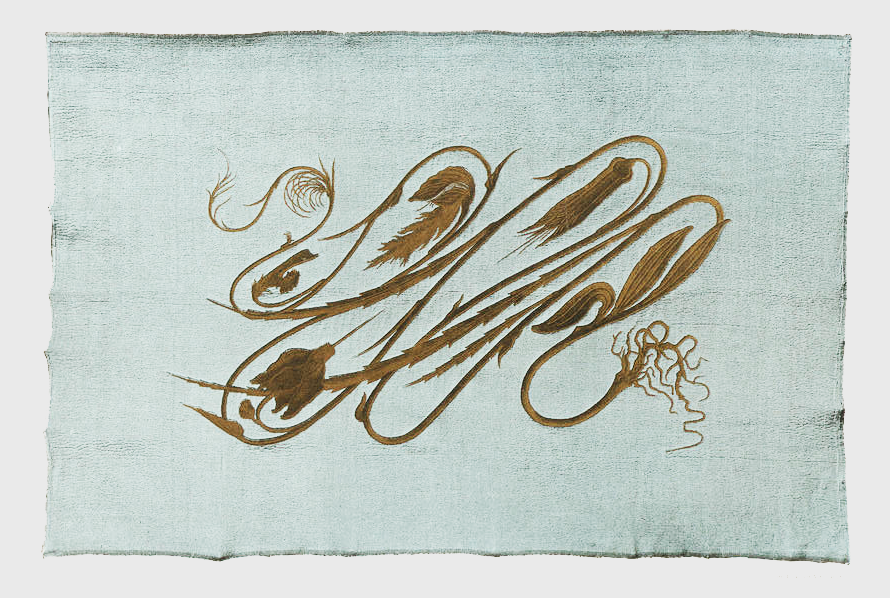
Design by Herrmann Obrist, embroidery by Berthe Ruchet, Wall hanging Cyclamen, published in the magazin PAN. Source University of Heidelberg
An art critic wrote enthusiastically in the art magazine Pan: ‘This frenzied movement appears to us like the sudden, violent lash of a whip.’ And so the wall hanging with cyclamen earned its nickname: the ‘whiplash’.
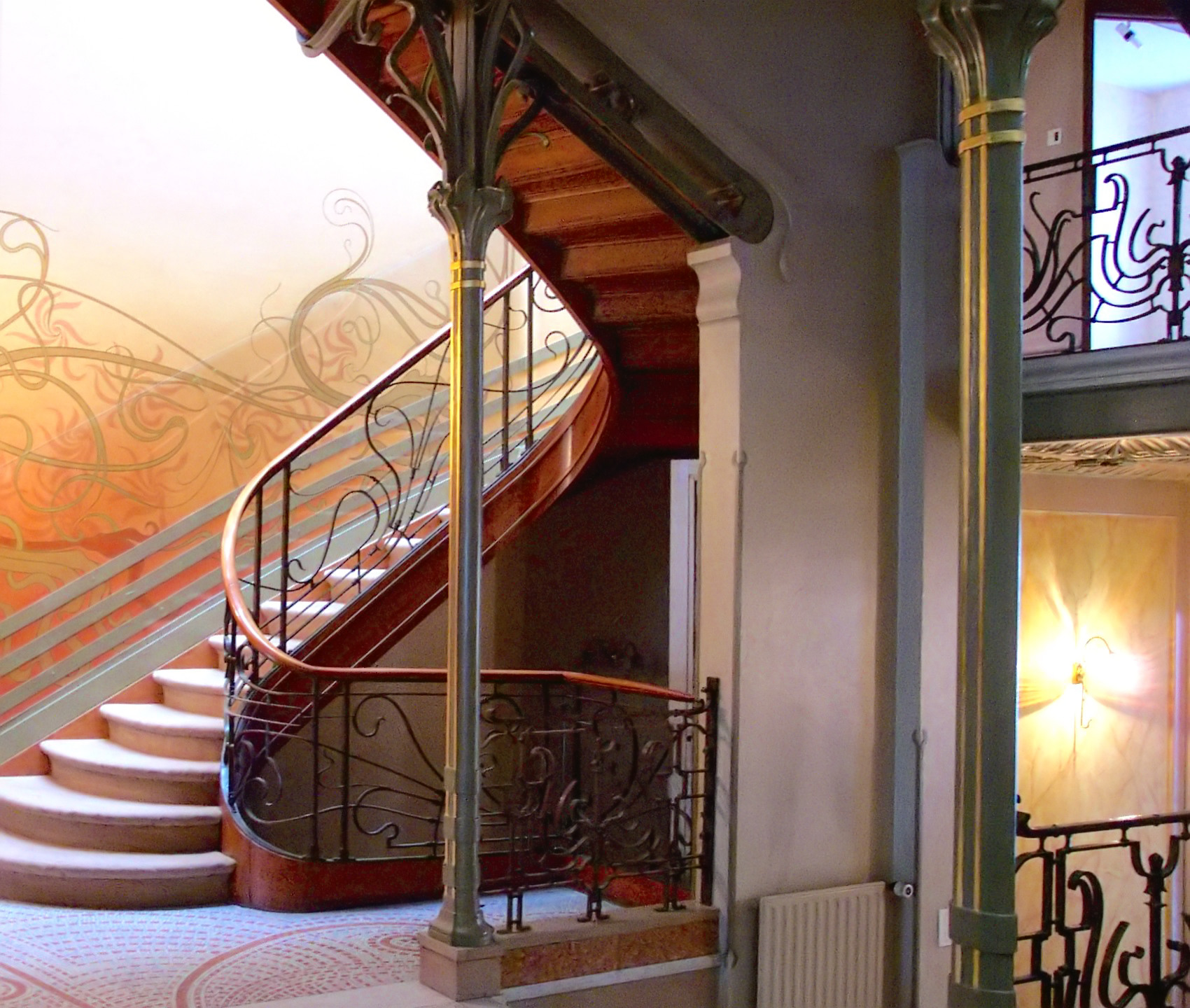
Interior of Victor Horta’s Hôtel Tassel in Bruxelles. Via Wiki commons
 Design is fine. History is mine.
