To the ancient Egyptians, the eye was far more than a physical feature: it embodied divine power, protection, healing, and renewal. Eye motifs appeared throughout their art and artifacts, such as realistic inlays in statues or mummy masks, and also in the form of amulets and beads for jewelry. While the Eye of Horus is the best-known version, with its distinctive myth and iconography, the plain eye also carried aesthetic and symbolic significance – believed to shield their wearer from harm.

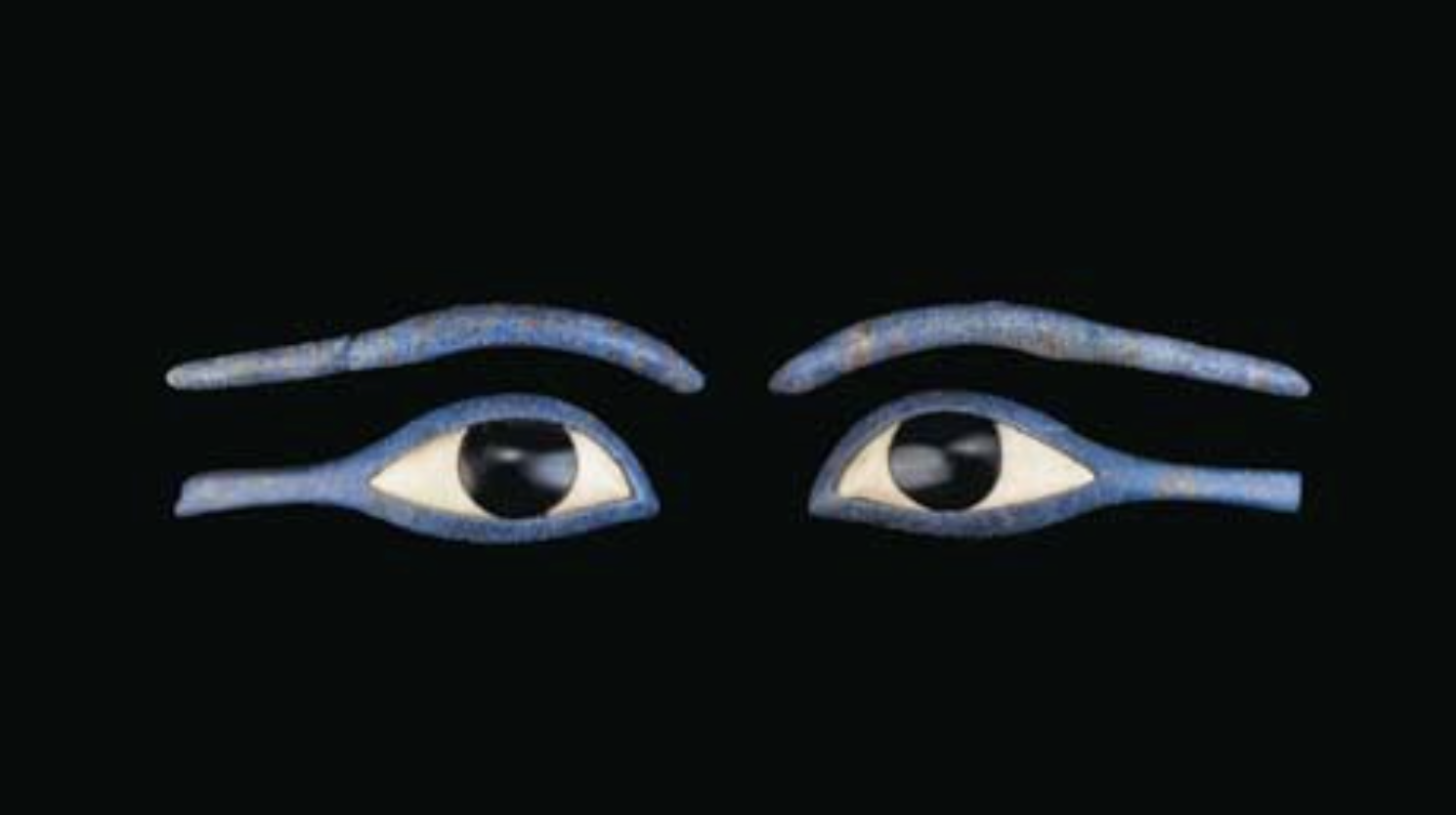
Glass eye inlays, late ptolemaic – early roman period, 1st century B.C./A.D. Composed of white sclera with dark blue irises in contoured blue glass lids. Via Christies.
They were made from various stones or glass – admired for its vivid colors and ease of shaping. Gypsum was also common, valued for its ability to be carved and painted.
The iris might be made of colored stone or bees wax as well, as seen with the Bust of Nefertiti. The artist’s goal was to achieve a lifelike, reflective appearance.
For the white of the eye materials such as valuable ostrich eggshell was used, obsidian or other dark stones for the pupil, rock crystal for a shiny cornea, all set in place with resin.
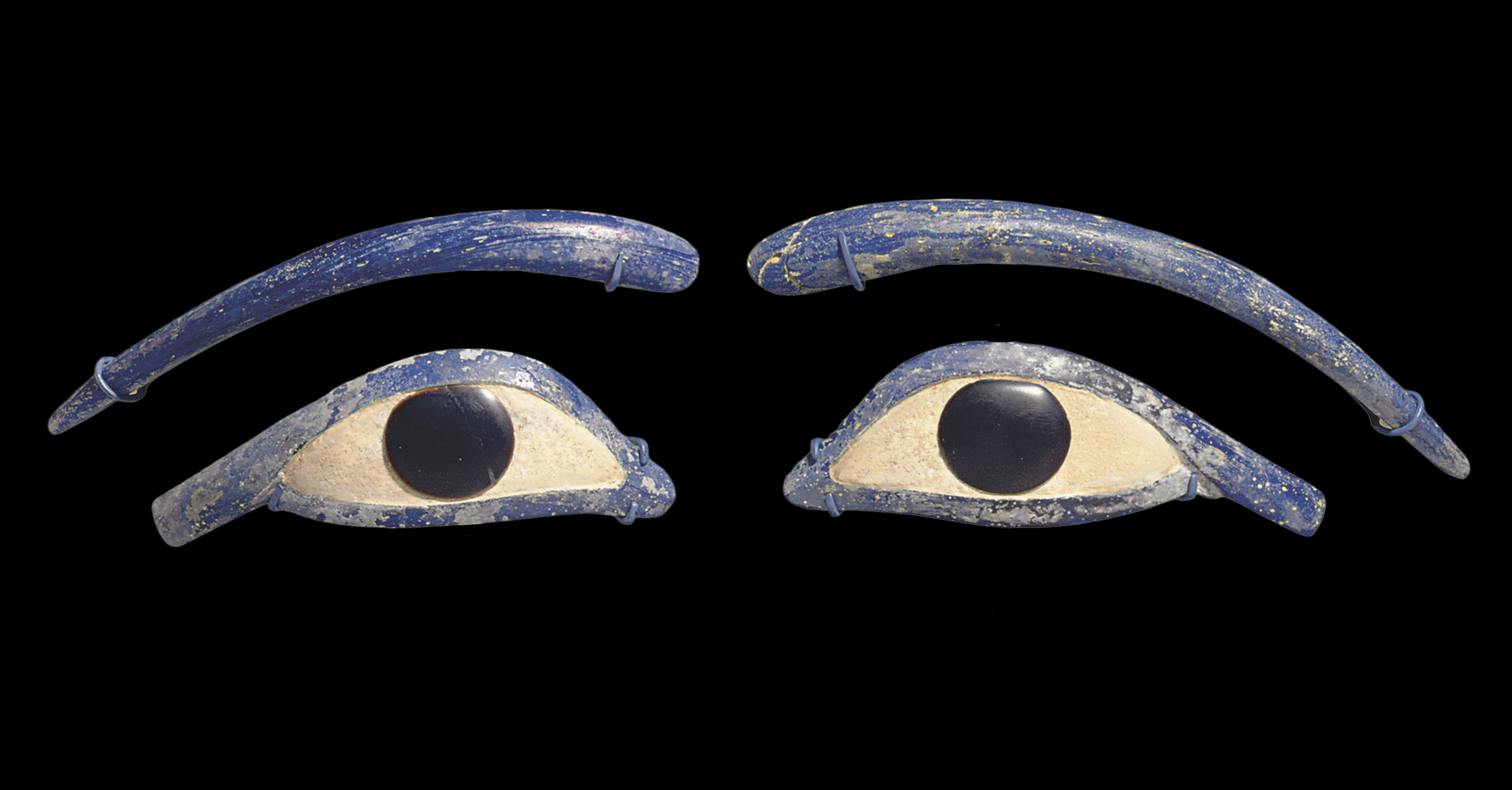
Eyes and brows, New Kingdom, 1550–1070 B.C.E. Obsidian irises, blue glass lids. Via Christies
The most famous one is the Eye of Horus, also known as Wedjat or Udjat (meaning “to be whole, unharmed”), which is tied to the myth of Horus, the falcon-headed sky god. According to legend, he lost an eye in a battle with his uncle Seth. The god Thoth restored it, making this eye anl emblem of healing and rebirth – central themes in Egyptian culture. Thoth himself was associated with wisdom, writing, and the moon.

Faience Wedjat Eye, Ptolemaic Period Circa 323-30 B.C.E. Via Merring Gallery
The symbol was divided into six parts, representing the shattering of Horus´ eye into six pieces. Each piece was associated with one of the six senses – The Egyptians didn’t stop at five senses; they included thought (mind).
Worn as an amulet, the Eye of Horus was thought to guard against evil and attract good fortune. Its design typically featured a falcon-like eyebrow, a teardrop- or almond-shaped pupil, and markings beneath the eye symbolizing joy or sorrow.

Faience Wedjat Eye from 672–525 B.C.E. © The Trustees of the British Museum
This glazed composition amulet is pierced from side to side at the centre so that it could be worn. Its basic design is the eye and eyebrow of the lanner falcon, the bird form adopted by the celestial creator god Horus, whose right and left eyes were the sun and moon respectively. The area in front of the bird’s leg is filled by an upreared cobra wearing a sun disc, its coiled body arching up behind the puffed up hood. At the back of the wing is a papyrus flanked by buds; between the wing and leg is a human eye. The entire design is set on a reed mat, its bindings carefully delineated. It is noteworthy that this example, like many others, represents the right eye not the left. Via British Museum
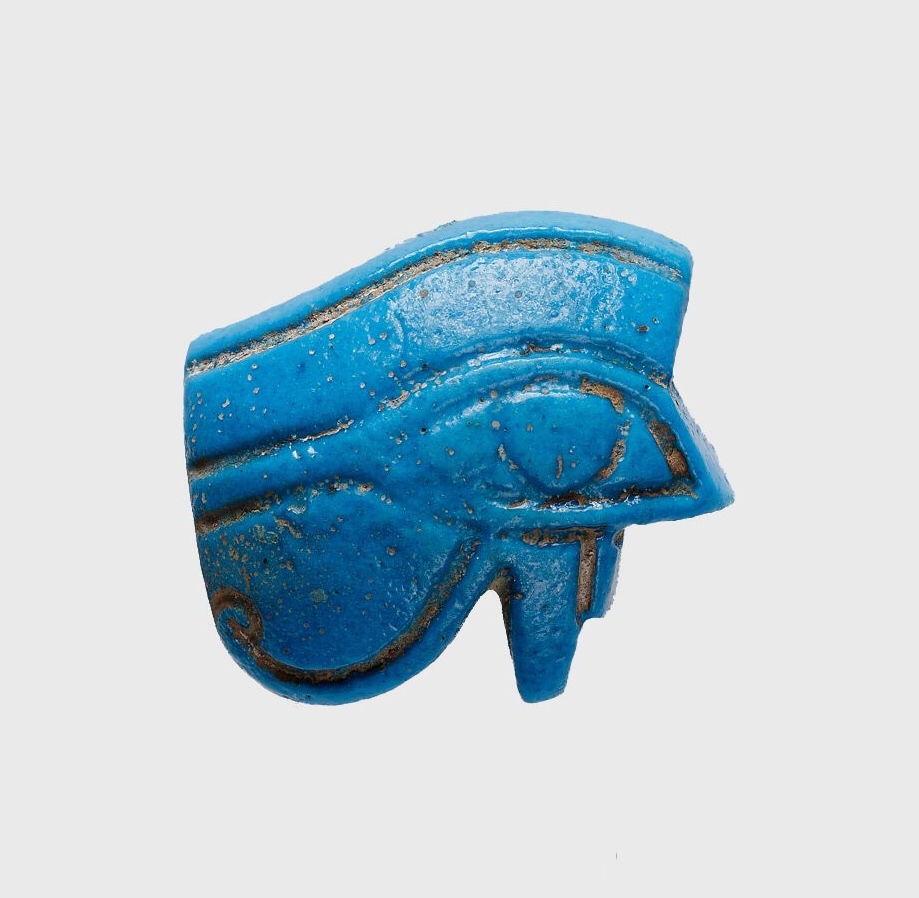


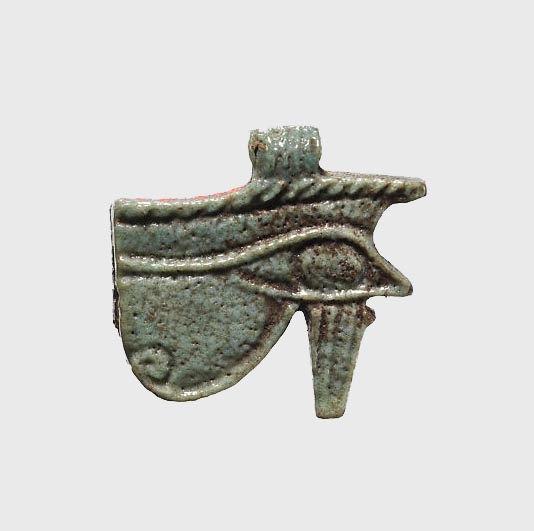
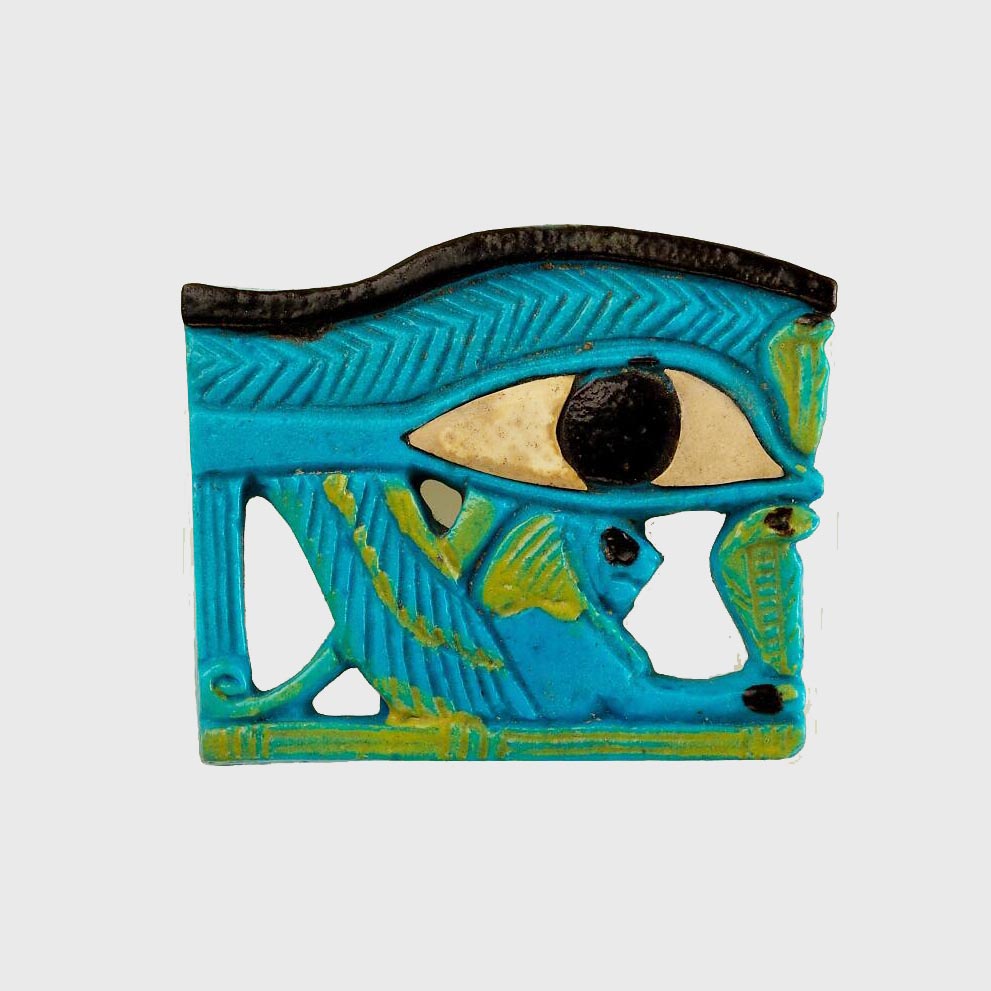
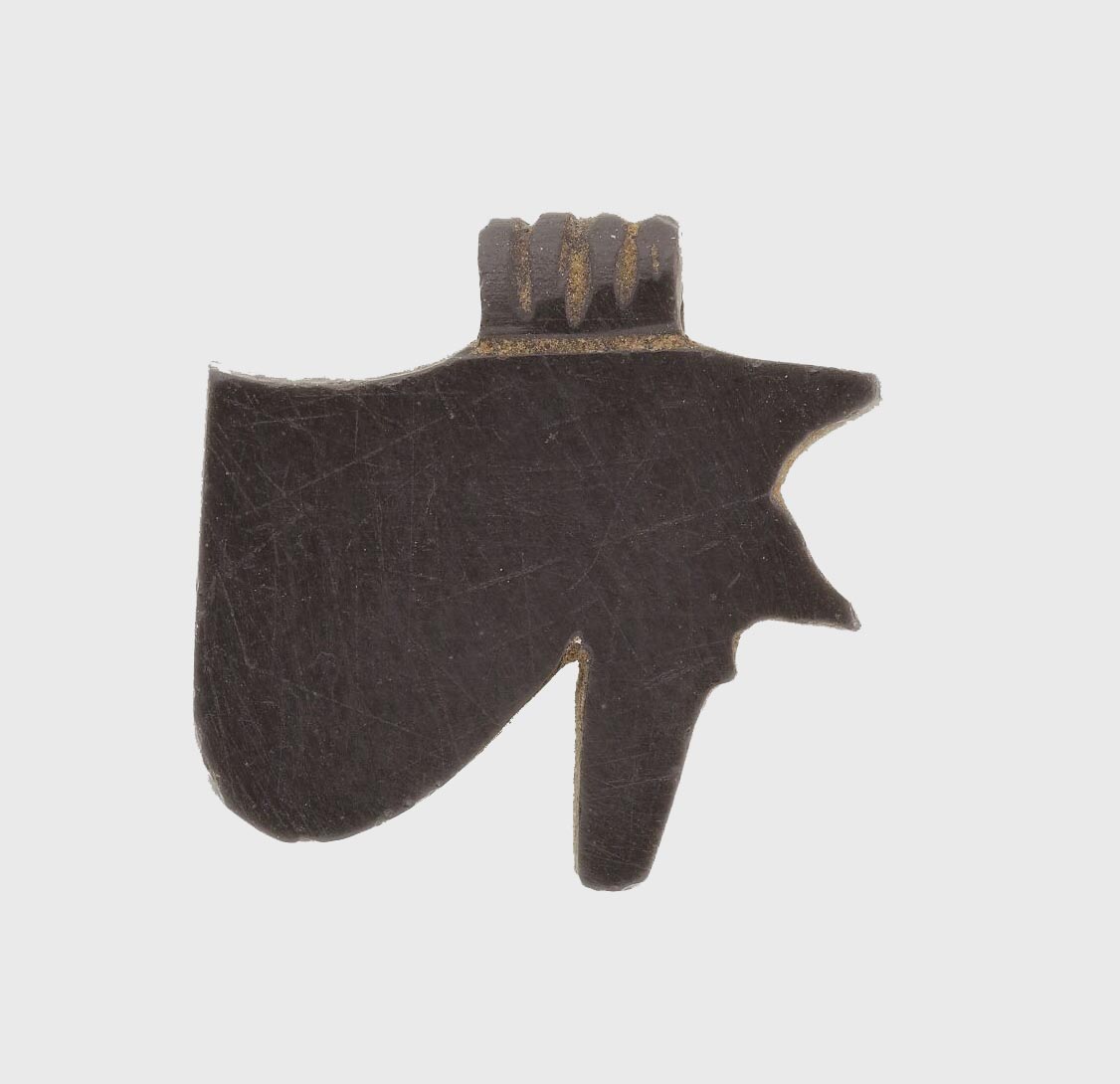
Various eye amuletts via Metropolitan Museum
The earliest known depictions of the symbol date back to the Predynastic period, before Egypt was unified under a single ruler. The Eye of Horus is frequently linked to artifacts from the Naqada culture, especially during the Naqada II period (ca. 3500–3200 BCE).

The richly decorated coffin of Jt-Jb, hathor priestess, is made of precious cedar wood and dates back to around 1800 B.C.E. Via Ruhrmuseum, Essen.
On this wooden coffin the Horus eyes show the way to the afterlife as some kind of “replacement eyes.” They also signal where the mummy’s head is located. These words are written on the upper part of the coffin: A sacrifice offered by the king … bread, beer, cool water, incense, ointment, clothing and all the good and pure things that a god lives on, for the venerable Jt-Jb”
Color itself carried deep symbolic meaning: blues and greens represented the sky and life for example, while black evoked the earth. The Egyptians developed a distinctive palette, with some hues carrying symbolic meanings, while others were primarily used for practical or decorative purposes.

They even mastered the art of manufacturing pigments as materials in their own right. Egyptian blue is the world’s oldest known synthetic pigment. Its recipe was so complex that it was lost for more than 1,500 years, from Roman times until the 19th century. First developed during the pyramid age, it was made by mixing lime, sand, and a copper-containing compound, then heating the blend in a furnace at 1470–1650 °F (793–899 °C). The process produced a brilliant, crystalline blue substance. Artists ground it into powder and mixed it with egg white, glue, or acacia gum to create a luminous turquoise paint.
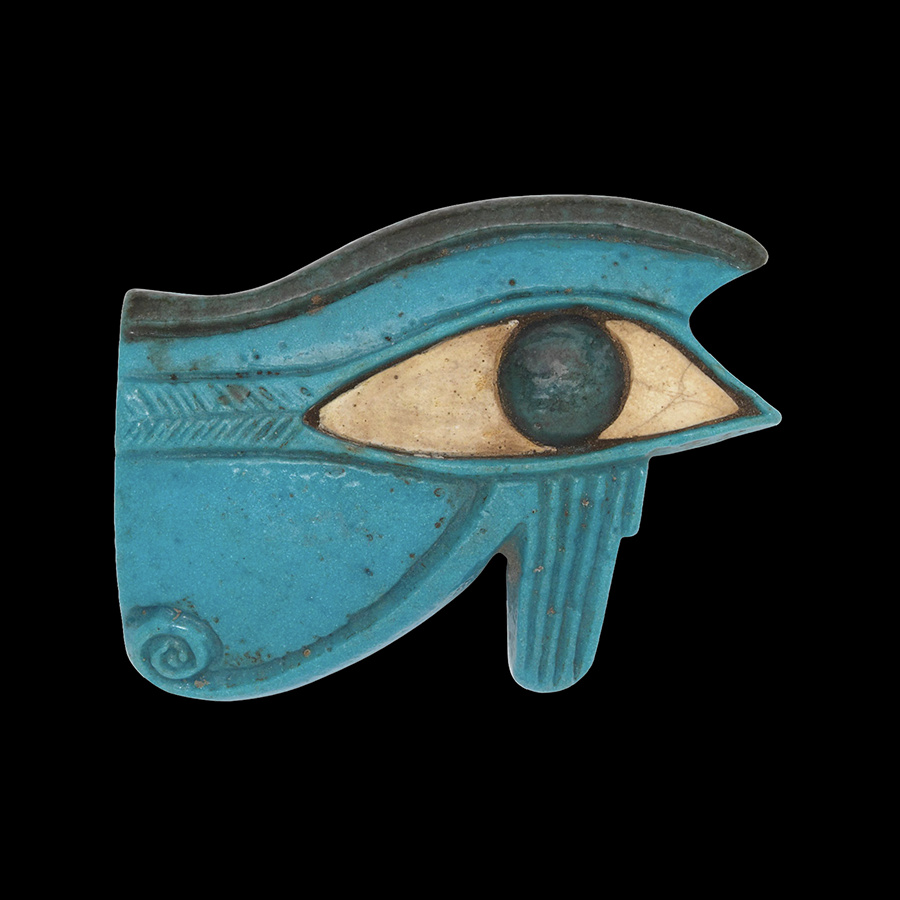
Faience eye amulet, ptolemaic period, 323–330 B.C.E. Via Christies
Egyptian women developed striking and sophisticated styles of eye makeup. During the Old Kingdom (2640–2450 BCE), the lower eyelid was painted green and the upper lid black; in later periods, both lids were painted black. Green pigments were derived from malachite and chrysocolla, while lead sulfide provided black. Mixed with fat into a paste, these minerals were carefully applied around the eyes.
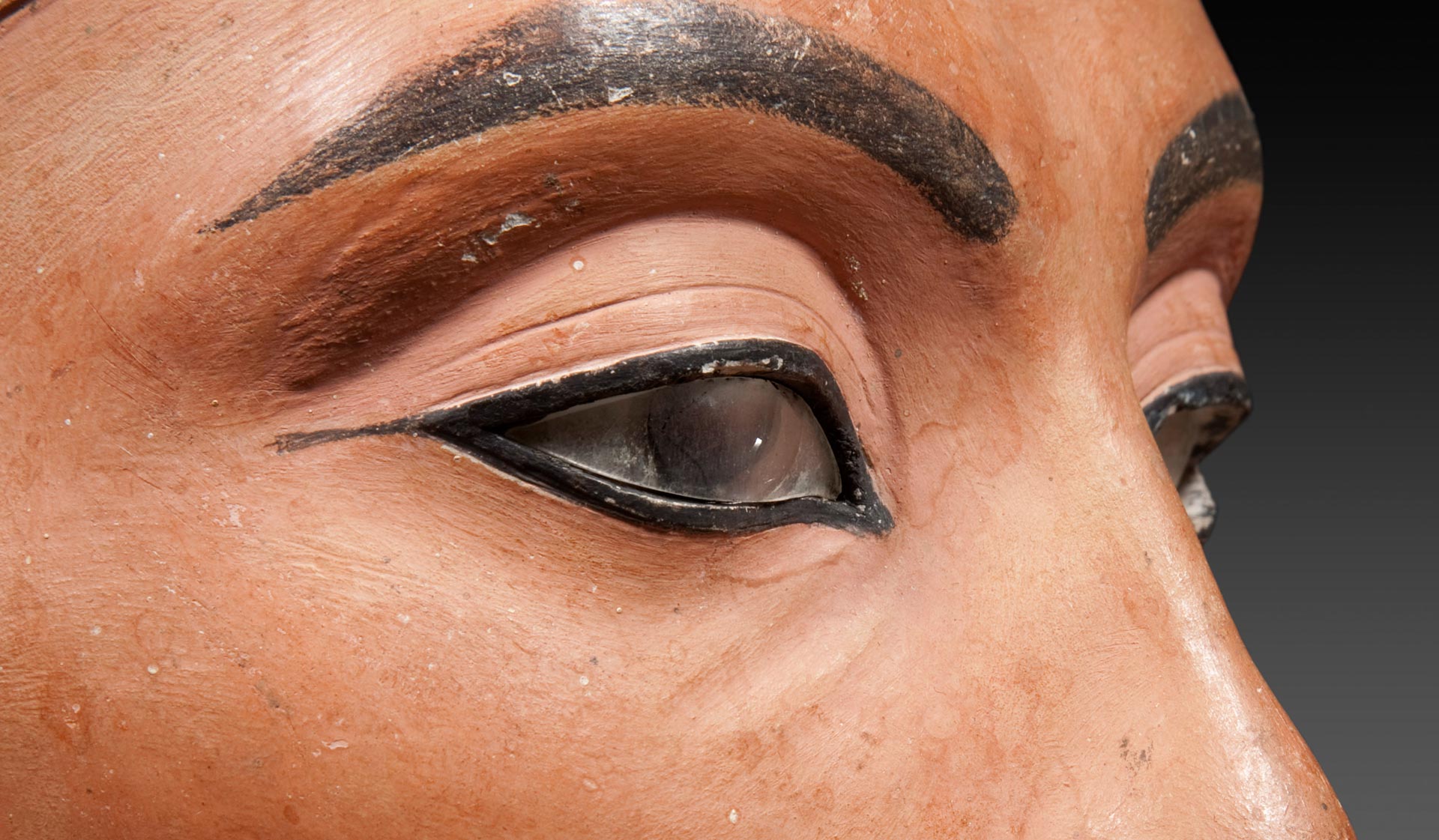
Bust of Nefertiti (detail) © National Museums in Berlin, Egyptian Museum and Papyrus Collection / Sandra Steiß

Kohl Jar and applicator, New Kingdom, ca. 1492-1473 B.C..E. via The Metropolitan Museum of Art. Public Domain.
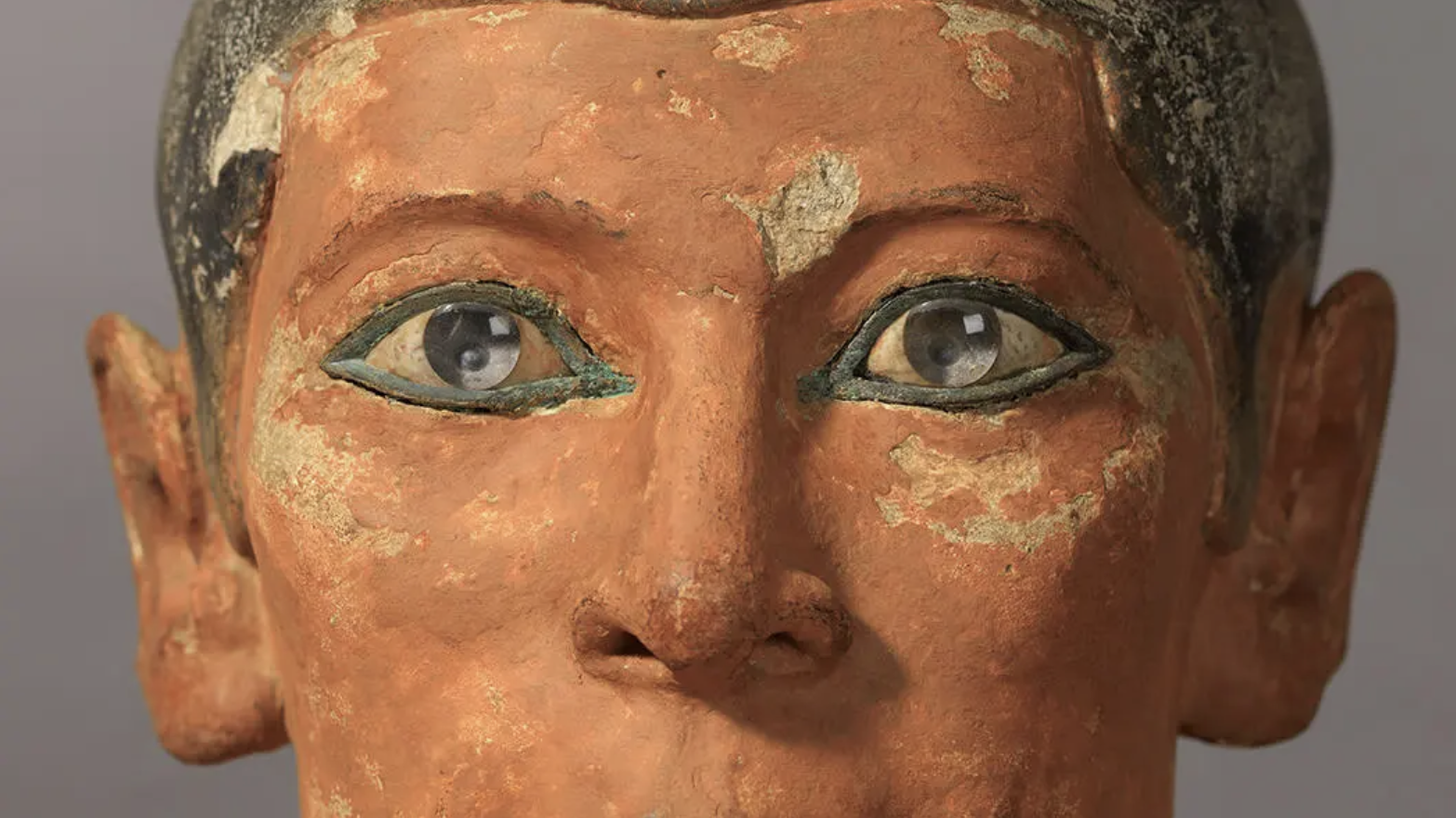
The Seated Scribe (detail), statue between 2620 and 2500 B.C.E. Louvre
Egyptian stone eye inlays, New Kingdom 1550–1070 B.C.E. White calcit eyes wirh cosmetic lines and brows in lapis. Via Christies
 Design is fine. History is mine.