Alongside Marcel Breuer, Erich Dieckmann (1896–1944) was one of the Bauhaus’ most talented furniture designers. Trained in both architecture and carpentry, he developed a distinctive style – geometric, functional, and suitable for industrial production, yet always rooted in craftsmanship. He primarily developed furniture, but also designed carpets, clocks, and concepts for interiors. But despite the aesthetic quality of his work, he faded into obscurity.
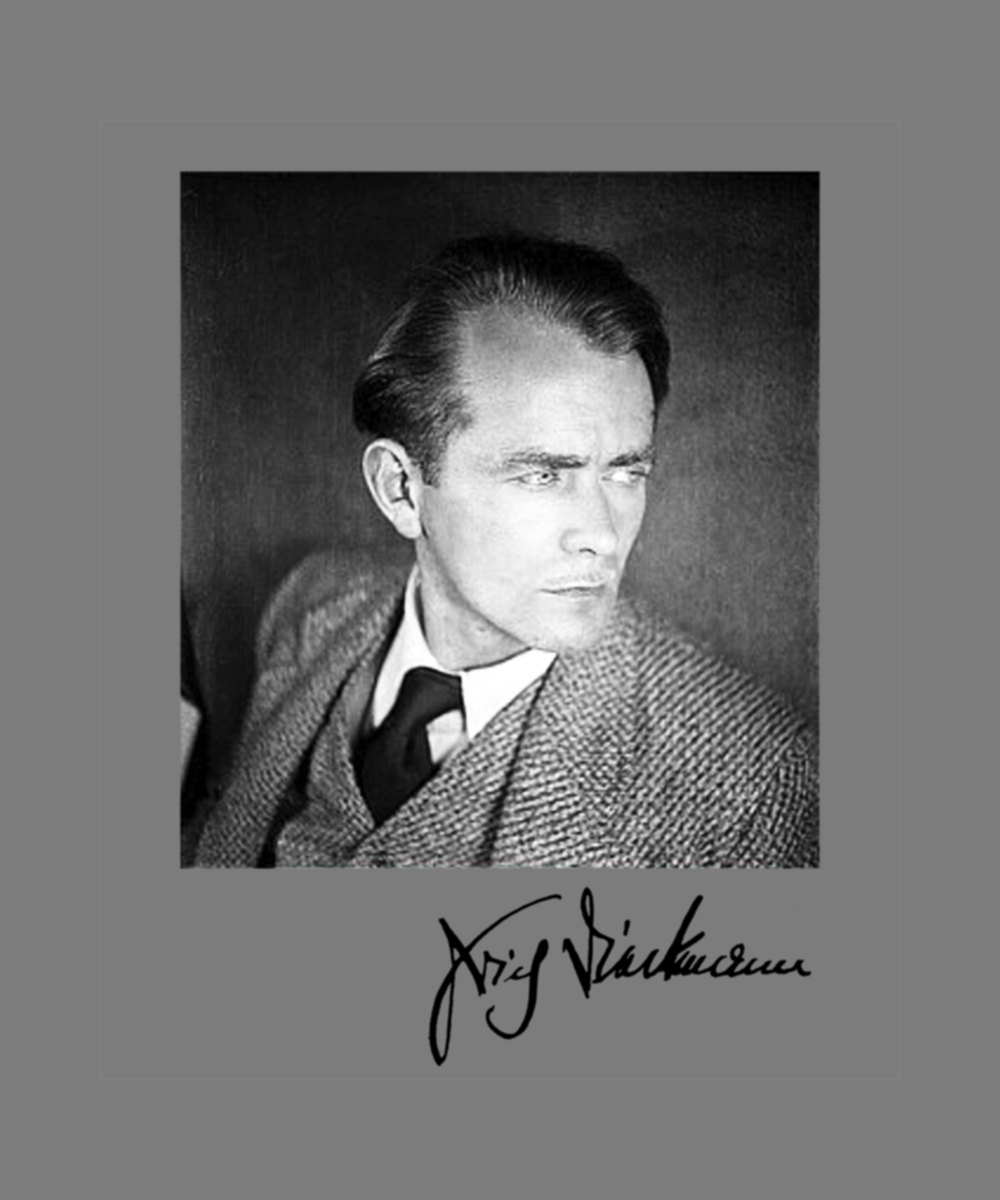
At just 17, Dieckmann volunteered for military service in WW I, a shell shattered his left forearm in 1915, the injury ended his dream of a seafaring career. So he studied architecture at the Technical University of Danzig from 1918 to 1920. He did not complete the degree, as he disliked the program’s approach, but the training gave him a strong foundation in spatial planning and construction principles.
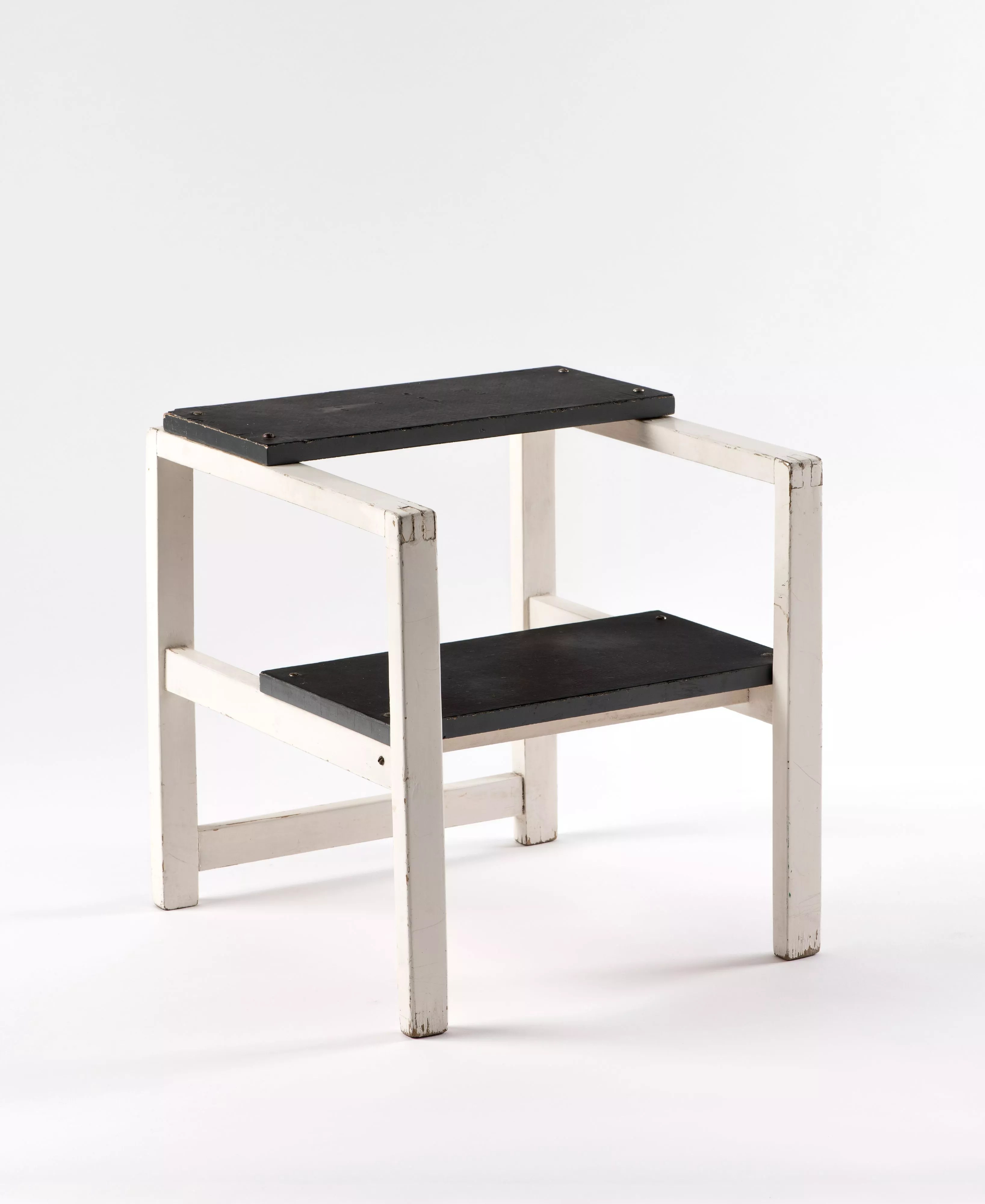
Children’s ladder chair, Erich Dieckmann, Weimar, ca. 1925. MK&G Hamburg
Gerhard Marcks introduced Dieckmann to the Bauhaus in Weimar, where he studied from 1921 to 1925 on a scholarship under Johannes Itten, completing a carpentry apprenticeship. During this period, he joined Walter Gropius’s inner circle. Unlike Breuer, he retained traditional wood joinery and favored special combinations – for example oak with bird’s-eye maple, walnut with elm.
His first major commission was the master bedroom and dining room for the 1923 „Haus am Horn (in the context of the first Bauhaus exhibition), praised for its clarity and simplicity.
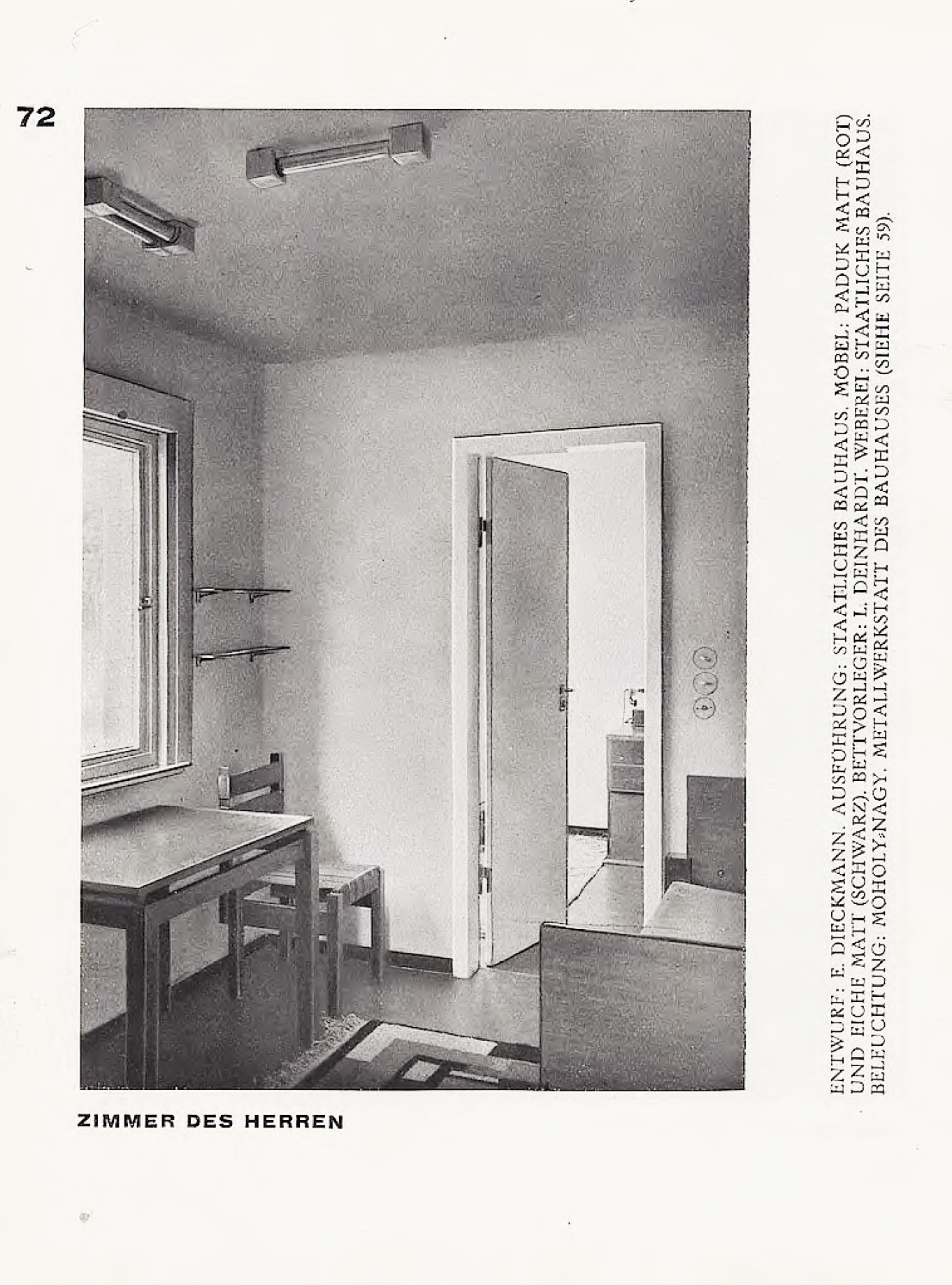
Men’s room. Design: Erich Dieckmann, executed by the State Bauhaus Weimar; furniture: padauk (red) and oak (black); bedside rugs: Lis Deinhardt, weaving workshop; lighting: Moholy-Nagy, metal workshop. Source Bauhaus Buch 3.
After the Bauhaus moved to Dessau in 1925, Dieckmann stayed at the successor institution, the Staatliche Bauhochschule Weimar, directed by the architect and reformer Otto Bartning (1883–1959). He became head of the carpentry workshop and was instrumental in creating a model testing facility for “standard furniture” (Typenmöbel), regarded as his most important achievement. These pieces were affordable, hygienic, and adaptable — ideal for the cooperative housing projects championed by the Werkbund. Dieckmann created standardised furniture for a Mies van der Rohe model apartment at Stuttgart’s Weissenhof Estate in 1927, composable systems with a basic dimension that can form a unit in the living room, bedroom or dining room.
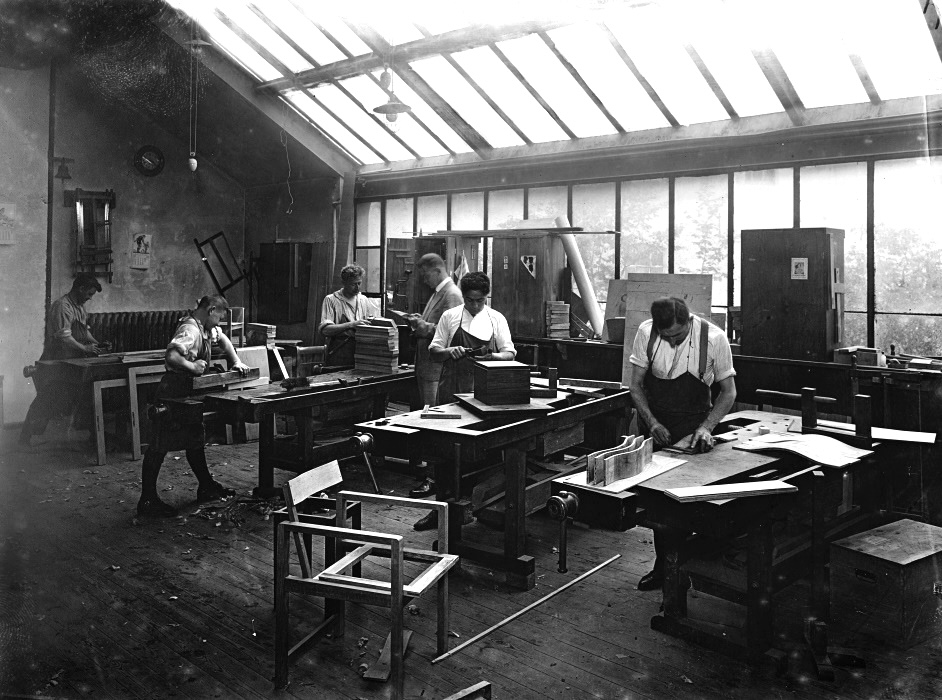
Carpentry department at the Staatliche Bauhochschule Weimar, headed by Erich Dieckmann, 1927. Photo: © Staatliche Museen zu Berlin, Photothek Willy Römer / Ernst Gränert
Dieckmann’s furniture is much more airy and open, as if drawn into the room; it does not obstruct movement or the view through the room. – Marcel Breuer.
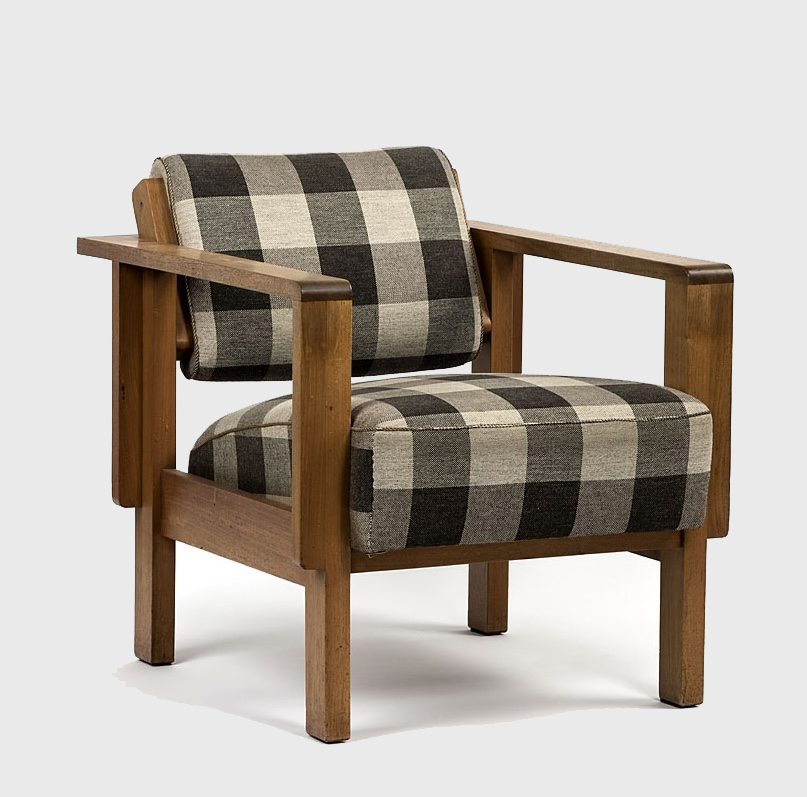
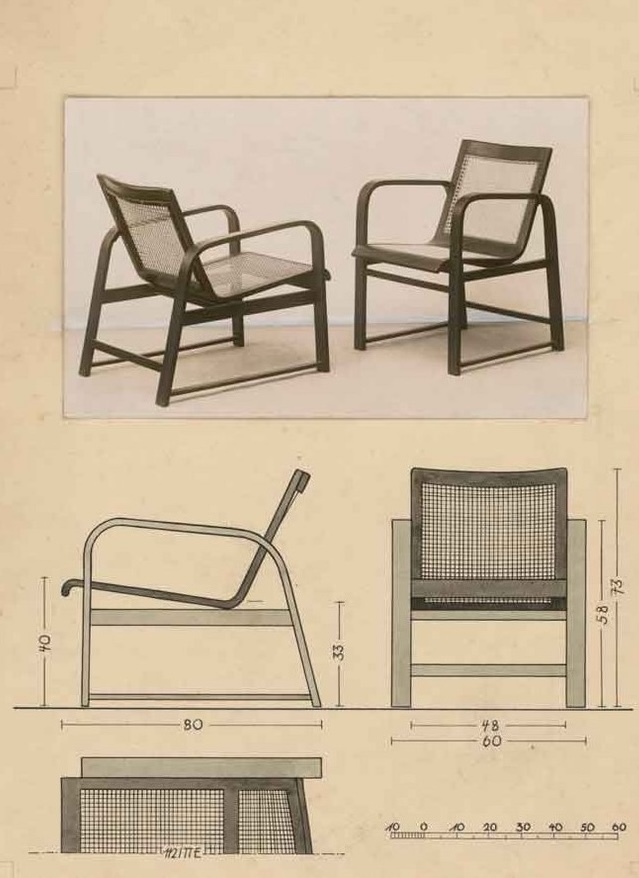
Lightweight club chair, Staatliche Bauhochschule Weimar, Design/Production around 1926. Photo: Public Domain. Via MKG Hamburg.
The armchair, designed for the standard furniture range, belongs to a series of models whose cubic shape is reminiscent of English club chairs from the 1920s.
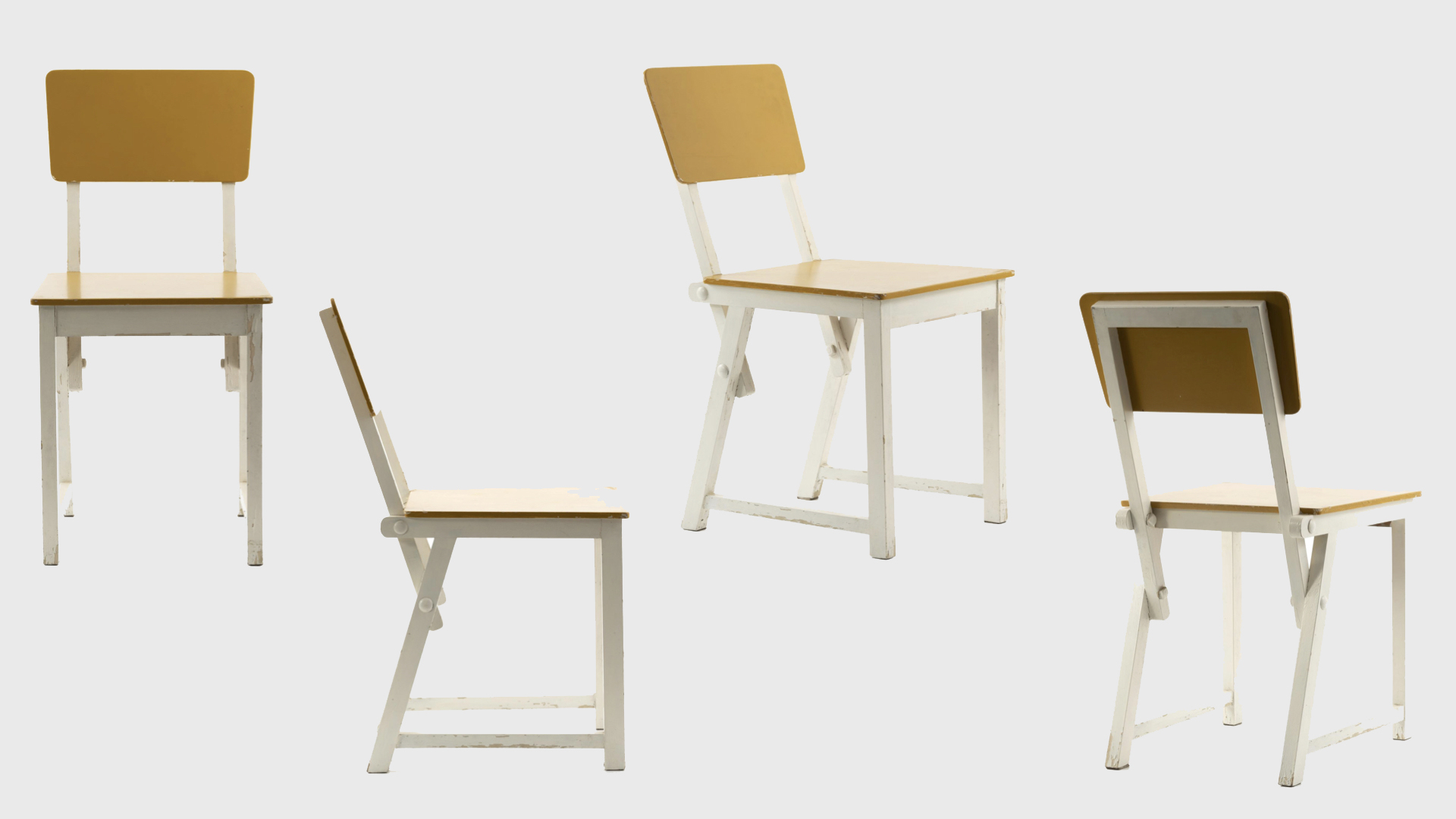
The H2 kitchen chair from 1926, executed by the State Building Academy Weimar, was also used in the Children’s home in Neuruppin, which Dieckmann furnished. Source Quittenbaum
He also took part in the Der Stuhl exhibition, and designed school furniture for Peter Petersen’s progressive school in Jena. He later furnished model apartments for exhibitions in Munich (Heim und Technik, 1928) and Berlin (Bauen und Wohnen), aiming to advance cooperative housing interiors. Dieckmann’s commissions ranged from children’s homes to private villas, including the complete furnishing, textiles and lighting of Otto Bamberger’s Villa Sonnenhaus – one of the Bauhaus’ largest private projects. Bamberger (1885–1933) was an industrialist, art collector, and patron of the Bauhaus. He owned a textile and wicker furniture factory in Lichtenfels, Frankonia.
“A piece of furniture has either grown organically… or it has been cobbled together – from an elephant’s body, a bay leaf, a spider’s leg, if you will.” – Erich Dieckmann
In 1931 he lectured on modern furniture design, and Otto Bartning proposed him for a professorship – an appointment blocked by the rising National Socialist influence.
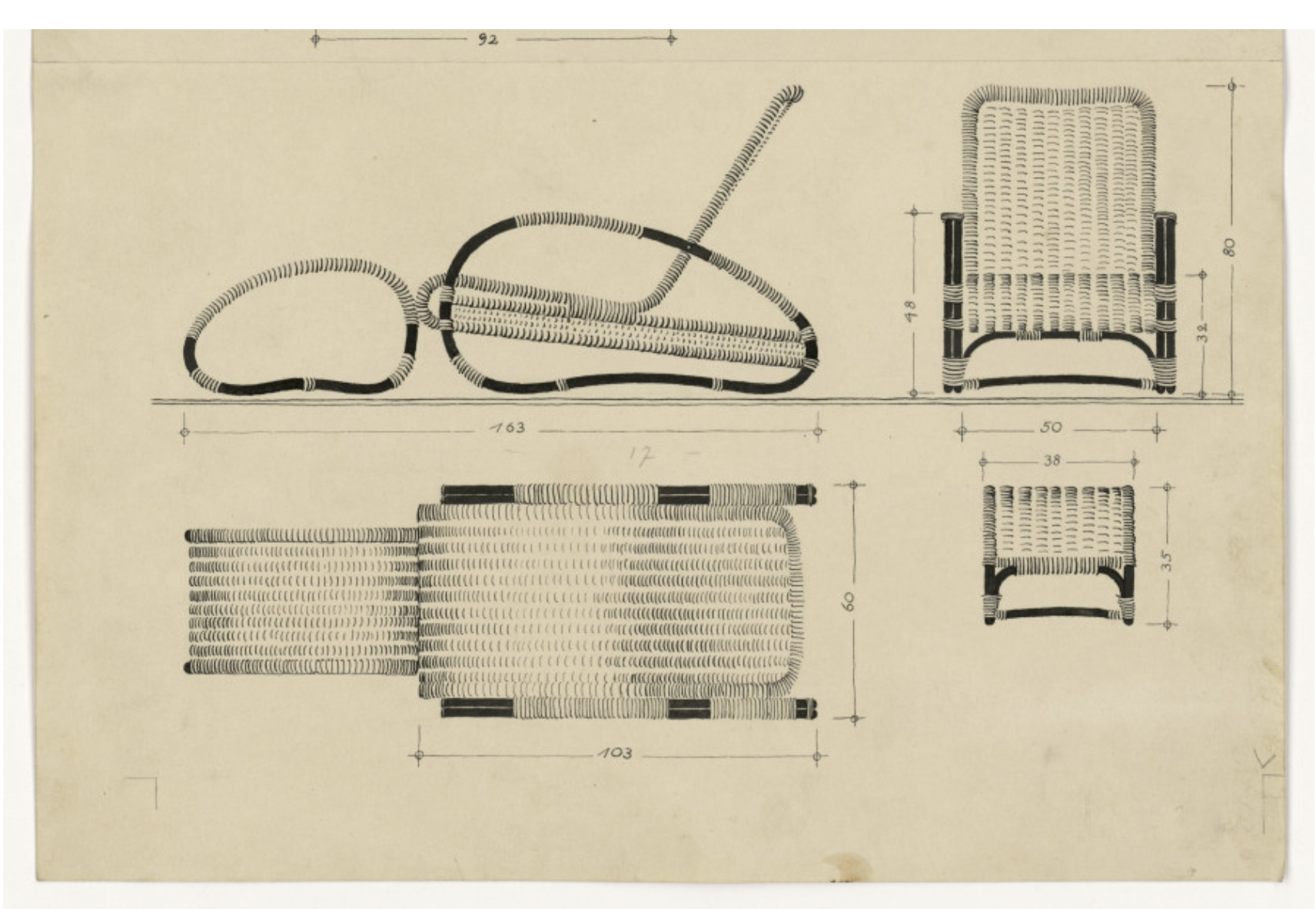
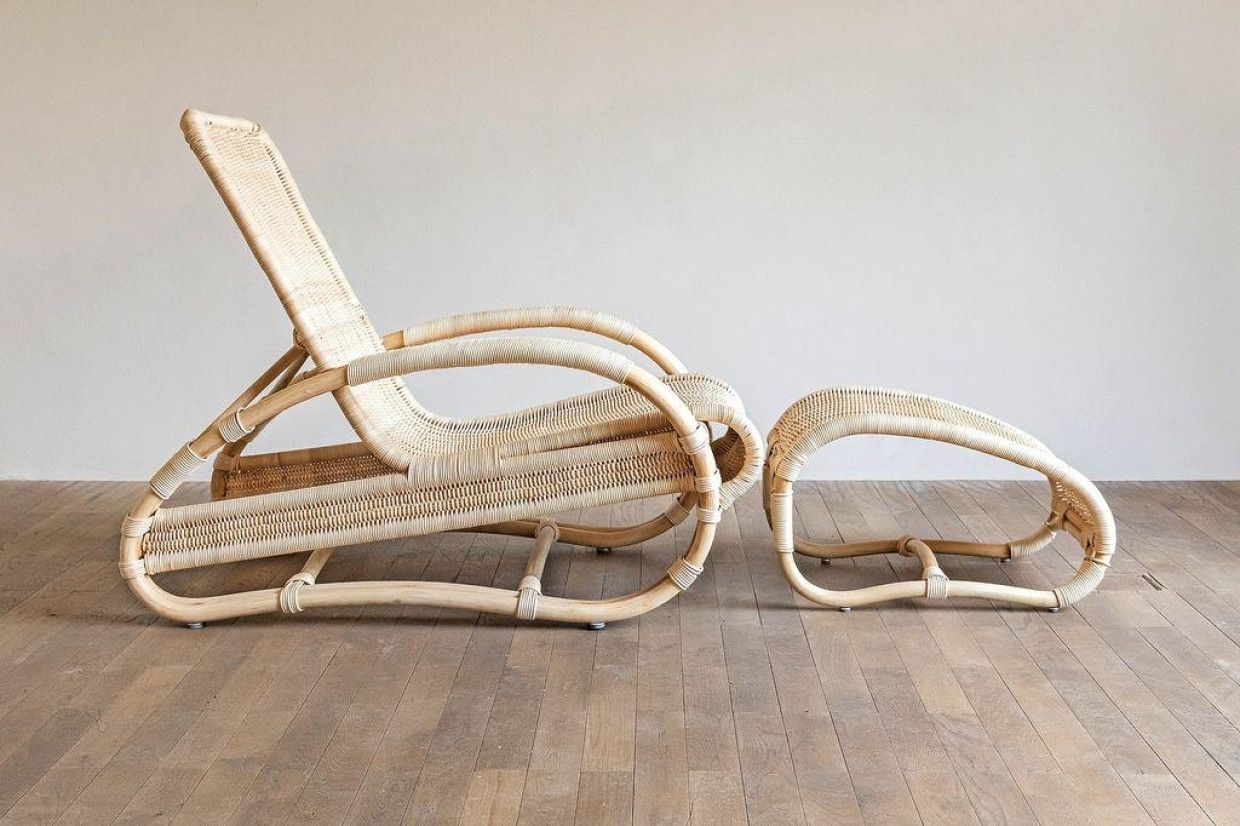
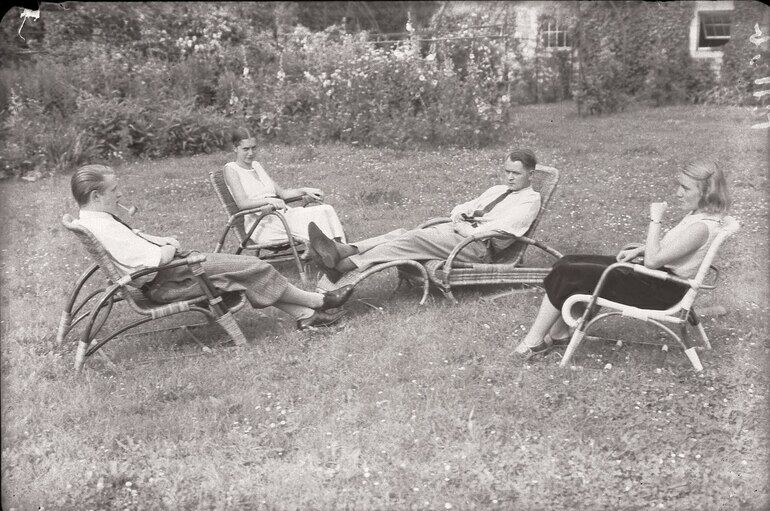
The deckchair made of Malacca cane and Bondot wickerwork from 1931 was probably never mass-produced. Dieckmann designed it for Dusco Werke AG in Coburg, which was a capital of the basket-making industry at the time. 1/ Drawing via smb. 2/ Basket weaver Gerd Backert from Michelau in Franconia has now brought the deckchair back to life. 3/ Dieckmann and students test his garden furniture, around 1931, from left: Bernhard von Brandenstein, Katharina Dieckmann, Erich Dieckmann, and Hela Jöns. Photo: © Collection of the City Archives of Halle (Saale), Finsler
“Life, warmth and truth can only be found where human nature comes into its own… Let’s allow our modern homes to have a human touch.” Erich Dieckmann.
In 1931 Dieckmann followed many former Bauhaus people to the school of Arts and Crafts at Burg Giebichenstein, where he oversaw the carpentry workshop until his dismissal by the National Socialists in 1933.
Dieckmann joined the NSDAP to protect his career, but his Bauhaus past was working against him. Years of unemployment and poverty followed, forcing his family apart and leaving him reliant on occasional design work. In 1936, he found a post in Hanover, reuniting his family, and moved to Berlin in 1938 to run a carpentry workshop. From 1939, he served as a consultant at the Reich Chamber of Fine Arts, marking the end of his design career. He died in 1944 of a heart attack during Allied air raids.
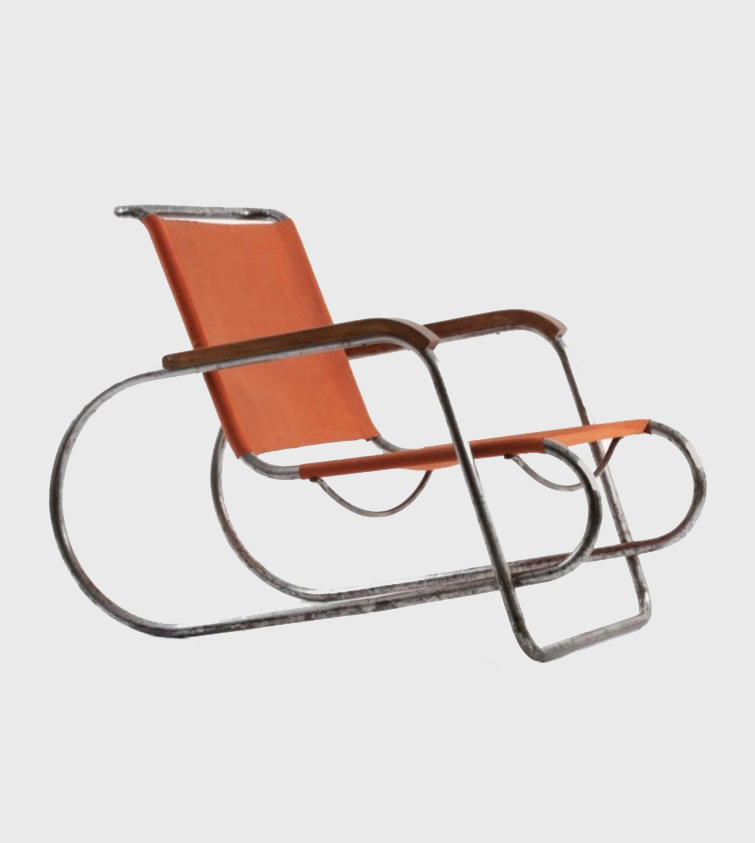
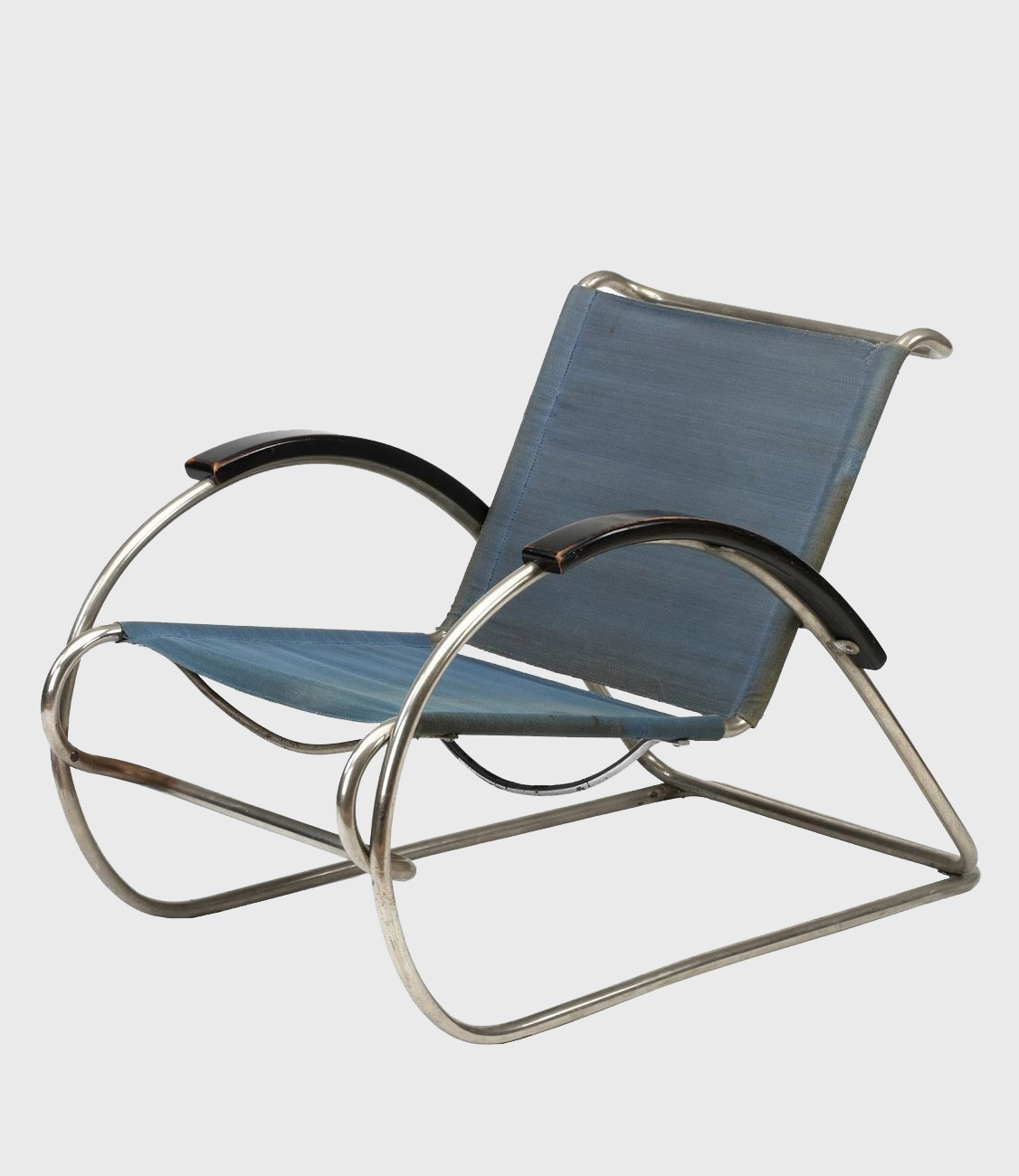
Armchair No. 8139, design: Cebaso, Ohrdruf i.Thüringen, 1930–1931, chrome-plated tubular steel, wood, iron yarn fabric © Galerie Fiedler, Berlin. Via deeds 2/ Armchair No. 8219, GRASSI Museum, Leipzig, Photo Christoph Sandig. Dieckmann suspended a seat between a skid-like frame, whose upper edges serve as armrests. This area was covered with lacquered wood to protect against the cold steel.
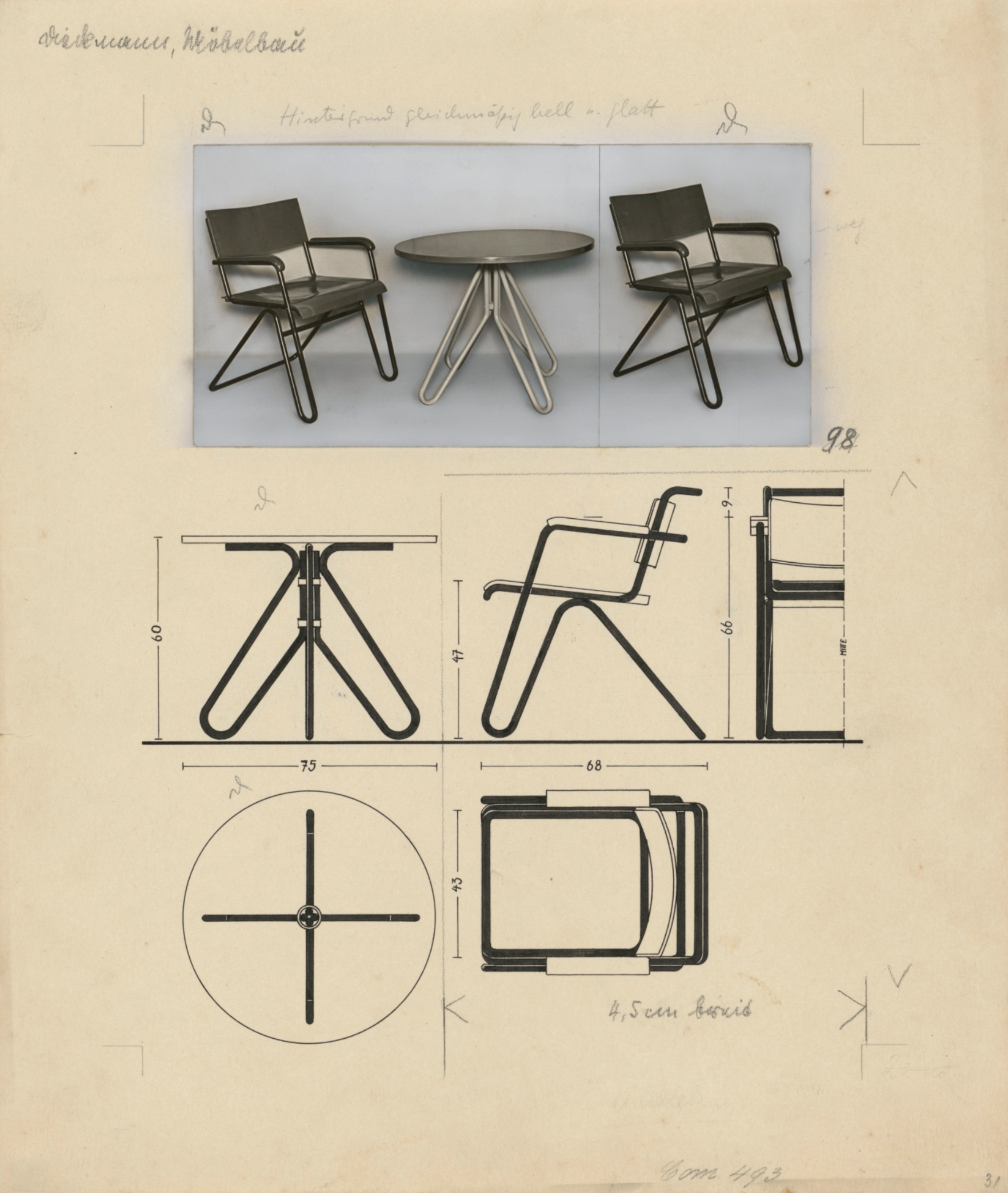
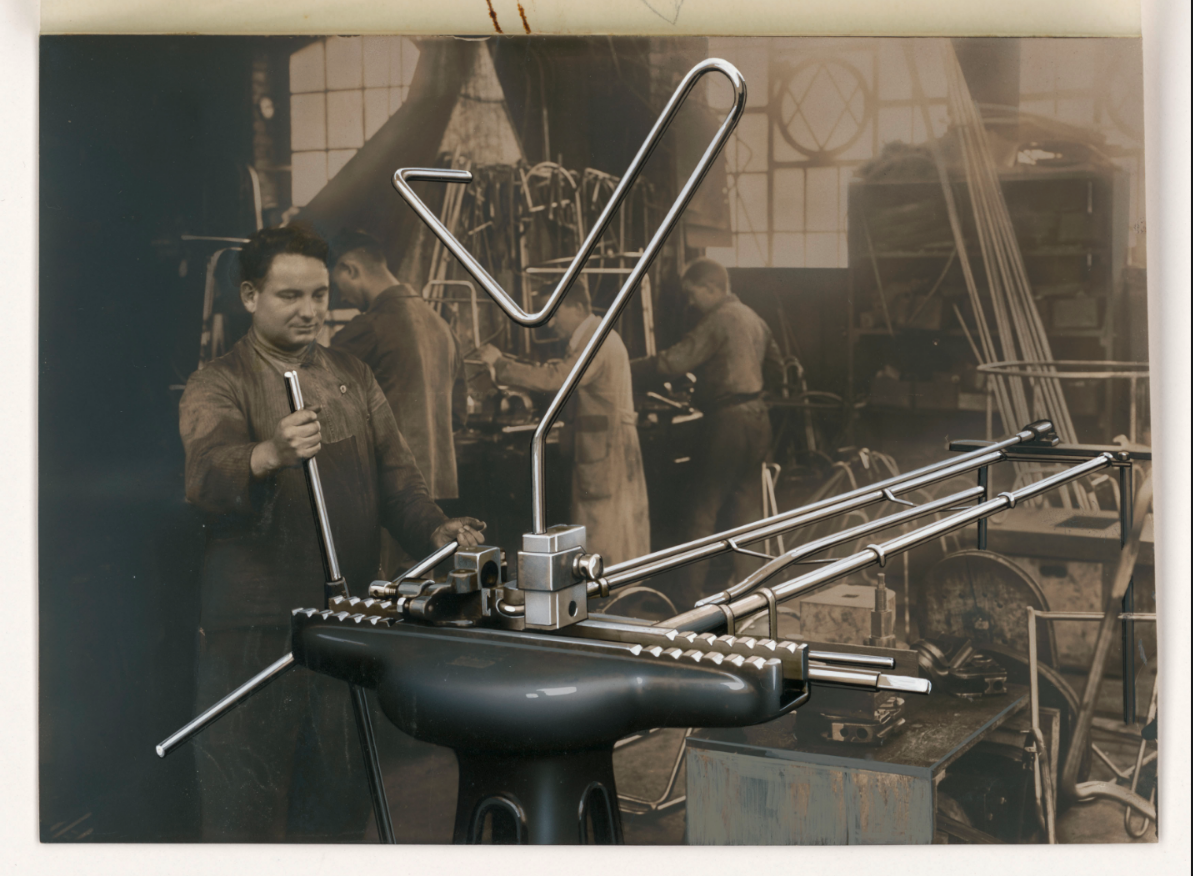
1/ Drawing Armchair and table with tubular steel frames, 1931. Staatliche Museen zu Berlin, Photo Dietmar Katz. 2/ Manufacture of tubular steel furniture from the book Möbelbau, 1931
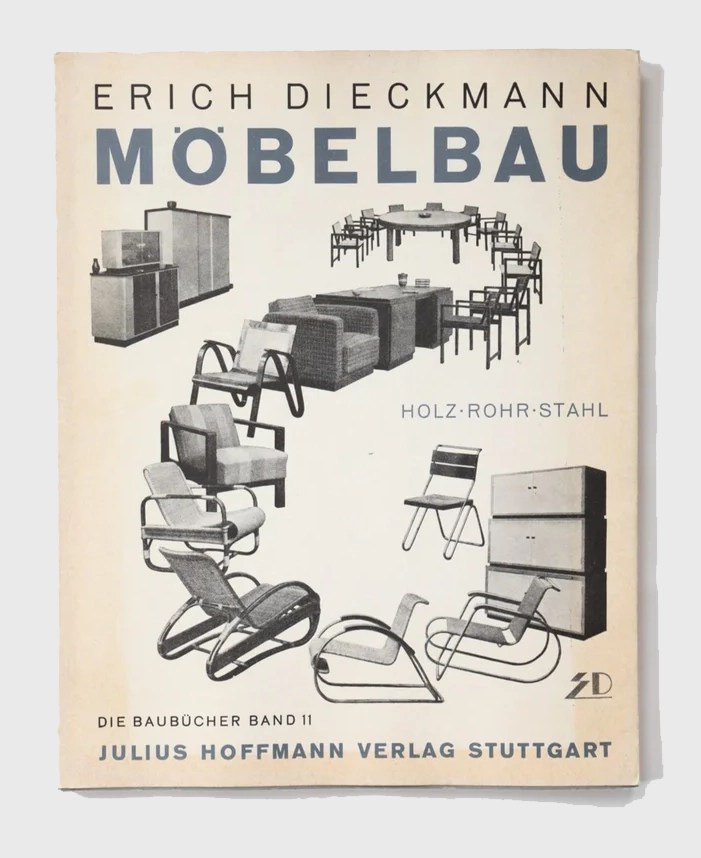
His graphic design clarity is especially visible in the plates of his book Möbelbau in Holz, Rohr und Stahl (Furniture construction in wood, tubing and steel) from 1931.
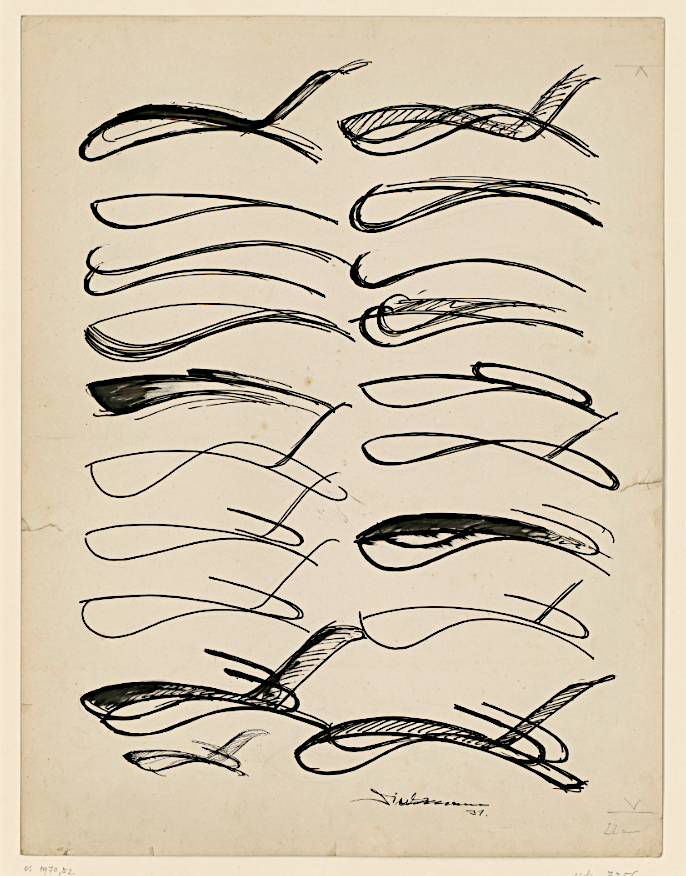
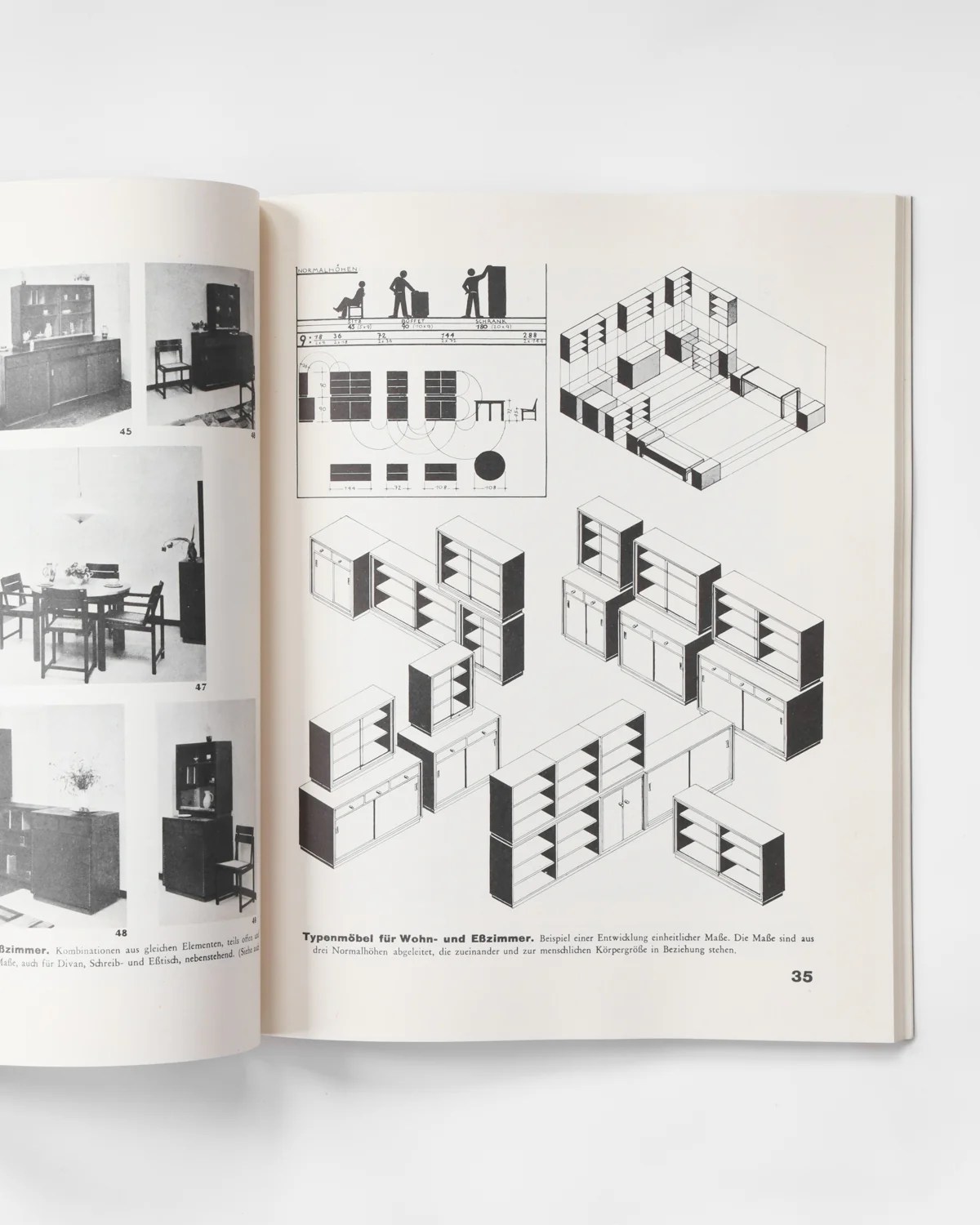
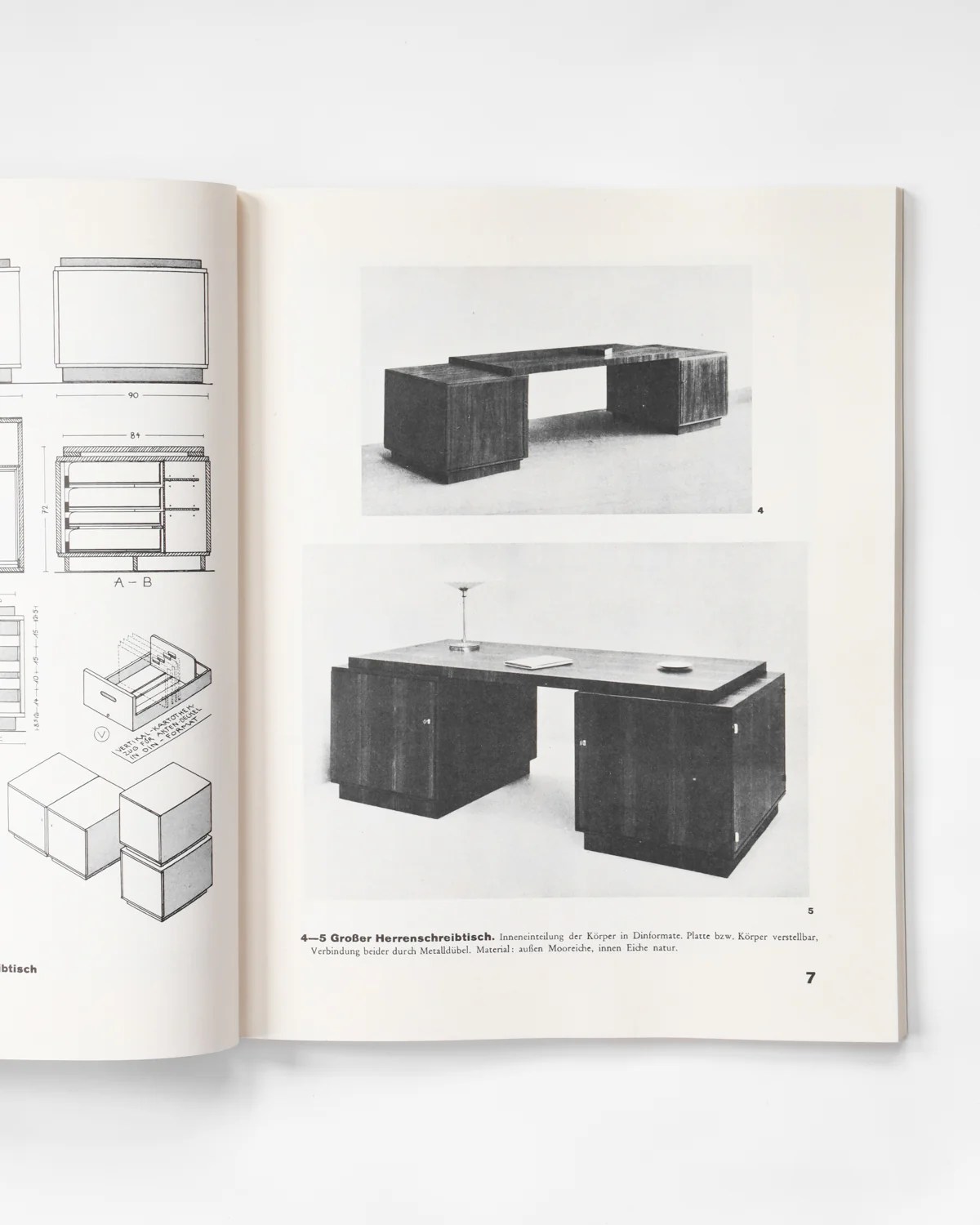
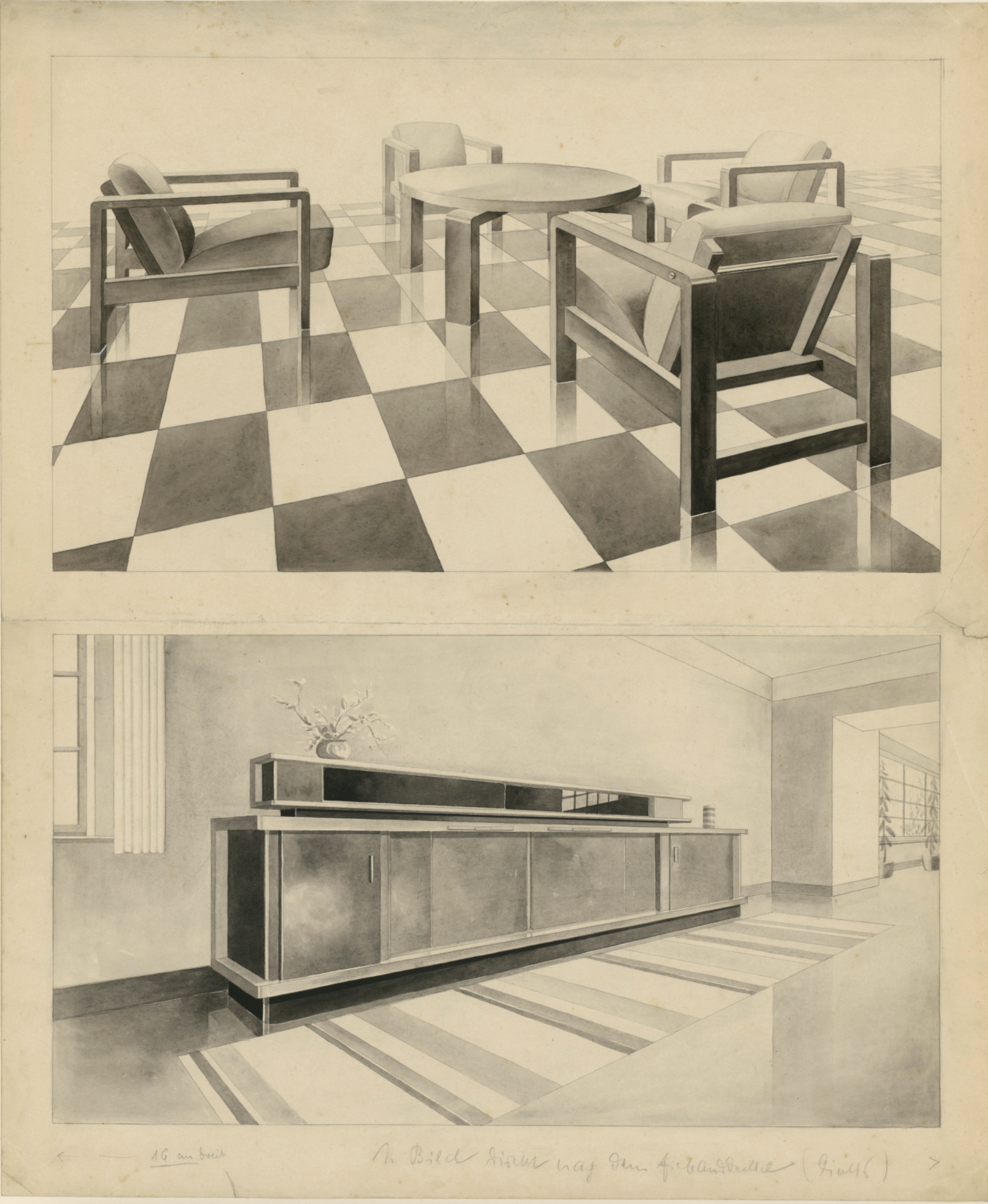
Alongside his carpentry and teaching, Dieckmann was a prolific draftsman. His drawings – ranging from precise technical plans to freehand sketches – were not merely preparatory work, but part of his design language. They reveal how he translated proportions, joinery, and material qualities into visual form before construction.
Take a look at his extensive drawing legacy (some 1,500 objects!) via smb Online collection.
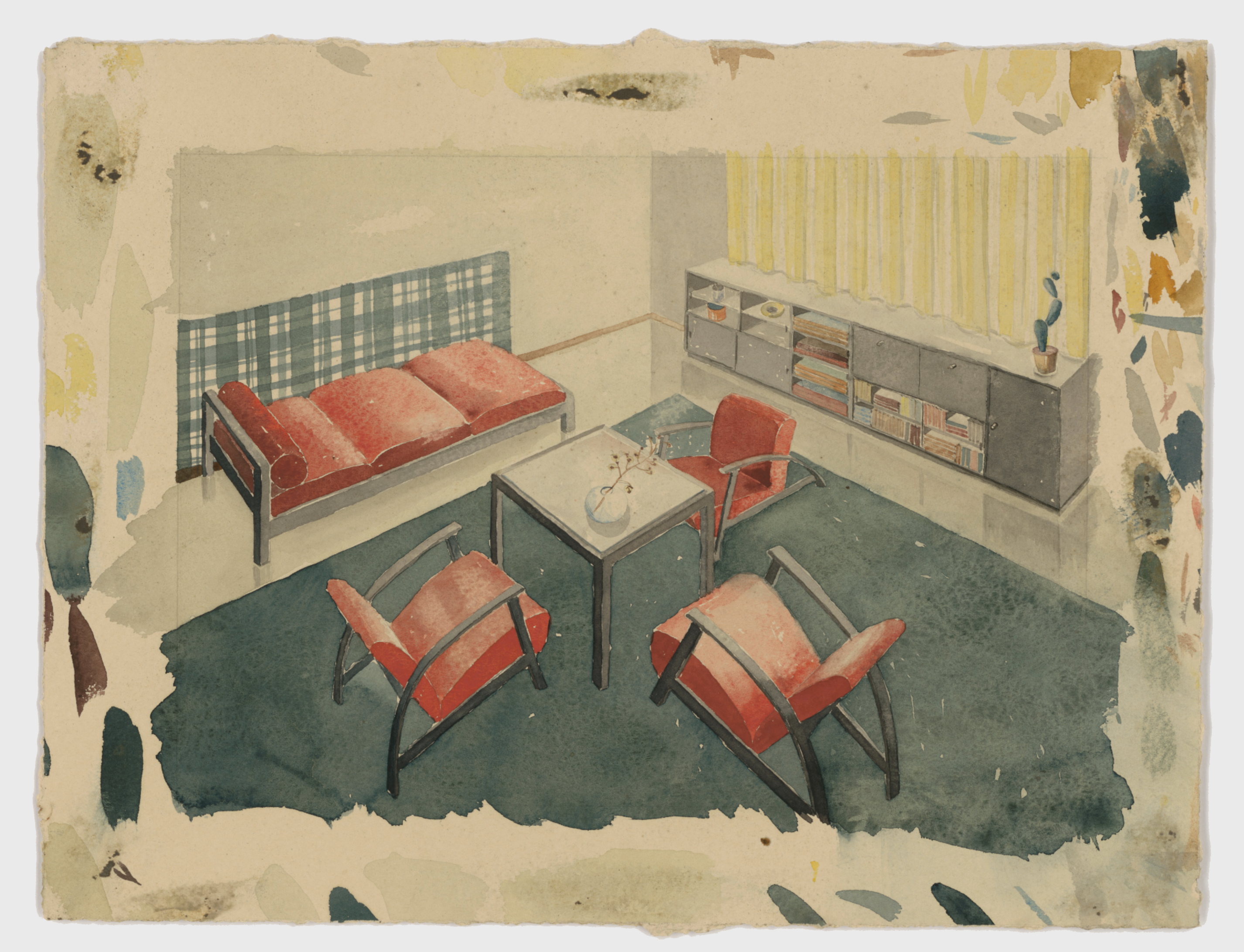
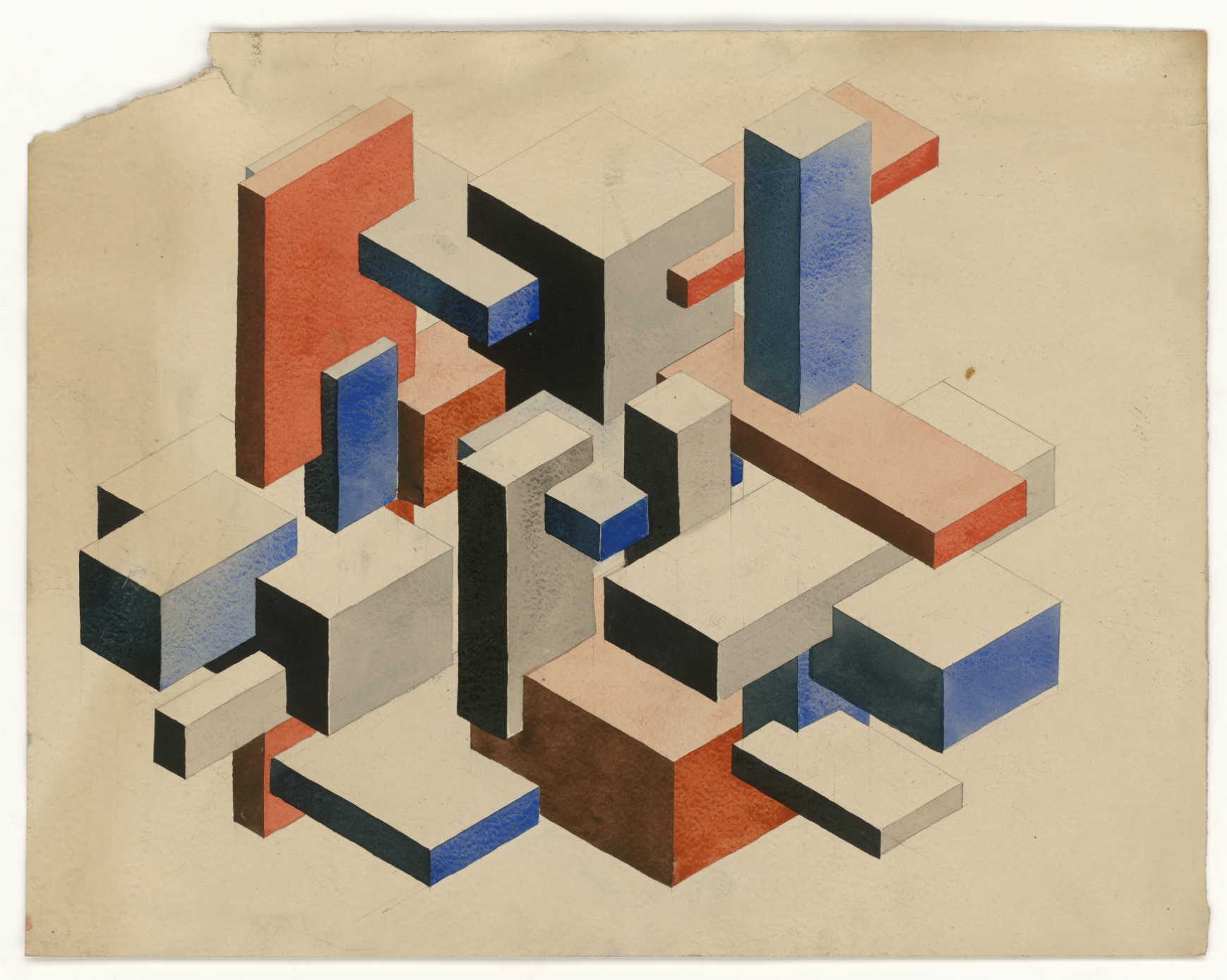
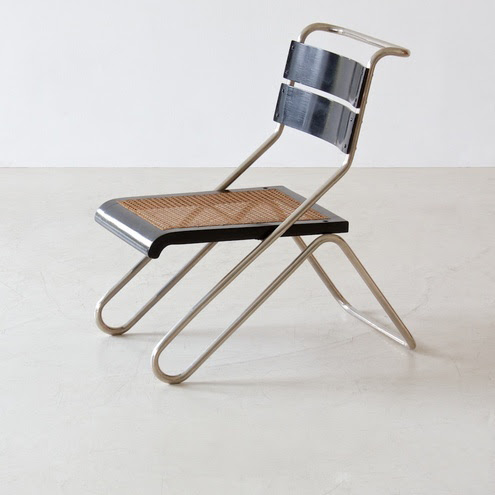
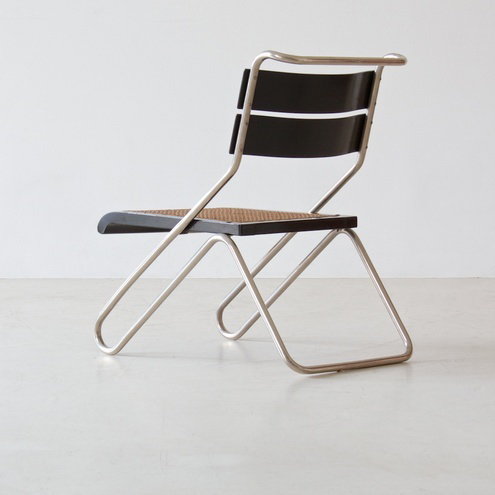
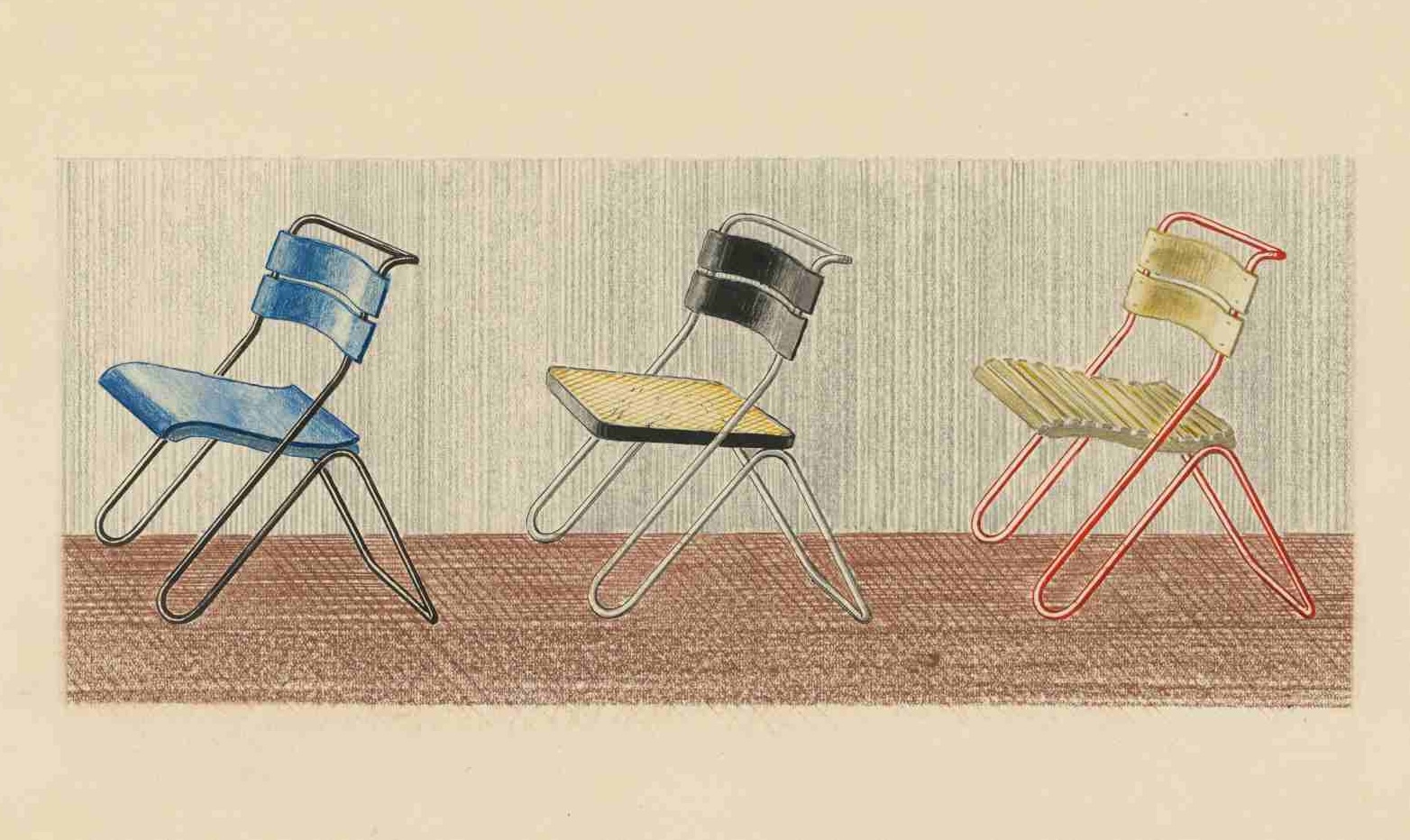
1/ Drawing Seating area with divan, Staatliche Museen zu Berlin, Photo Dietmar Katz. Tubular Steel armchair, 1931. Via Modern XX. 3/Drawing of three chairs, 1925–1935 © Art Library of the State Museums in Berlin – Prussian Cultural Heritage Foundation / Photo: Dietmar Katz.
Dieckmann developed the steel tube frame from a continuous line. As with many of his pieces, components were available in different versions, such as the seat, which could also be purchased covered with tubular mesh. The chair was advertised in the company catalogue as being suitable for all purposes: in the home, in the office, in conference rooms and as a hall and coffee house chair
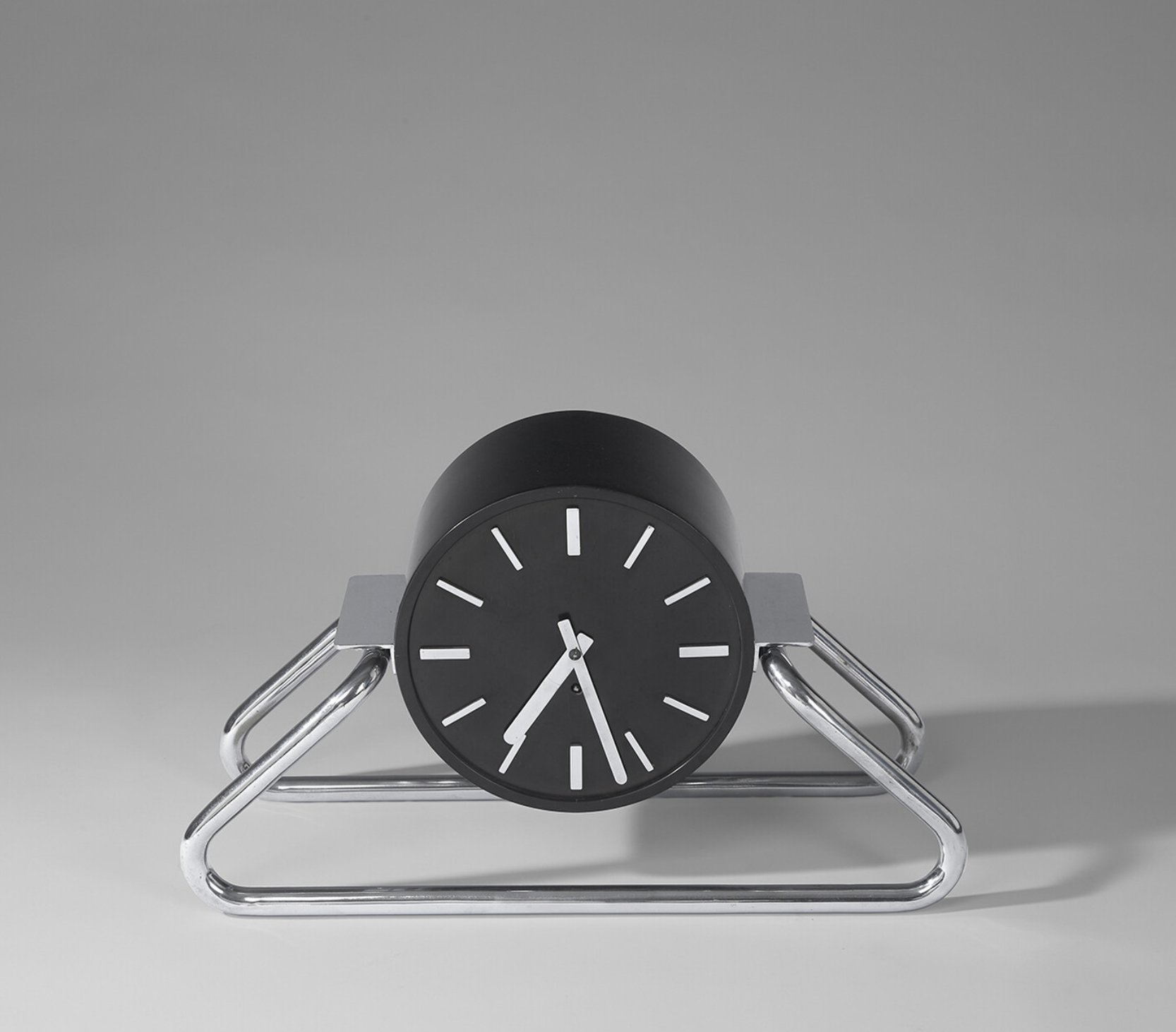
Table clock, 1931 © Staatliche Museen zu Berlin, Photo Karen Bartsch.
Dieckmann designed the clock as part of the interior furnishings for the home of entrepreneur Otto Bamberger. Bamberger was a collector of contemporary art and gradually had his villa, Sonnenhaus, in Lichtenfels furnished with designs by Dieckmann.
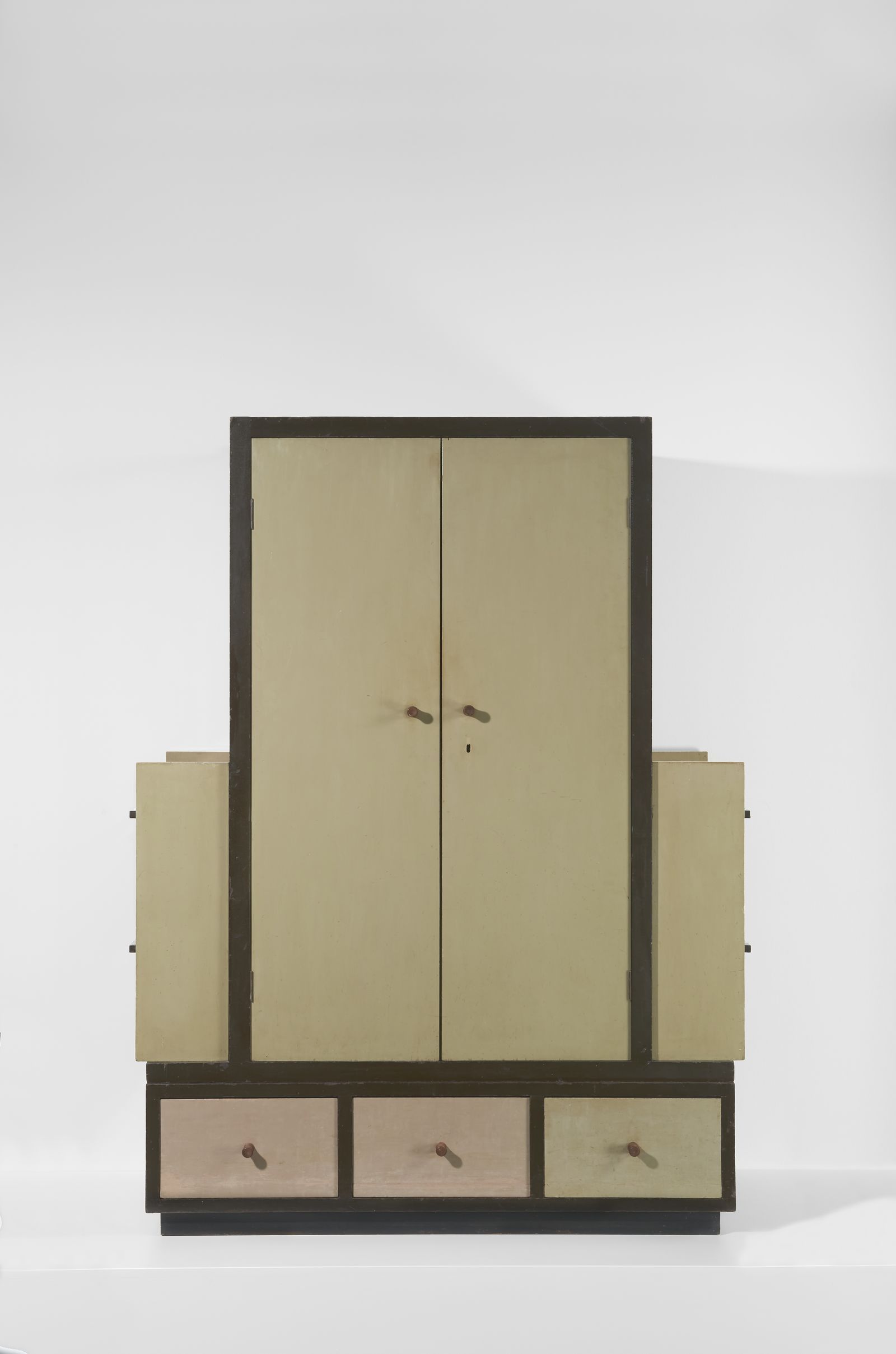
The multi-purpose wardrobe with side shelves was designed at the Bauhaus in Weimar or at the State Academy of Architecture. The accompanying design drawing identifies the piece as a ‘simple cabinet for a bachelor’s room for clothes and linen, with two side shelves for books’. © Kunstgewerbemuseum der Staatlichen Museen zu Berlin, Photo: Karen Bartsch
Interesting article about the restauration of the bauhaus wardrobe here: Staatliche Museen Berlin
More about Dieckmann here: Smow / Stylepark and Wikipedia
Weitere Infos im Rahmen der Ausstellung Stühle: Dieckmann! aus dem Jahr 2022: Pressemitteilung Stiftung Preussischer Kulturbesitz
 Design is fine. History is mine.