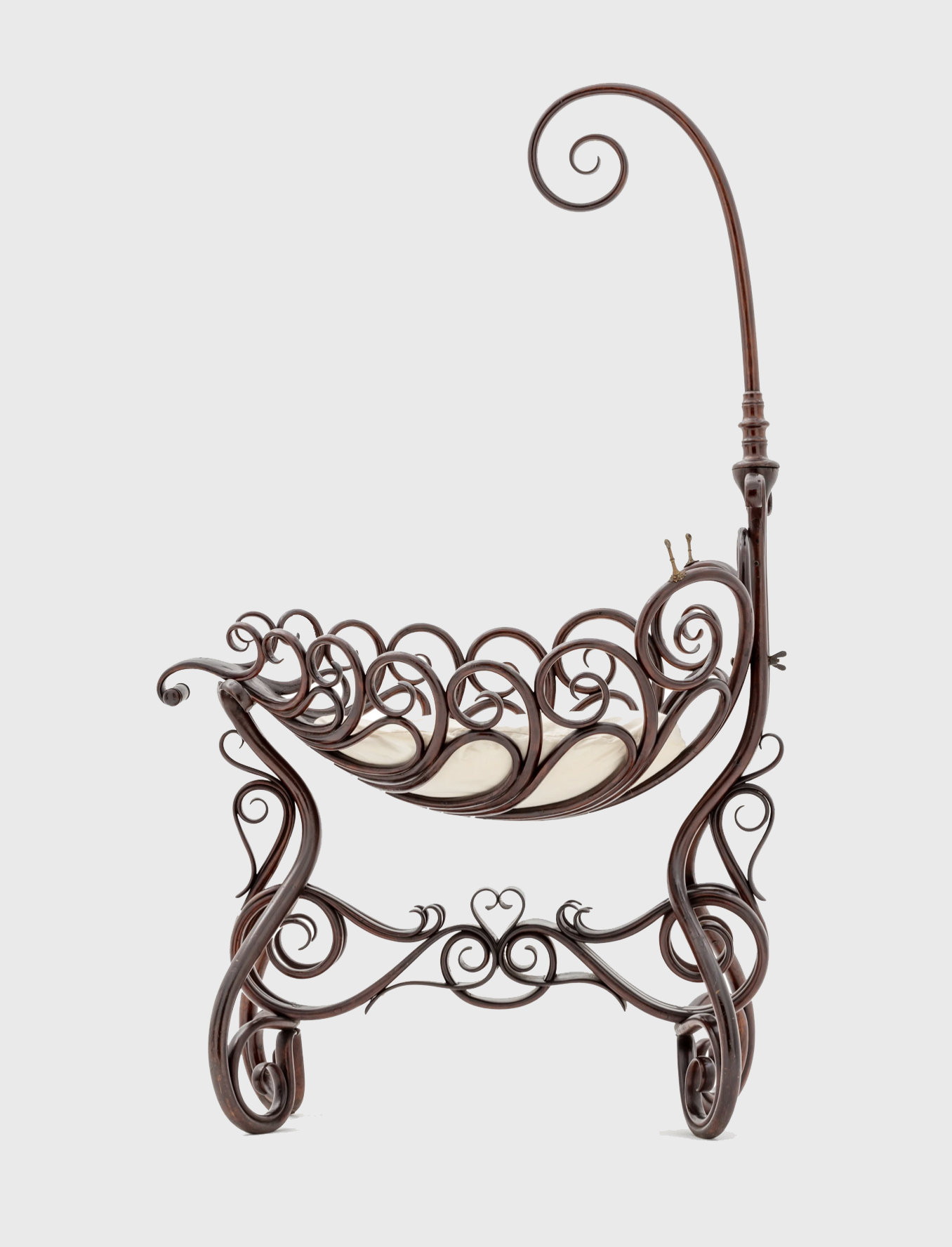
The company J. & J. Kohn (Jacob and Josef) from Vienna offered several designs of cradles made from bentwood; above is number 1571, one of the most extreme examples in Art Nouveau style.
Bentwood designs became ubiquitous as seating for cafés and gardens and later as elaborate, upholstered domestic furnishings. Inexpensive, durable, light, and ideal for export because components could be assembled after shipping, pieces such as J. & J. Kohn’s cradle became perfect symbols of the new industrial age. The bentwood process had been developed by the German designer Michael Thonet in the mid-nineteenth century in order to make appealing functional furniture efficiently and economically. In 1867 the manufacturer J. & J. Kohn became Thonet’s chief competitor, opening factories in several international locations.
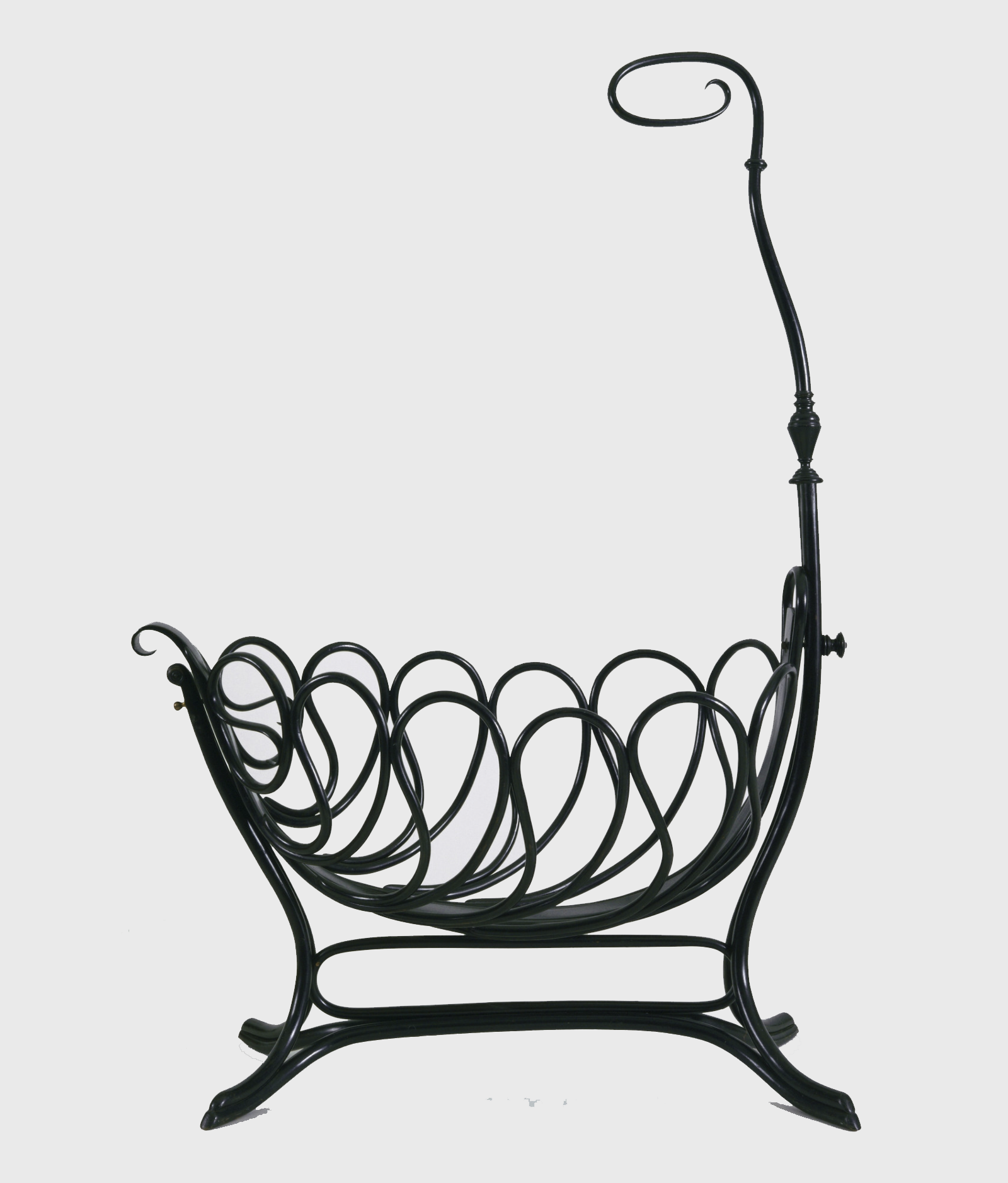
The cradle (like this model 1573 from 1895) was lined with thick cushions to create a soft, sheltered, egg-shaped bed for an infant. The sinuous and sensual design, with the elegant, curved forms and the long vertical arm that supported draped netting, reflects the popular Art Nouveau style of the time, in this case the style of Vienna Secession. Such cradles could be found in stylish, bourgeois homes all over Europe.
Bentwood furniture was made by steaming lengths of wood and then bending them and placing them in metal molds to dry. The resulting standardized sections were assembled with hardware instead of the traditional hand-carved joints. The idea of standardized elements revolutionized the principles of furniture production. Source: MoMA.
Model No. 1571 via maas museum. Model No.1573 on view at the MoMA.
 Design is fine. History is mine.