A Chinese emperor once secretly purchased these scissors for his concubines, sparking a desire for them in other imperial palaces and setting the stage for its success. Three centuries later, the brand is still alive, and its forging technique has been recognized as part of China’s first batch of National Intangible Cultural Heritage.
The manufactory of Zhang Xiaoquan (c. 1643 – c. 1683) was founded in 1663. Creating those scissors involved as many as 72 steps. The most challenging one is embedding a piece of steel in wrought iron, which is then hammered repeatedly and ground with locally sourced mineral-rich mud bricks to create a sharp edge.
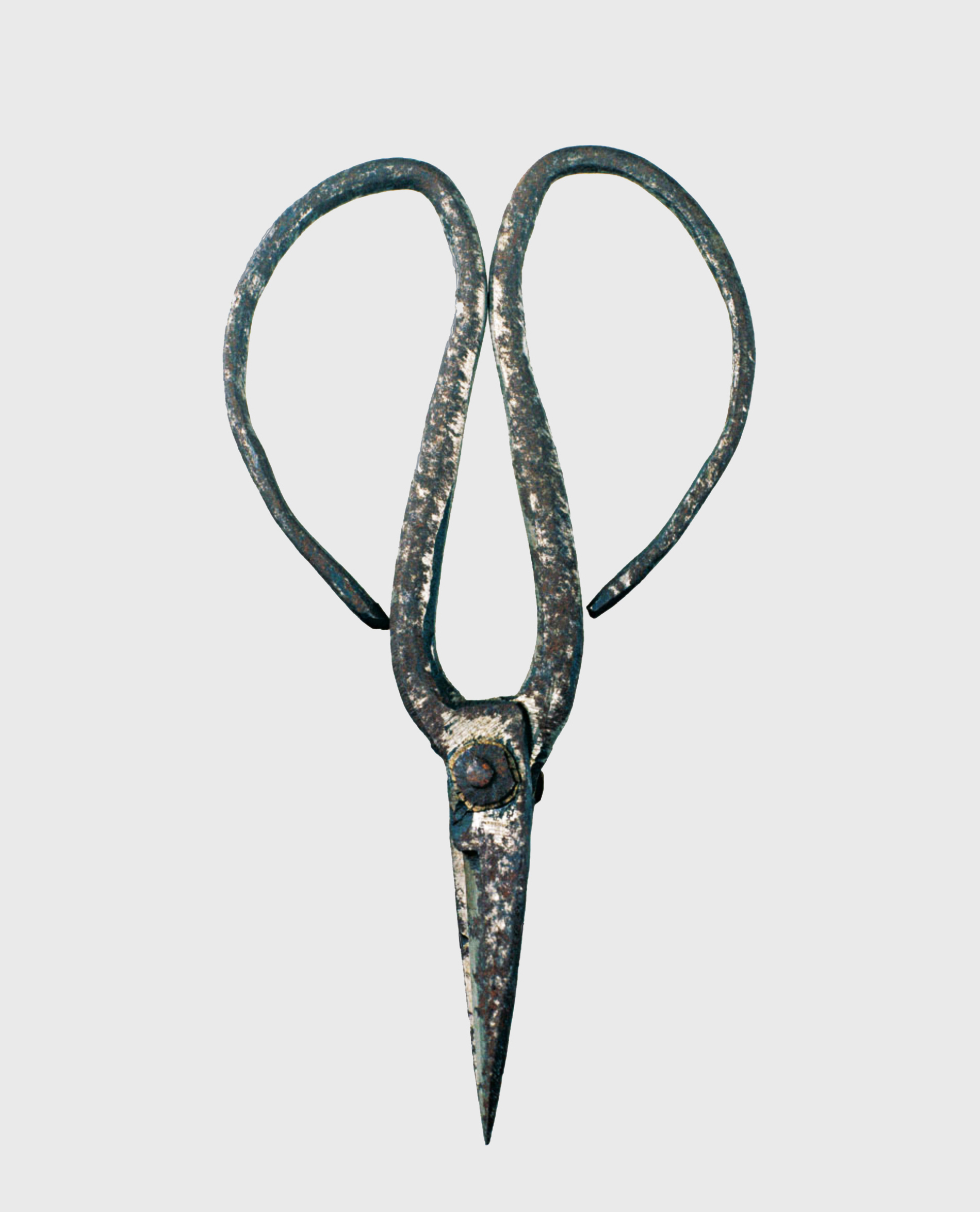
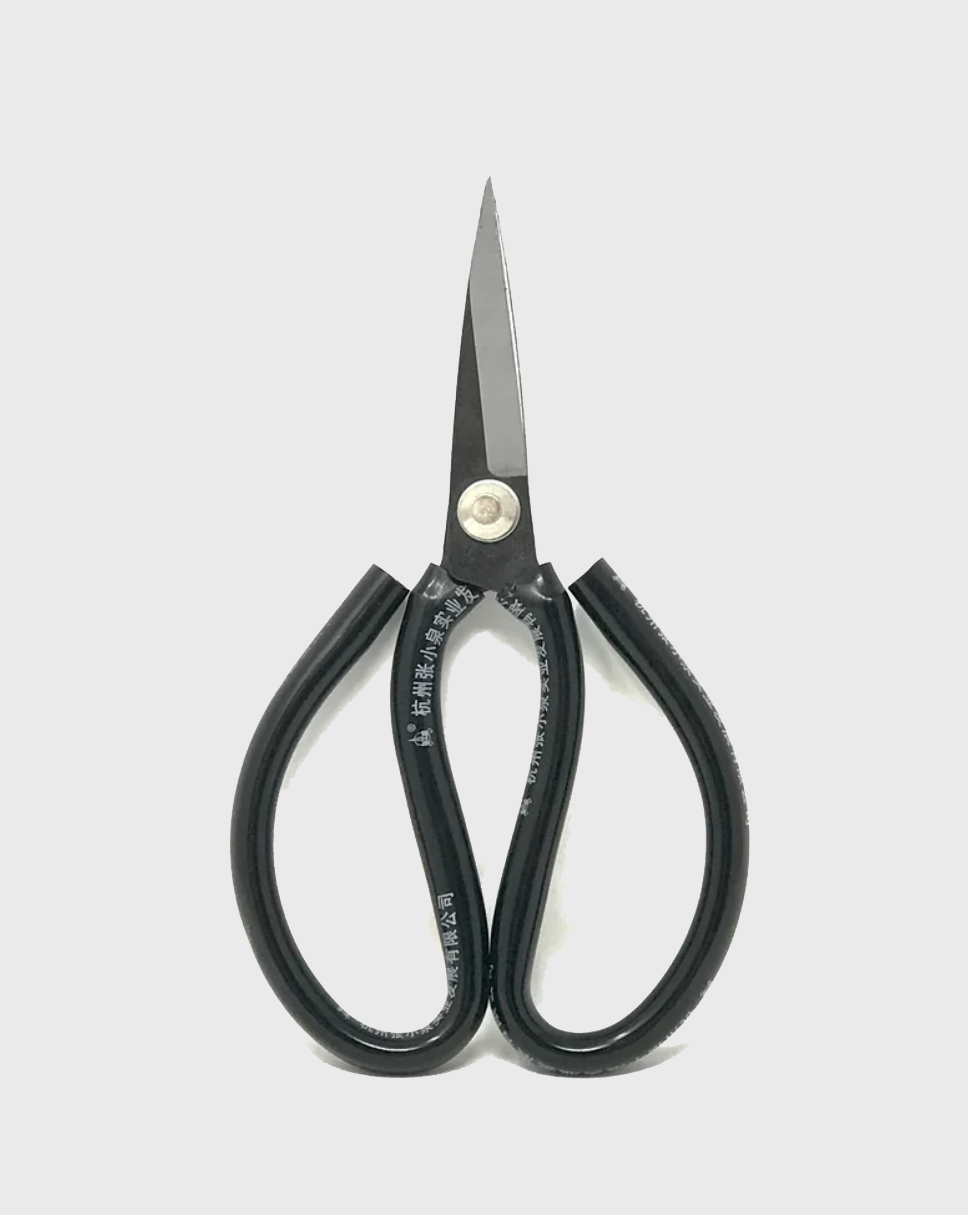
The iconographic scissors were designed by Zhang Xiaoquan and made from 1663 to present by Hanghhou Zhang Xiaoquan. Nowadays a length of quality tubing has been added to pad the handles and prevent soreness during use. Photo: Martha Mae. There you can buy them online.
This objext is #001 in the book series Phaidon Design Classics:
“In China the Zhang Xiaoquan brand represents not only a pair of scissors but also a part of Chinese culture. It is said that every household in the country owns a pair. The Hangzhou Zhang Xiaoquan scissors factory has been in operation for over 300 years and now sells 120 types of scissors in 360 specifications, including sewing, garden, office, hairdressing and kitchen scissors. Their largest, ‘King’s Scissors’, which are 115 cm (45 in) long and weigh 56 kilos (123 lb), are recorded in The Guinness Book of Records, while the smallest scissors are only 3 cm (1.2 in) long and weigh only a few grams. The original scissors are a beautiful example of simple, functional design. A copper rivet fixes two identical steel halves, each consisting of one blade and one hooped handle. The perfectly symmetrical design works for both right- and left-handed users. The scissors are lightweight, comfortable in the hand and extremely hard-wearing.
In 1663 when the Zhang Dalong scissors factory in Hangzhou, Zhejiang province, was taken over by the son of its founder, it also took on its inheritor’s name, Zhang Xiaoquan. From then until now the company has grown enormously and has enjoyed the patronage of China’s emperors. A huge milestone in the history of the company came in 1956 when Chairman Mao, in his writings focussing on the socialist recon- struction of the handicraft industry, cited Zhang Xiaoquan scissors for their contribution to the nation and advised that the industry be developed. With substantial government backing, the new Enterprise began to build larger premises and in 1958 the state-run factory was founded. The company is now continually ranked first in national quality evaluations and since 2000 has transformed from a state-run concern to a limited company. As a result of continued mechanization and technological advancement, the factory now produces a phenomenal 45 million pairs annually. Zhang Xiaoquan Household Scissors can be bought in 90 per cent of China and its sales make up. 40 per cent of the Chinese scissors market.” Copy via Phaidon – Design Classics 3
 Design is fine. History is mine.