Fratelli Toso refers to a brotherhood of glass makers and glass designers, who created exceptional glassworks in Murano, particularly in the 1960s, albeit a bit in the shadow of illustrious names such as Vennini, Vistosi or Barovier & Toso.

Ermanno Toso, vase “Nerox a petoni”, 1960. H. 23 cm. Execution: Fratelli Toso. Colorless glass, deep gray iridescent powder fusions, red, yellow and violet spot fusions. Via Quittenbaum
Fratelli Toso was founded in 1854 by the six sons of Pietro Toso – fratelli means brothers – and is one of the oldest glass manufacturers in Murano, well known for vases, lamps and decorative pieces. The brand presented various styles, from traditional “murrini” glassmaking to innovative modern decors during the 1960s.


Ermanno Toso, “Nerox a petoni”, 1961. Via Quittenbaum. Giusto Toso, Vase “Incalmo”, 1961. Via Quittenbaum
Ermanno Toso (1903–1973) was a productive glass maker and designer, he completed his training at Fratelli Toso, later becoming a partner there; he was artistic and commercial director of the glassworks since 1936 and the father of Giusto and Renato Toso.

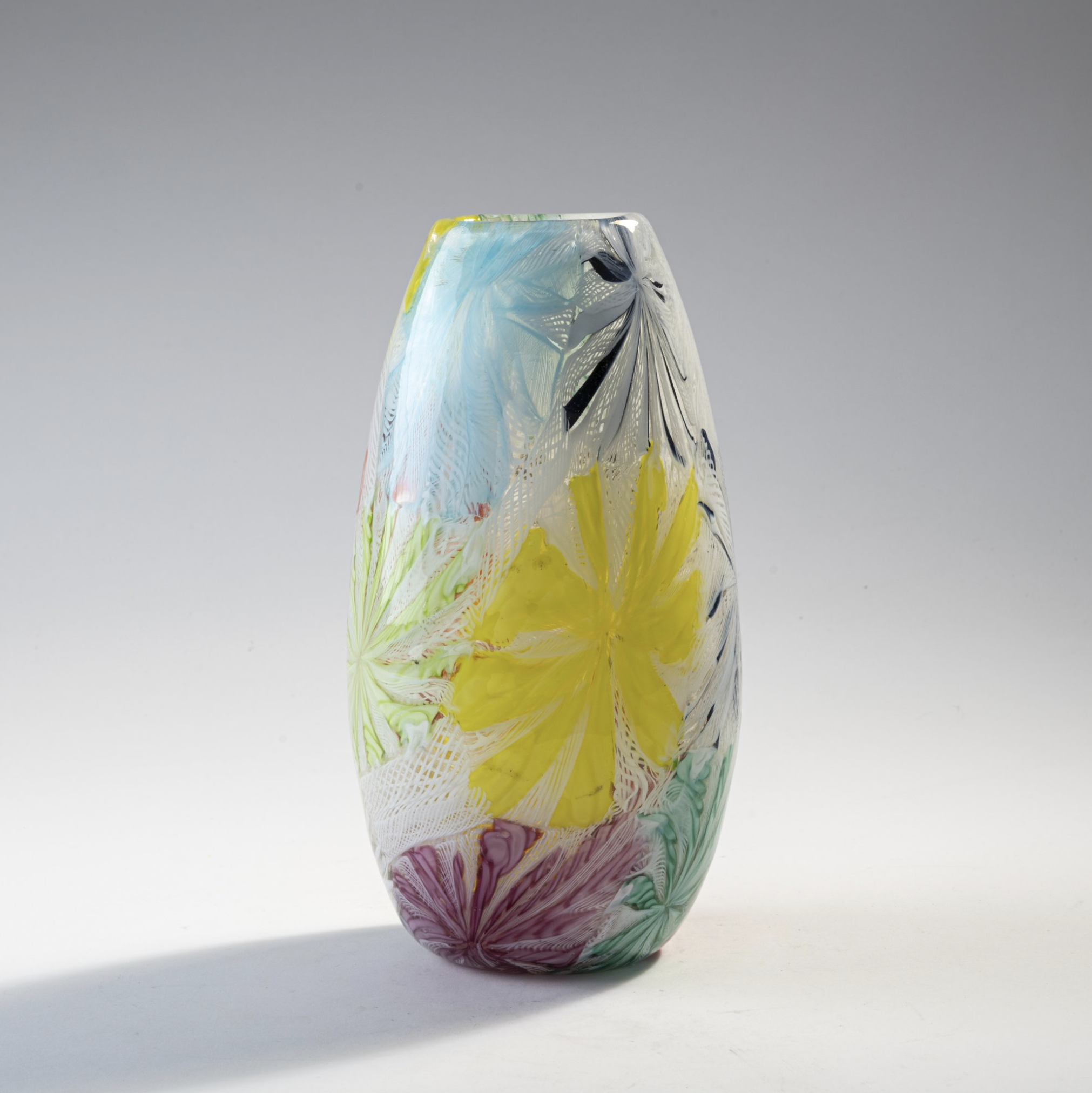
Ermanno Toso, Vase Stellato, 1960. Back and front. Via Quittenbaum.
The speciality of Fratelli Toso was murrine in millefiori decoration, which are still traded today. The technique, which was already known in its basic form in Roman glassmaking in the 1st century BC, consists of cutting small discs (known as ‘tessera’) from a coloured glass strand and melting them into colourless glass. The Fratelli Toso used 1,500 different shapes of murrine, which were divided into different categories (Cattedrale, Farfalle, Kiku, Millepiedi, Millepunti, Pavone, Spicchi, Stellati); these can be freely combined with each other, resulting in a multitude of designs that cannot be repeated in detail.
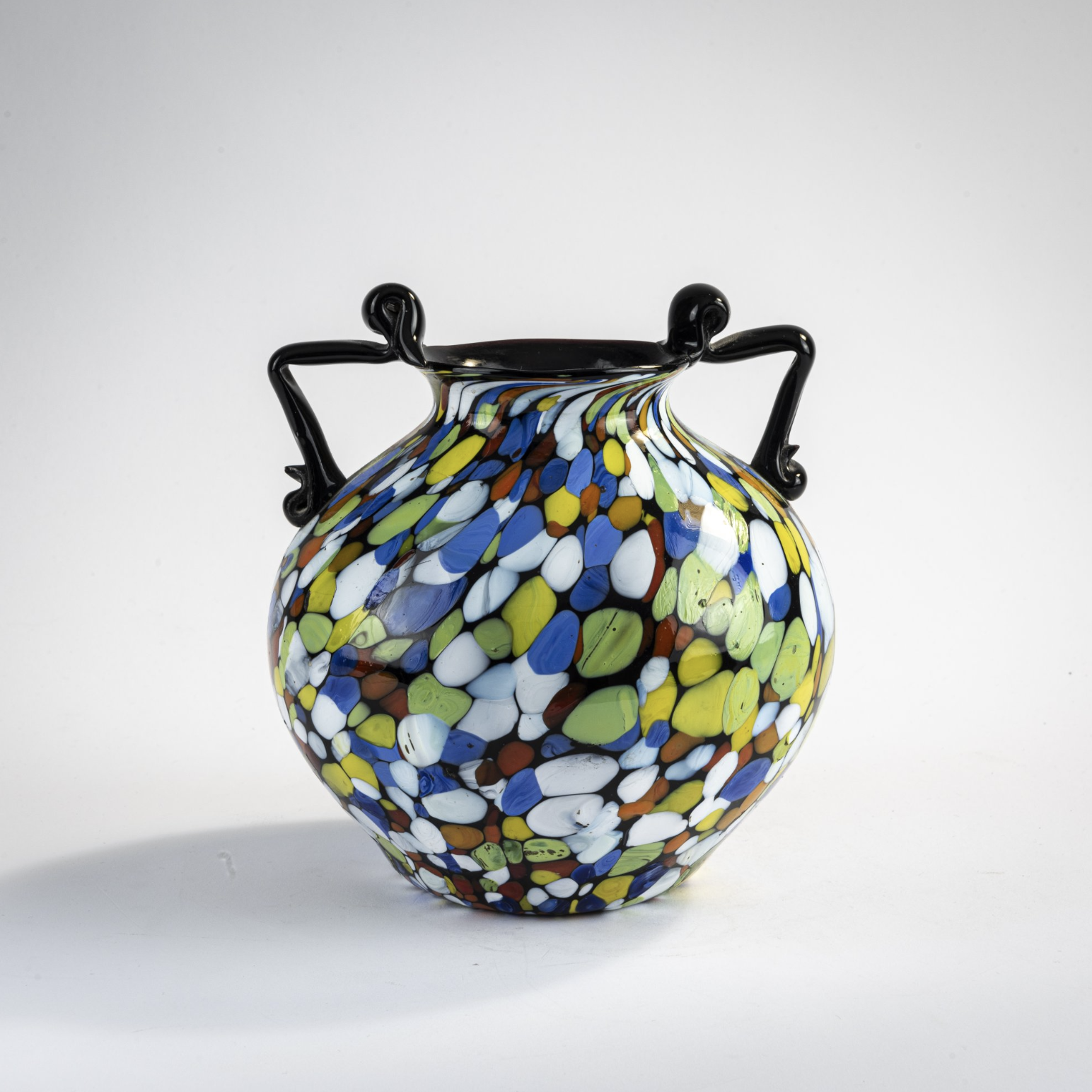
Fratelli Toso, Handled vase, 1920. H 19 cm. Dark purple glass with melted murrine spots in yellow, green, blue, white, orange and red. Via Kunstpalast Düsseldorf
Early pieces of this type, mostly with acid-etched surfaces, date from between 1900 and 1920. The variations from around 1960, based on designs by Ermanno and glass maker Rosanna Tosi, do not differ significantly in terms of technique; however, the shapes are more varied and the colours much more vibrant.
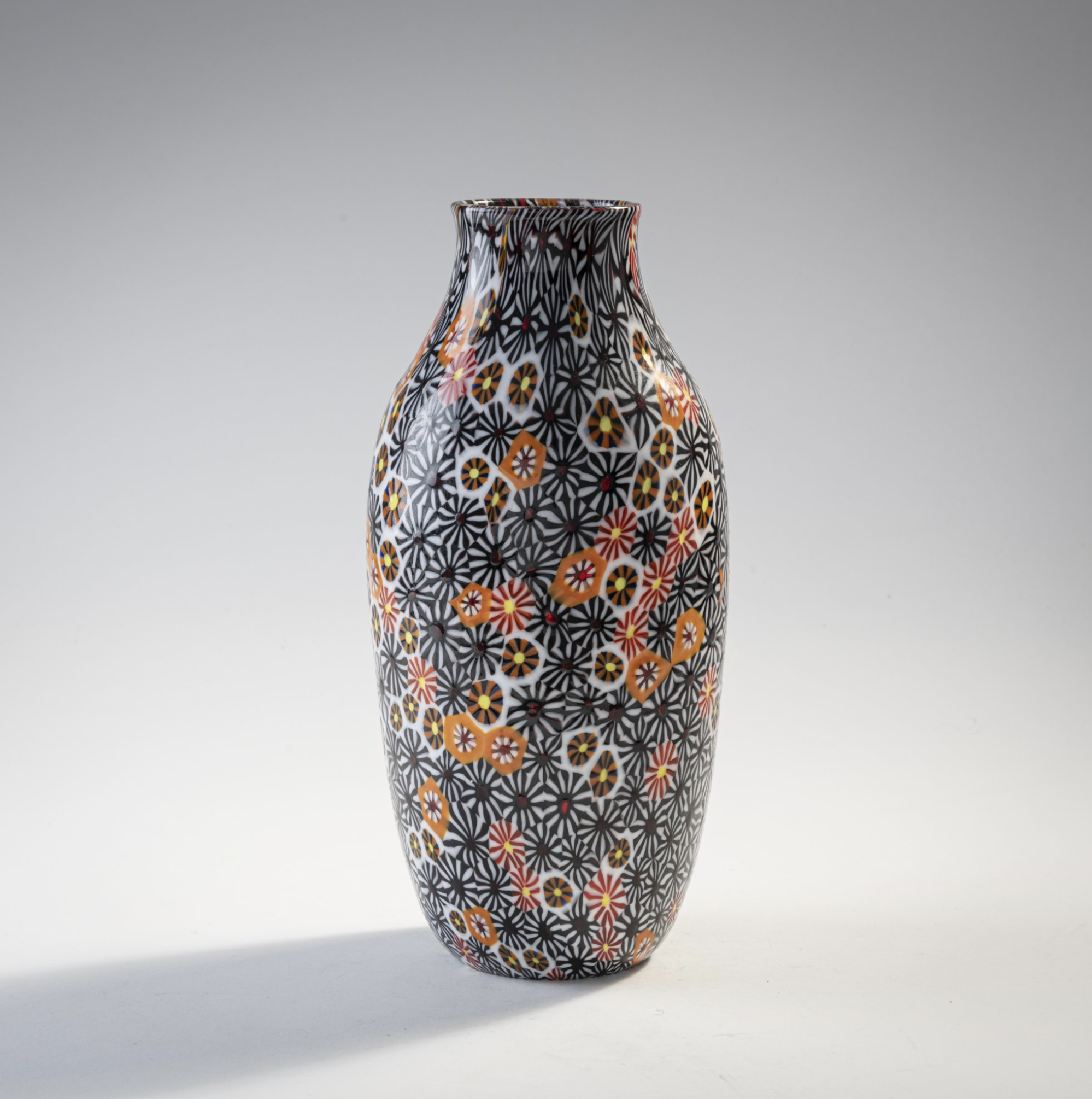
Fratelli Toso, Stellato Zanfirico vase, 1960. Via Quittenbaum
Giusto Toso (*1939) began his career in his father’s company, and later worked for Barovier & Toso or with the glass maker Leucos; his most famous designs include the ‘Rio’ and ‘Elios’ lamps.

Giusto Toso, lamp “Gogi Gogi” by Fratelli Toso, 1961. Via Artnet
After some internal conflicts and a company split in the 1980s, Arnoldo Toso, a descendant of the founders, now runs the ‘Antica Vetreria Fratelli Toso’. The company is still known for its artistic Murrine glassware, offers selected products online and works with museums, collectors and auction houses.
Rosanna Toso (1941-2001), sister of Arnoldo Toso, should also be mentioned: She joined Fratelli Toso in 1964 as a designer and became artistic director in 1973. At the dissolution of the company she continued to work in the Antica Vetreria Fratelli Toso.

Fratelli Toso workshop in 1982. Via Muranonet.
By the way: The name Toso appears frequently in Murano. There is also “Aureliano Toso”, another impressive brand. They all have a family background, but stood mostly for different companies.
 Design is fine. History is mine.