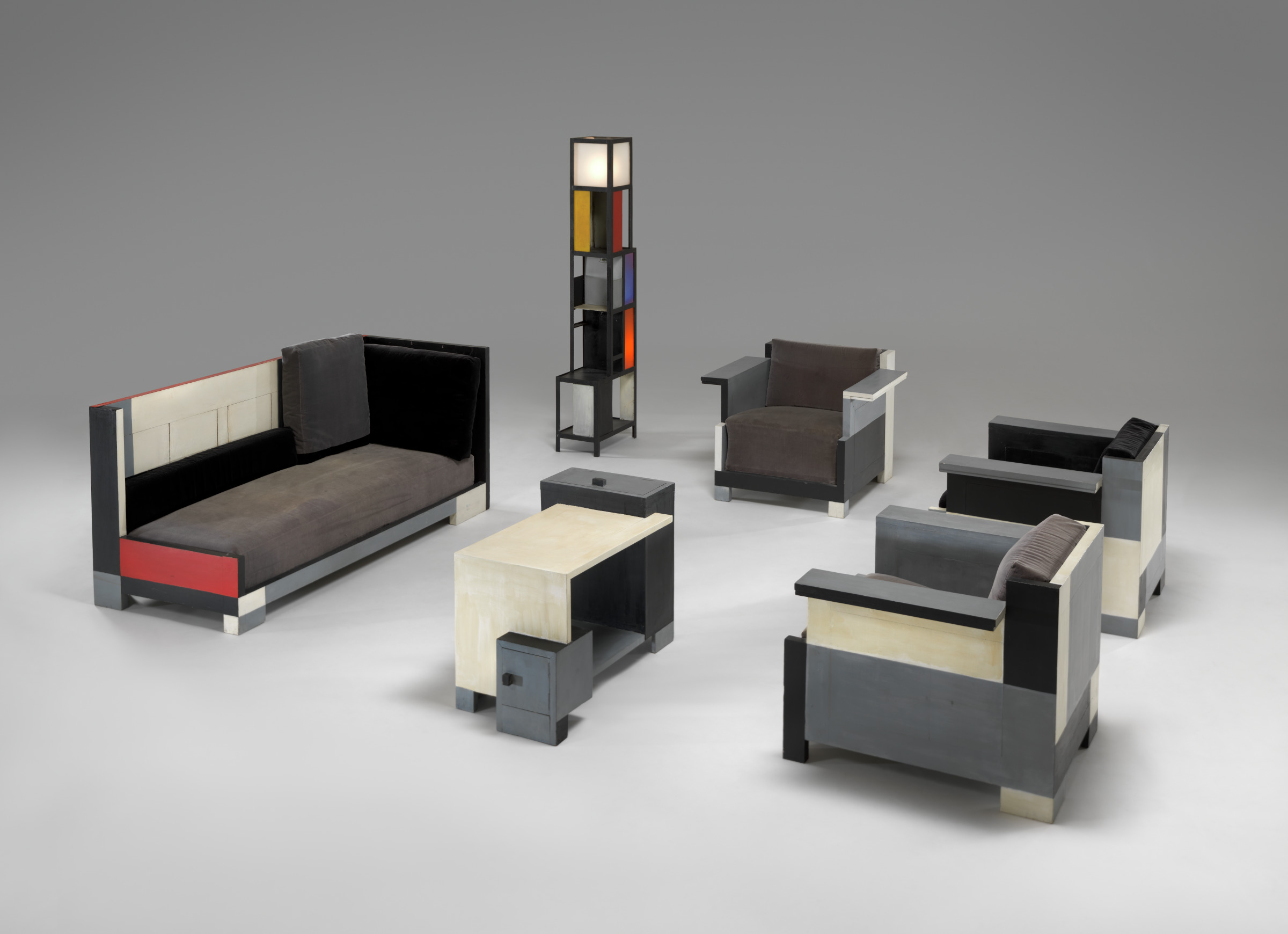
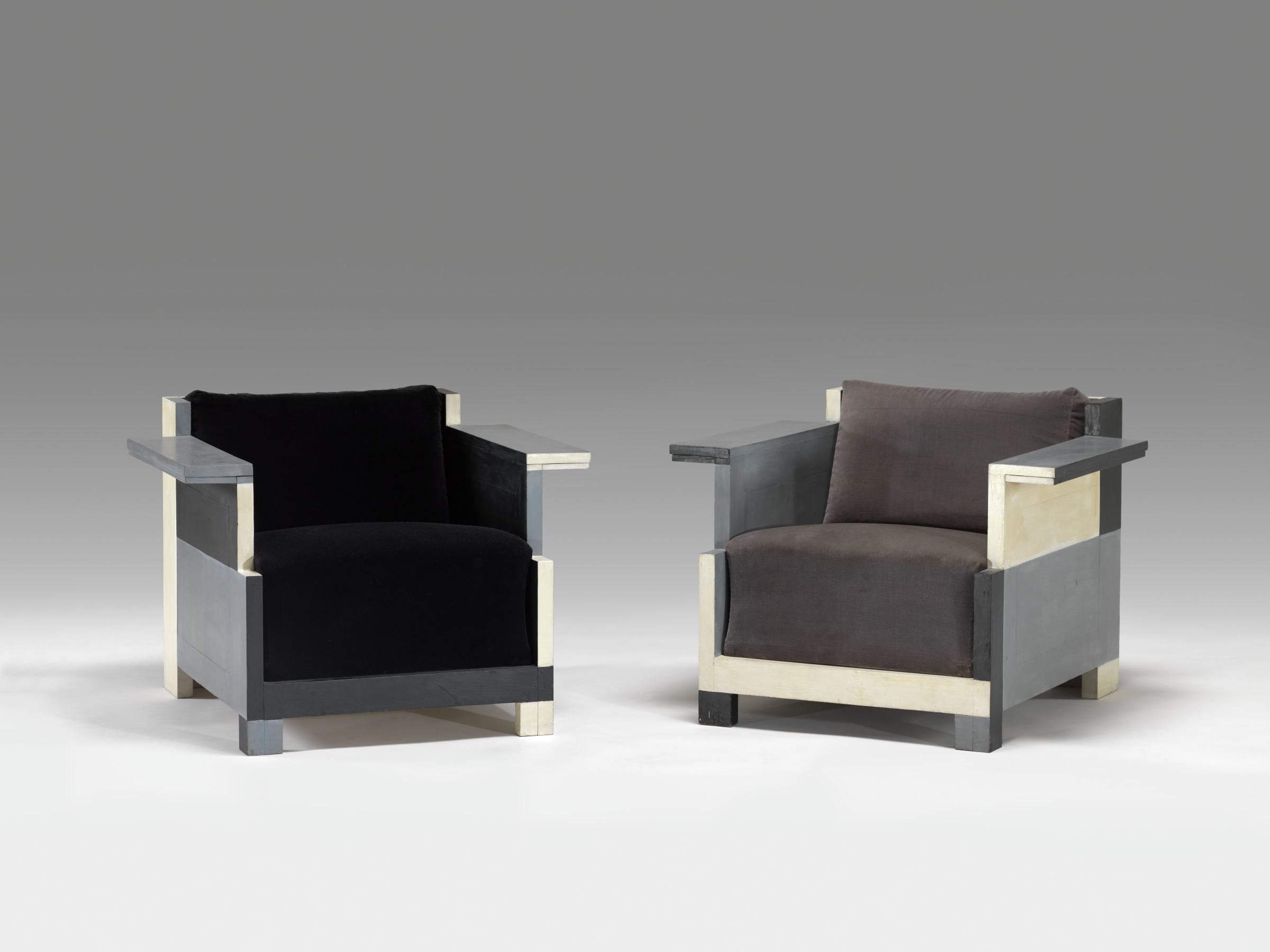

In 1913 the French painter Félix Del Marle published his Futurist Manifesto of Montmartre, in which he criticized the bohemianism of his fellow Parisians. Although he was not Italian, he was welcomed by the Italian Futurists, a group of painters, poets, sculptors, and architects who did glorify technology, war, and other aspects of modern life through their work. After World War I, Del Marle met followers of the Dutch De Stijl Movement and adopted their philosophy, which emphasize the use of primary colors, straight lines, rectangles, and squares. Working with De Stijl theory, Del Marle made this suite of furniture for his own house at Pont-sur-Sambre in Bécon, France. Via vmfa.museum
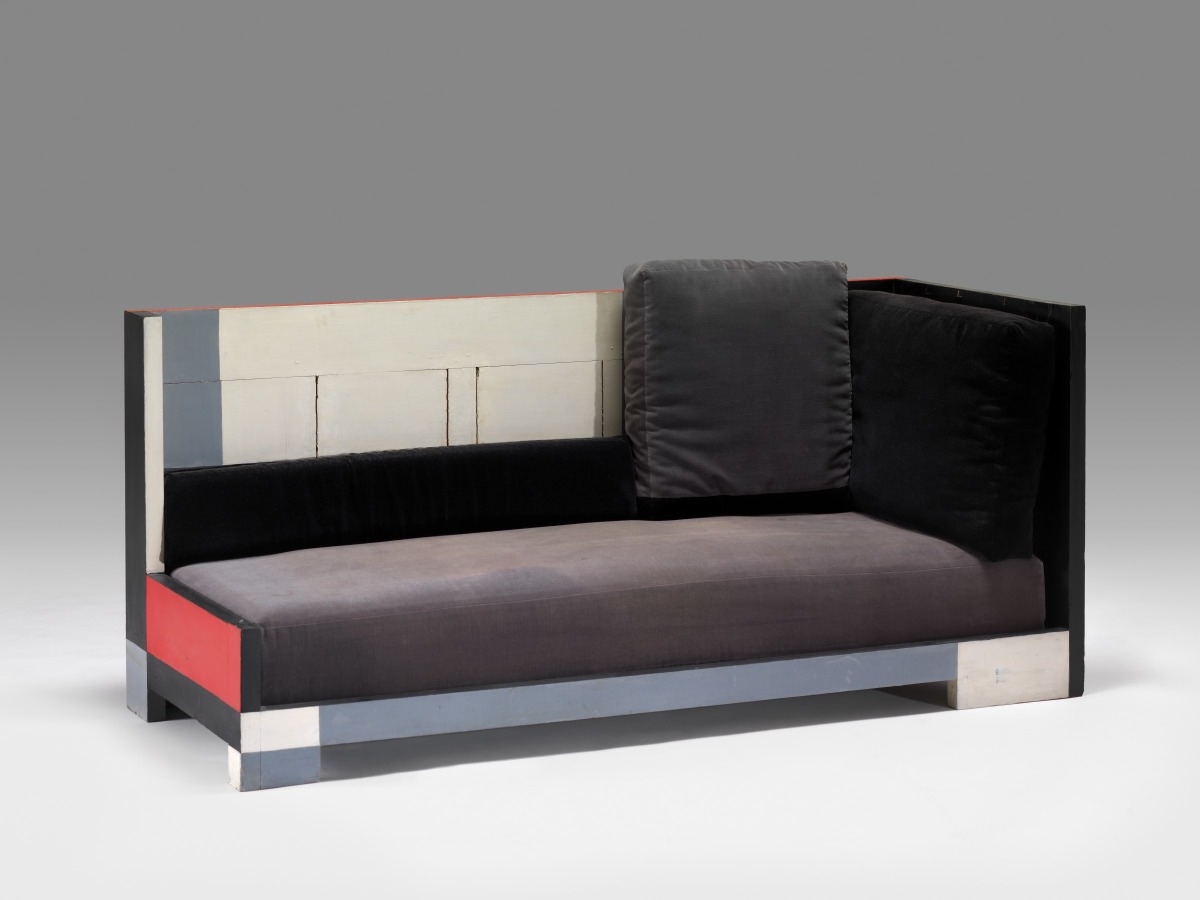
Félix Del Marle, (1889 – 1952), Suite of Furniture, 1926. Painted wood, frosted glass, metallic paint, upholstery, painted metal. Virginia Museum of Fine Arts, Richmond
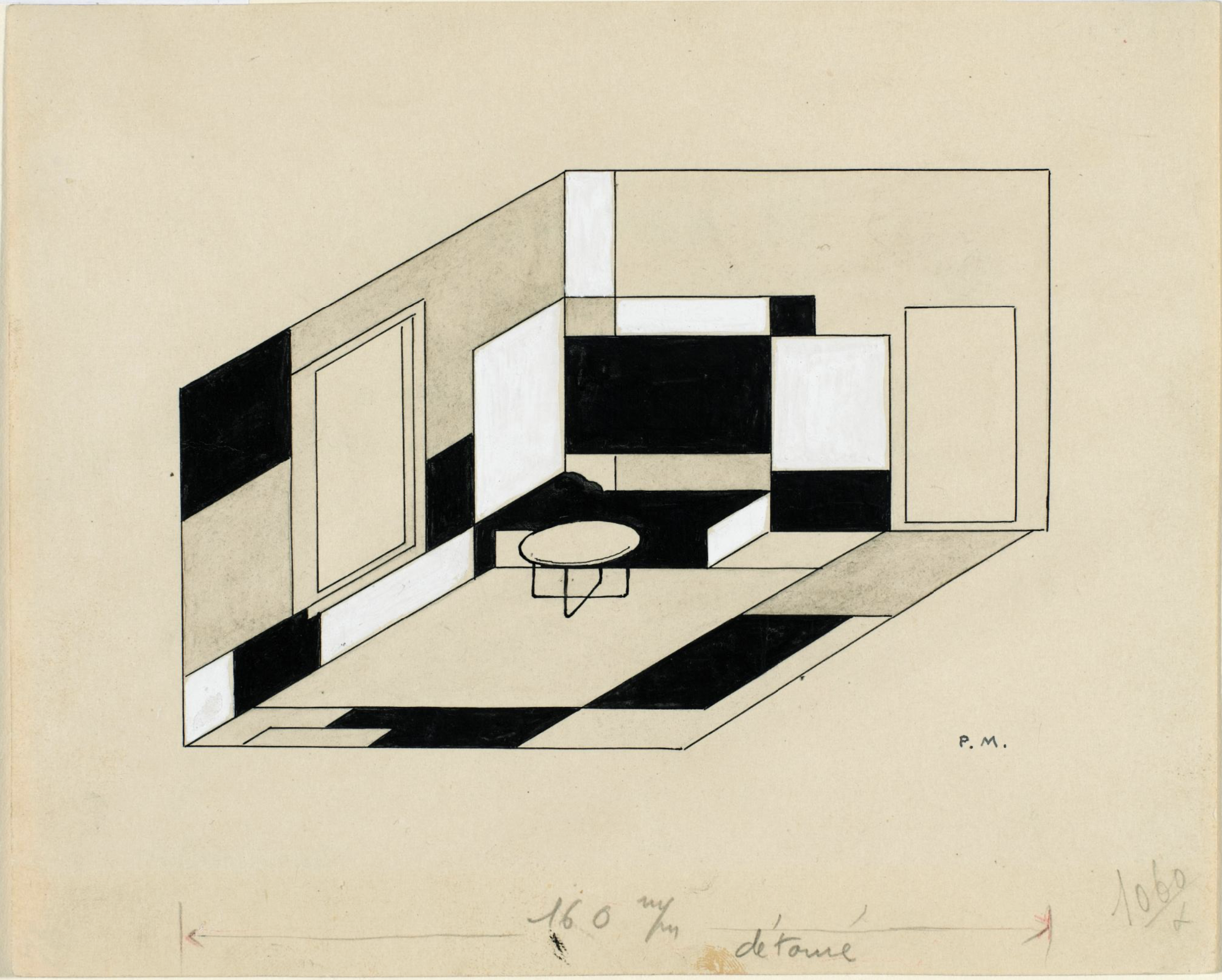
Sketch for Ida Bienert’s office in Dresden, 1926. Centre Pompidou
‘Concrete rather than abstract painting, because nothing is more concrete, more real than a line, a colour, a surface. It is the realisation of the creative spirit.’ (Del Marle)
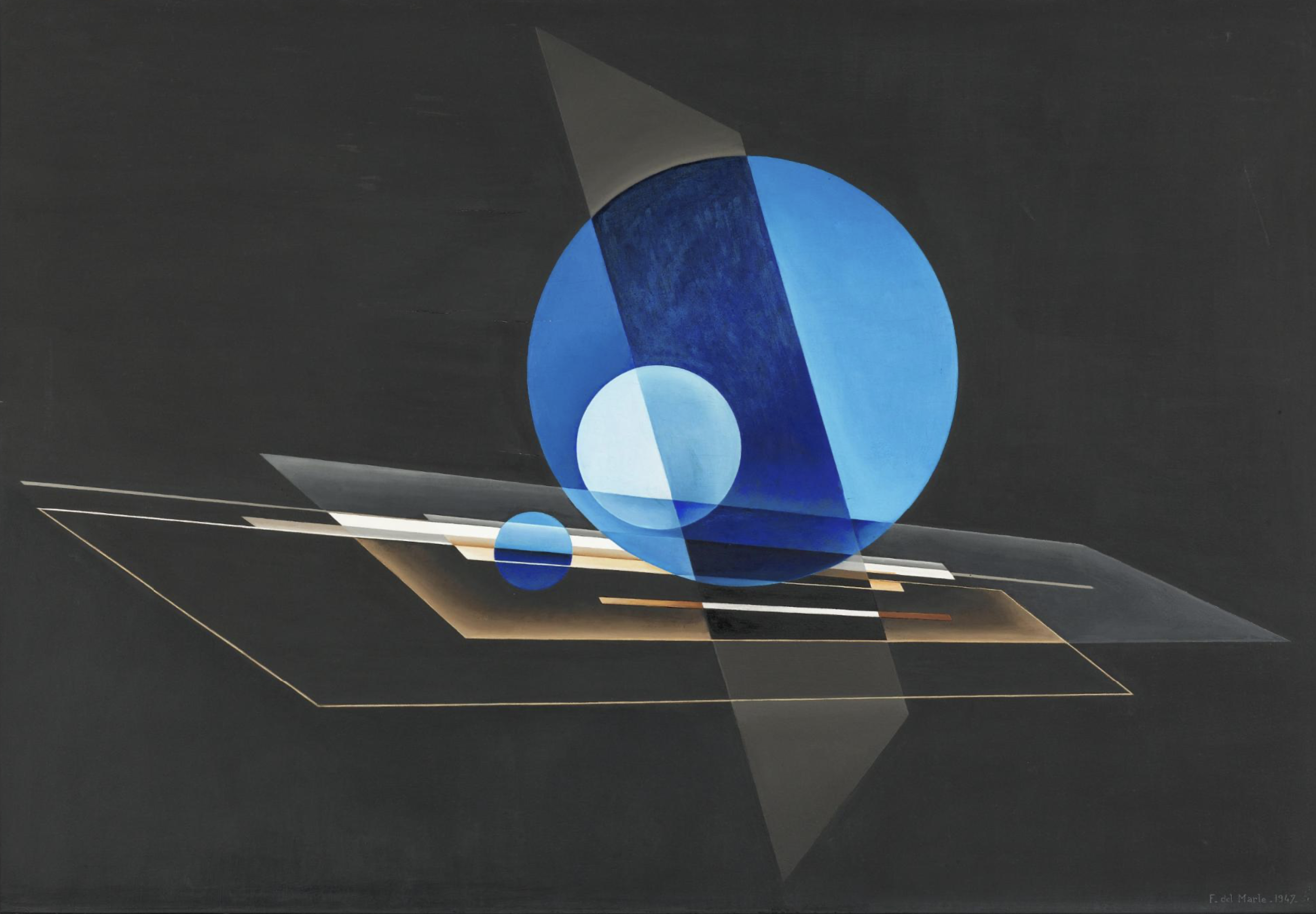
Composition, 1947. 93 x 137,5 cm. Via Centre Pompidou
When he founded the Groupe Espace with André Bloc in 1951, he was an active member of the Salon des Réalités nouvelles, where in 1950 he had opened a room dedicated to architecture, which critics named ‘Espace’. A protean artist, Del Marle is one of the rare French representatives of Italian futurism. He then embraced the neoplasticism of Mondrian. Within the Espace Group, at the request of the architect Bernard Zehrfuss, he was responsible for the polychromy of the Renault factory in Flins. Via Centre Pompidou
 Design is fine. History is mine.