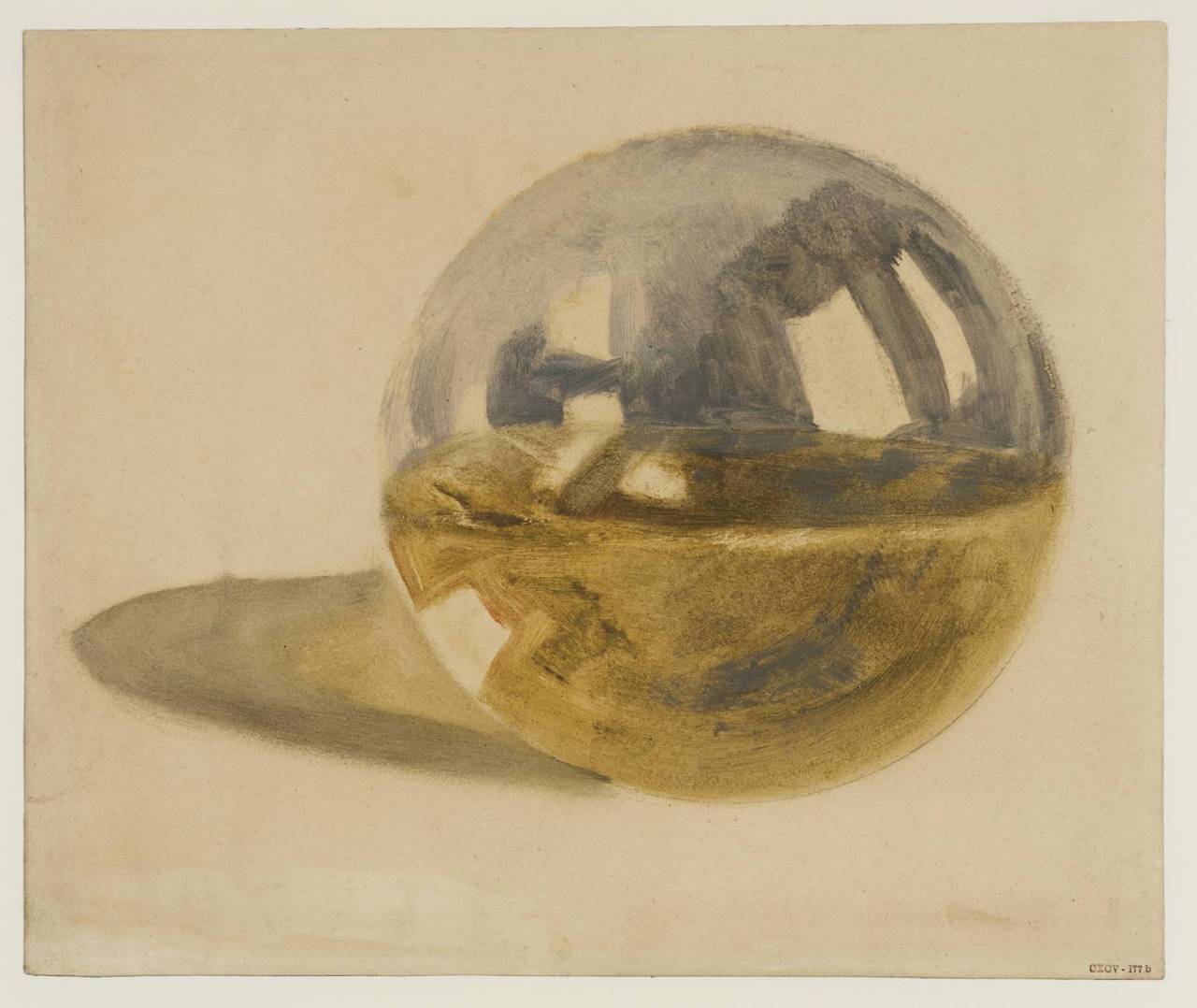
William Turner, Lecture Diagram: Reflections and Refractions in a Transparent Globe Half-Filled with Water c.1810.
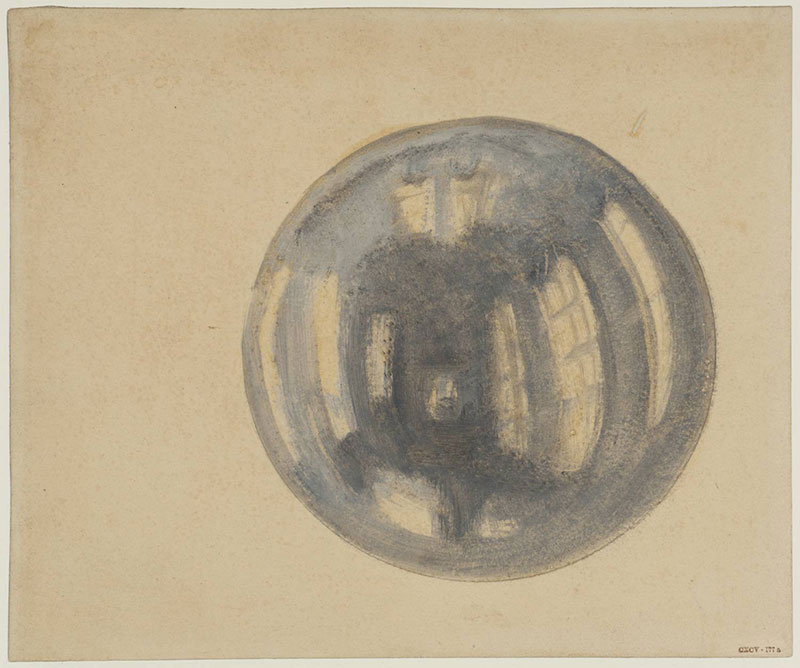

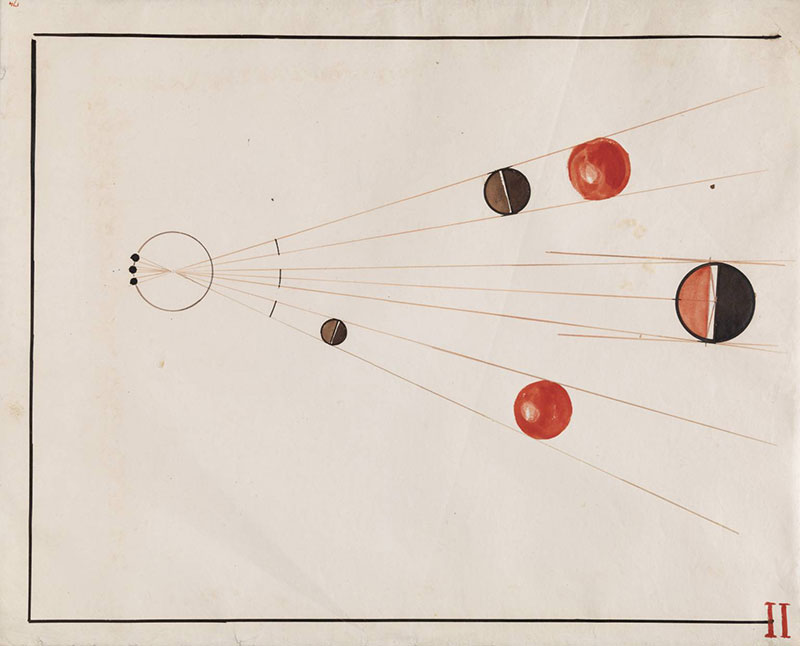
Lecture Diagrams: Tate Britain. More to see and read: Socks Studio
The production of Turner’s diagrams must have been relatively straightforward. The majority of the drawings are completed in bold strokes of red and black watercolour over indications in pencil. These were usually done freehand, with only occasional use of straight edges. On most of them, Turner wrote the name of his source above or below the procedure delineated. There are a handful of more finished watercolours, however, for which he used a more complex transfer process. For these, Joyce Townsend, Senior Conservation Scientist at Tate, has determined that he placed a sheet of paper coated with lamp black under his original drawing and then traced over the outlines to generate a copy, or sometimes multiple copies. The fact that a number of the originals show indications of a transfer process on their reverse suggests that the transfer or copy paper was prepared, most likely by Turner himself, by dipping it in lamp black to coat both sides. Once he had his guiding lines, he finished the copy with watercolour. The Turner Bequest holds a few sheets of paper with unelaborated tracings. (Andrea Fredericksen, 2004). Via Socks Studio
 Design is fine. History is mine.