Albers started 1920 as a student in the crafts and preliminary courses at the Bauhaus Weimar, working in the glass workshop, eventuall leading the department until 1922. One hallmark of his early work was his resourcefulness: He often reused found materials, including glass, metal, and wood, some of which he collected from dumpsters near workshops or construction sites. After the First World War, Germany was in ruins and poverty was rife, also at the Bauhaus.
Using salvaged glass, he explored transparency, layering, and light interaction, which foreshadowed his later color and optical experiments in painting.
He would cut, layer, and combine discarded glass pieces to study the effects of light, reflection, and color overlay. These experiments were an early indicator of his fascination with how material properties and visual perception interact.
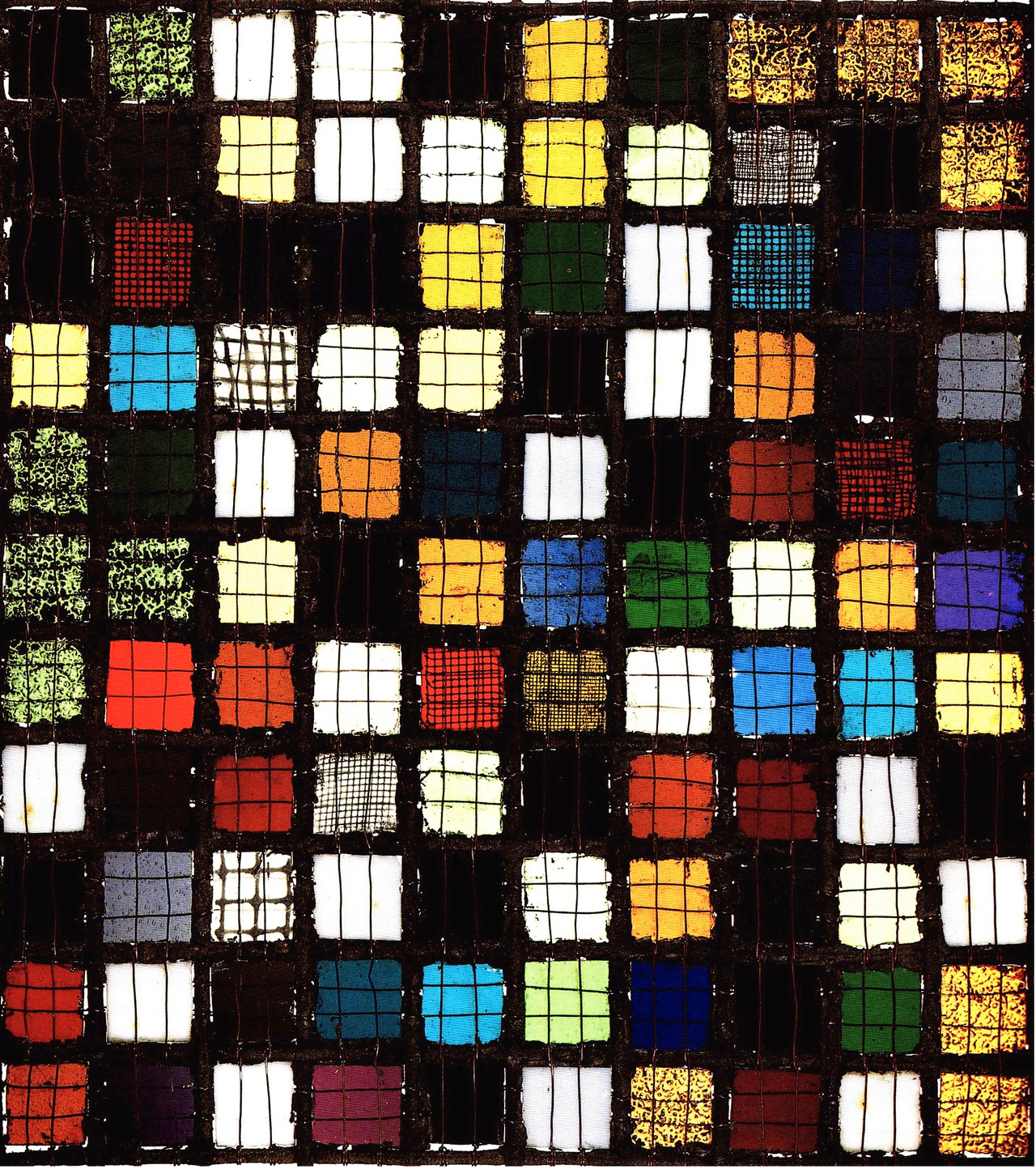
Josef Albers, “Gitterbild”, Glass assemblage, 1921. 32,4 x 28,9 cm; glass, metal, copper wire; WikiArt/Public domain US
 Design is fine. History is mine.