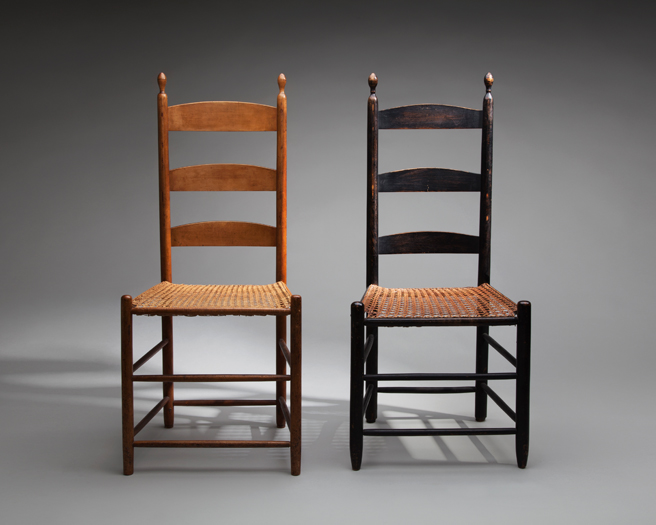
Shaker Design. Chair, 1852. Canterbury, made for the Community. Benjamin Rose Collection. Photos SFO Museum.
Community Chairs
Shaker chair design stems from eighteenth-century New England vernacular furniture. The Shakers emulated the ladder-back or slat-back chair, a light, durable chair that could be easily constructed. The number of slats a chair had depended on the height of the back of the chair. Craftsmen typically made dining and work chairs with two slats, side chairs with three, and armchairs with three to five slats. Each Shaker community made unique styles of pommels or finials to adorn chair posts. Because craftsmen in each community developed a special way of shaping chair pommels, it is often possible to identify the community where a Shaker chair was made. Early seat upholstery consisted of splint, woven straw, cane, and leather. During the 1830s, colored wool tape, which was made on looms in Shaker communities, was commonly woven into different patterns to form chair seats. Chairs, like other furniture, were often recycled or refinished; in particular, the Shakers often replaced seating materials.
 Design is fine. History is mine.